Introduction
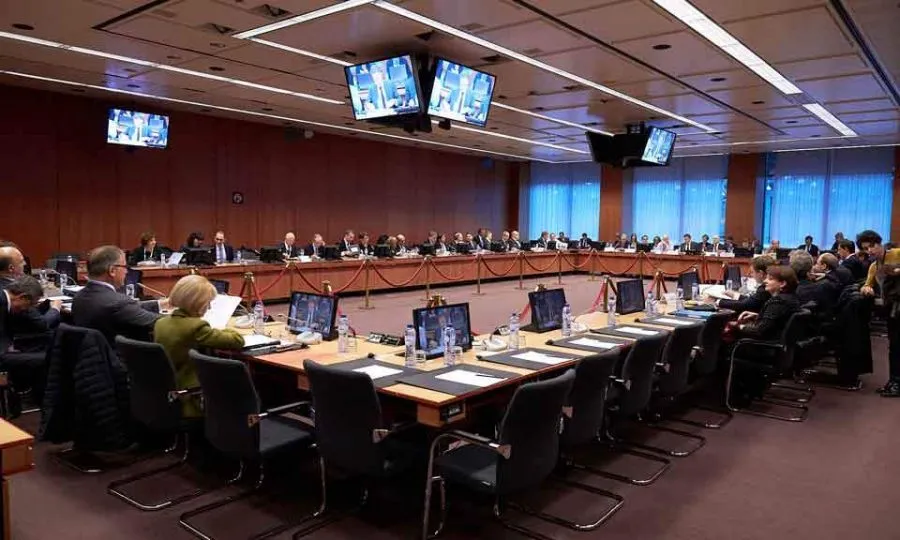
The Eurogroup is preparing to debate the growing role of stablecoins in the European financial system at its October 2025 meeting. The decision to place digital currencies on the official agenda underscores how seriously policymakers now view blockchain-based finance. Ministers are expected to address how privately issued coins could affect monetary stability, cross-border payments, and the European Central Bank’s plans for a digital euro.
Policy Context
Stablecoins, digital assets designed to maintain a steady value being backed with reserves such as fiat currency or government bonds, are increasingly viewed as both a tool and a risk. They offer faster transactions and lower costs, but also raise questions about control and oversight. For the European Union, the key challenge lies in integrating this innovation without undermining its monetary framework.
The upcoming meeting builds on the Markets in Crypto-Assets regulation, known as MiCA, which seeks to establish uniform rules across all member states 2026. The European Commission has urged finance ministers to coordinate national policies before the regulation takes full effect. The European Central Bank continues to emphasize that stablecoins must operate under strict transparency and reserve requirements to prevent destabilizing parallel currencies.
At the same time, the Digital Euro project is progressing through its pilot phase. The ECB envisions an official electronic version of the euro that can coexist with private stablecoins while ensuring security and institutional oversight. This dual approach reflects Europe’s desire to maintain financial sovereignty while embracing technological change.
Market Response
The market has reacted quickly to policy developments. Data from the European Banking Authority shows that transaction volumes for euro-backed stablecoins have nearly doubled over the past year. Financial institutions in France, Germany, and Portugal are experimenting with blockchain-based settlement systems that allow payments to clear instantly rather than in days.
Investors and payment providers are closely watching how the Eurogroup frames its discussion. A more flexible regulatory environment could accelerate the rollout of compliant stablecoin products across European markets. Several large banks have already launched internal pilots exploring tokenized deposits and on-chain liquidity tools to streamline cross-border transfers.
Meanwhile, global investors are treating the EU’s policy deliberations as a bellwether for future regulation. If the Eurogroup signals support for a structured integration of stablecoins into the financial system, Europe could set the global standard for compliance and transparency in digital asset issuance.
Expert View
Economists say that the Eurogroup’s move reflects a growing realization that digital currencies are no longer a fringe topic. According to researchers at the European Monetary Institute, stablecoins have become integral to the evolution of payment systems and liquidity management. They argue that the challenge is not whether to adopt blockchain-based models, but how to supervise them effectively.
Industry observers note that several European financial institutions are quietly developing hybrid systems that combine reserve-backed security with programmable payment functions. These innovations are reshaping how value moves within the banking sector. While policymakers do not directly reference such models, they are increasingly aware that these technologies are influencing real-world financial operations and could serve as prototypes for regulated digital finance.
Future Outlook
The October meeting is expected to outline next steps for stablecoin oversight within the EU. Likely outcomes include new reporting requirements for issuers, standardized reserve audits, and stronger links between national regulators and the European Central Bank. Analysts predict that Brussels will adopt a pragmatic stance, combining strict supervision with room for experimentation.
Banks and fintech firms are preparing for this shift investing in compliance and blockchain infrastructure. Some are exploring settlement frameworks that use transparent, reserve-backed digital tools to enhance efficiency and accountability. These efforts align with Europe’s broader strategy to modernize its financial system without compromising stability.
Conclusion
adding stablecoins to its official agenda, the Eurogroup is acknowledging that digital assets are now a permanent part of modern finance. This discussion marks a turning point for Europe’s approach to innovation and regulation.
The outcome of this meeting will determine how the EU balances the promise of blockchain efficiency with the responsibility of safeguarding its currency system. Whether through public initiatives like the Digital Euro or private innovation under strict supervision, Europe is positioning itself to shape the next era of digital money rather than be shaped it.