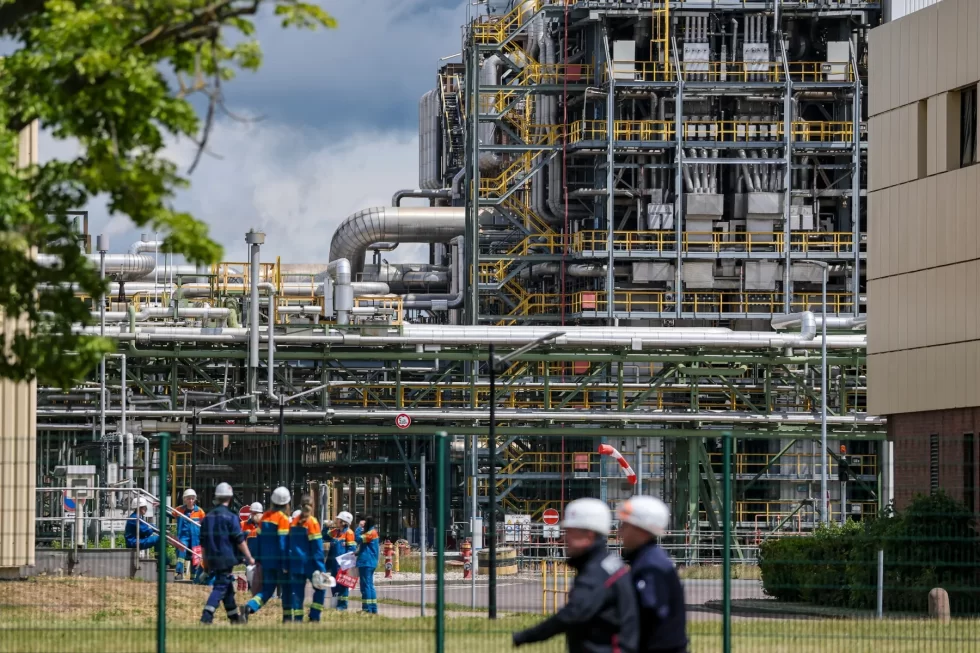
A €635 billion sector under mounting strain
Europe’s chemicals industry, valued at roughly 635 billion euros, is entering one of its most difficult periods in decades. Once a cornerstone of the continent’s industrial strength, the sector is now grappling with a convergence of challenges that are eroding profitability and undermining long term competitiveness. As conditions worsen, industry observers increasingly expect mergers and acquisitions to accelerate as companies look for scale, resilience, and survival.
The pressures facing chemical producers are structural rather than cyclical. Demand growth has slowed across key markets, while production costs have risen sharply. At the same time, companies are navigating a complex regulatory landscape that adds compliance costs and uncertainty to future investment decisions.
Weak demand and global competition squeeze margins
One of the most immediate challenges is sluggish demand. Key downstream industries such as automotive, construction, and consumer goods have cooled, reducing orders for basic and specialty chemicals. This slowdown comes at a time when global competition has intensified, particularly from producers in regions with lower energy and regulatory costs.
European manufacturers are finding it increasingly difficult to compete on price. Export volumes have come under pressure, and domestic customers are more cautious with procurement. The result is underutilized capacity across many plants, a problem that weighs heavily on margins in a capital intensive industry.
Energy costs remain a critical disadvantage
High energy prices continue to be a defining issue for Europe’s chemicals sector. Chemical production is energy intensive, and sustained increases in gas and electricity costs have fundamentally altered cost structures. While prices have eased from peak levels seen during recent energy crises, they remain well above those faced competitors in other regions.
This disparity has forced some producers to scale back operations or temporarily shut facilities. Others are reassessing whether certain assets remain viable in the long term. Energy costs have therefore become not just an operational concern, but a strategic one that influences decisions on investment, location, and ownership.
Regulation adds further pressure ahead of 2026
Regulatory complexity is another major factor driving consolidation expectations. The industry faces increasingly strict environmental requirements, with more demanding emissions rules scheduled to take effect in 2026. While sustainability goals are widely supported, compliance requires significant capital expenditure at a time when balance sheets are already under strain.
For smaller and mid sized firms, meeting these standards independently may prove unrealistic. Larger groups, contrast, are better positioned to absorb costs, invest in cleaner technologies, and spread compliance expenses across broader operations. This imbalance strengthens the case for mergers as a way to achieve regulatory resilience.
Why consolidation is becoming more likely
In this environment, consolidation offers several advantages. Mergers can deliver economies of scale, reduce overlapping costs, and improve bargaining power in energy procurement and supply chains. Combined entities may also be better equipped to invest in innovation, efficiency upgrades, and low emission technologies.
Investors are increasingly supportive of consolidation as a means of protecting value in a challenged sector. With organic growth limited, strategic combinations may offer the clearest path to stabilizing earnings and maintaining global relevance.
Implications for jobs and industrial strategy
While consolidation may strengthen corporate balance sheets, it also raises concerns about employment and regional industrial capacity. Plant closures, rationalization, and workforce reductions often follow mergers. Policymakers therefore face a delicate balance between supporting competitiveness and preserving industrial jobs.
At a broader level, the chemicals sector’s struggles raise questions about Europe’s industrial strategy. Chemicals underpin countless value chains, from pharmaceuticals to renewable energy. Sustained decline could have ripple effects across the wider economy.
A turning point for the industry
The outlook for Europe’s chemicals sector remains challenging, with few signs of quick relief. Weak demand, high costs, trade barriers, and regulatory pressure form a difficult backdrop that is unlikely to change overnight. In this context, consolidation appears less a choice than an inevitability.
The coming years may reshape the industry’s structure, determining which companies endure and which disappear. For Europe, the outcome will be critical in defining whether its chemicals sector can adapt and remain competitive in an increasingly demanding global landscape.