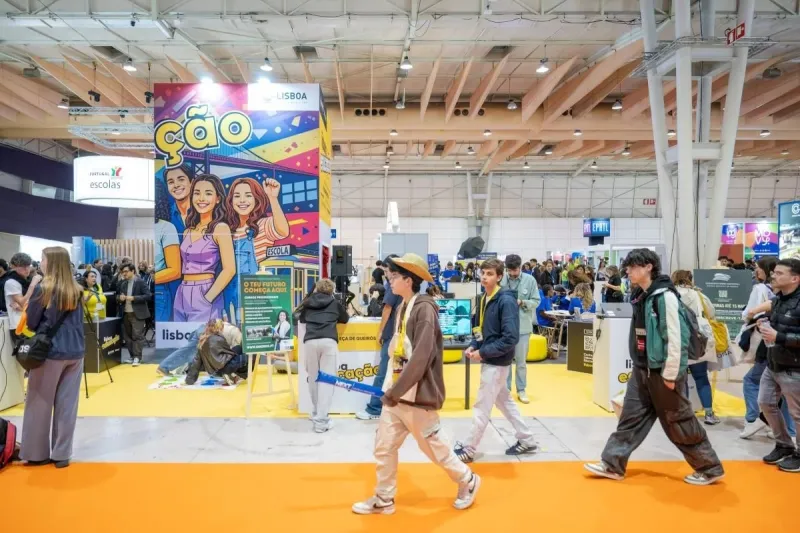
Lisbon hosted one of Portugal’s largest education and career events this week as Futuralia 2026 returned to the Feira Internacional de Lisboa. The four day fair, held from March 11 to March 14, brought together universities, training institutions and professional organisations from Portugal and abroad. The event attracted thousands of students, parents and professionals seeking guidance on academic programmes, vocational training and career opportunities. Futuralia has become a key annual platform where young people can explore education pathways and engage directly with institutions offering courses and professional development options.
The exhibition halls at FIL were filled with representatives from universities, international education providers, professional training centres and employment organisations. Visitors had the opportunity to speak directly with academic advisers and recruiters, allowing them to learn more about degree programmes, scholarship opportunities and skills training initiatives. Many exhibitors also introduced specialised courses designed to meet evolving labour market demands, including programmes related to digital technologies, sustainability and entrepreneurship. The event aimed to provide participants with practical information to help them make informed decisions about their educational and professional futures.
Education leaders and institutional representatives used the fair to discuss how learning and workforce preparation are evolving in Portugal. Many organisations highlighted the increasing importance of international collaboration and cross border academic mobility. Universities promoted exchange programmes and partnerships that allow students to study abroad while developing global career networks. Training providers also emphasized the growing role of technical education and skills development in areas such as artificial intelligence, engineering, healthcare and digital services, sectors expected to play an important role in Portugal’s economic development in the coming years.
The event also served as a meeting point for institutions looking to strengthen partnerships across the education sector. Representatives from Portuguese universities and international schools discussed collaborative research projects, student mobility initiatives and professional training programmes. Several organisations also used the event to present new initiatives designed to improve access to education and career guidance. Participants highlighted that events such as Futuralia create valuable opportunities for dialogue between students, educators and industry leaders, helping align academic programmes with the needs of the labour market.
Beyond the exhibition stands, Futuralia featured a series of presentations, discussions and interviews focusing on future trends in education and employment. Organisers arranged sessions where institutions shared insights about new learning methods, emerging technologies in education and strategies for preparing students for changing workplace environments. Interviews conducted during the fair provided additional perspectives from educators and organisations about how education systems are adapting to technological transformation and evolving economic conditions.
Futuralia has grown into one of Portugal’s most recognized education events since its launch, regularly attracting national and international institutions. Each year the fair creates a space where students can gather information about higher education programmes, vocational training and career opportunities while also connecting with professionals working in different industries. The presence of international exhibitors reflects Portugal’s increasing integration into global education networks and the growing interest among students in studying abroad.
The 2026 edition continued this tradition bringing together diverse participants and highlighting the wide range of opportunities available to students and young professionals. Many visitors spent hours moving between exhibition areas, attending talks and speaking directly with university representatives about course requirements and career pathways. For institutions, the fair provided a valuable opportunity to present their programmes to potential students and strengthen relationships within the education sector.
As Futuralia concluded its four day run in Lisbon, organisers and participating institutions described the event as an important platform for guiding the next generation of students. The conversations and connections formed during the fair are expected to continue through follow up discussions, partnerships and educational initiatives that extend well beyond the exhibition halls.