The Green Party has intensified pressure on Britain’s governing Labour Party after securing a decisive election victory in Greater Manchester, a result that has reignited debate over Labour’s political direction under Prime Minister Keir Starmer.
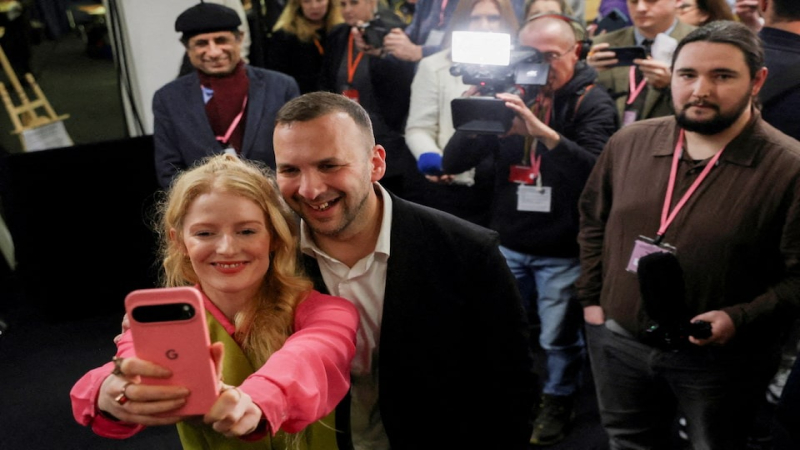
Hannah Spencer won the Gorton and Denton parliamentary seat with 40.7 percent of the vote, marking the Greens’ fifth lawmaker in the House of Commons. Reform UK placed second with 28.7 percent, while Labour fell to third position in what had previously been considered a stronghold.
Spencer’s victory speech focused less on environmental policy and more on economic inequality, criticising what she described as a system that benefits billionaires at the expense of working people. Her message positioned the Greens firmly to the left of Labour, directly appealing to voters who feel disillusioned with the government’s current approach.
The result comes at a politically sensitive moment for Labour. Starmer has faced criticism from within his party and from trade unions over a perceived shift toward the political centre, particularly on issues such as immigration and fiscal policy. The strategy is widely seen as an attempt to counter the rise of Nigel Farage’s Reform UK.
Union leaders were quick to respond to the outcome. UNISON, one of Labour’s largest financial backers, said the party was reaping the consequences of moving away from its traditional support base. Senior figures within Unite also described the result as a warning sign, urging Labour to reconnect with core working class priorities.
Left wing Labour lawmakers echoed those concerns, arguing that efforts to neutralise Reform UK adopting tougher rhetoric on immigration risk alienating longstanding supporters. Some suggested that the Greens are filling a vacuum created Labour’s repositioning.
The election was triggered the resignation of the previous Labour MP, creating an opportunity for opposition parties to test voter sentiment. While governing parties often struggle in elections, the scale of Labour’s defeat has drawn attention in Westminster.
The Greens expanded their appeal beyond environmental activism during the campaign. Spencer addressed economic inequality and community cohesion, and spoke about defending minority communities. The party’s stance on the conflict in Gaza also featured prominently, with leaders criticising what they view as insufficiently robust government positions. Labour lawmakers have said the issue became divisive during the campaign.
Green Party leader Zack Polanski described the win as evidence that voters are looking for alternatives to mainstream politics. He rejected accusations that the campaign relied on divisive tactics, stating the focus was on policy differences and accountability.
For Labour, the outcome underscores the challenge of balancing electoral pragmatism with ideological identity. With Reform UK gaining support on the right and the Greens advancing on the left, the governing party faces increasing competition across the political spectrum as it seeks to maintain unity and voter confidence.