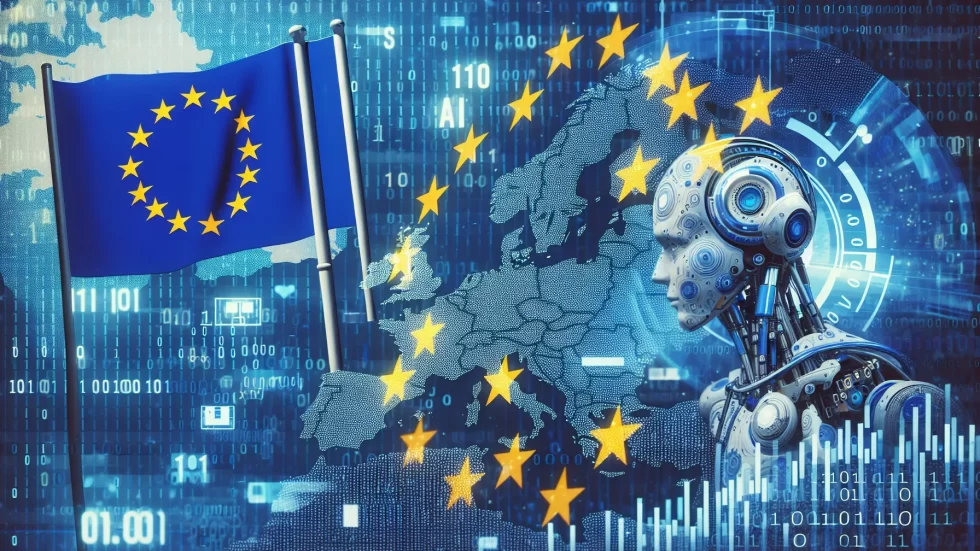
European Union artificial intelligence policy is playing an increasingly influential role in shaping how innovation develops in Portugal in 2025. As the EU moves forward with comprehensive AI governance frameworks, Portuguese companies, startups and research institutions are adjusting strategies to align with new standards. These policies aim to encourage responsible innovation while ensuring transparency, safety and accountability across AI driven technologies.
For Portugal, alignment with EU AI policy represents both an opportunity and a constraint. While new rules introduce compliance requirements, they also create a predictable environment that supports long term investment and collaboration. Innovation in Portugal is evolving within this structured framework, balancing creativity with regulatory responsibility.
EU AI Policy Establishes Clear Innovation Boundaries
The most important impact of EU AI policy is the establishment of clear boundaries for innovation. Regulations define acceptable use cases, risk categories and compliance obligations for AI systems. Portuguese firms now develop solutions with these parameters in mind from the earliest stages of design.
This clarity reduces uncertainty for businesses and investors. Knowing which applications require stricter oversight allows companies to allocate resources more effectively. While experimentation remains possible, it must occur within defined ethical and legal limits. This structured approach encourages thoughtful innovation rather than rapid but uncontrolled deployment.
Compliance Influences Product Development Strategies
Compliance requirements are directly influencing how AI products are designed and deployed in Portugal. Companies are integrating transparency features, data governance controls and risk assessment processes into development cycles. These considerations are no longer optional additions but core components of product strategy.
For startups, this means higher upfront planning costs but fewer surprises later. Established firms are adapting existing systems to meet updated standards. Although compliance can slow initial development, it often results in more robust and market ready solutions that are easier to scale across the EU.
Research and Collaboration Gain New Momentum
EU AI policy has also encouraged greater collaboration between Portuguese research institutions, private companies and public bodies. Funding programs and innovation initiatives aligned with EU priorities support responsible AI development. Universities and research centers play a key role in exploring applications that meet regulatory expectations.
These collaborations strengthen Portugal’s innovation ecosystem linking research with real world deployment. Shared standards make it easier to collaborate across borders, positioning Portuguese innovators within broader European networks. This integration enhances knowledge exchange and accelerates responsible innovation.
Investor Confidence Benefits From Regulatory Alignment
Clear AI governance frameworks improve investor confidence reducing regulatory risk. Investors are more willing to support AI driven projects when legal expectations are transparent and consistent across markets. Portugal benefits from this alignment as firms can scale solutions within the EU without facing fragmented regulations.
This predictability supports long term investment strategies rather than speculative activity. While some high risk experimentation may slow, sustainable innovation becomes more attractive. Portugal’s adherence to EU AI policy reinforces its reputation as a reliable environment for technology development.
Conclusion
EU AI policy is shaping innovation in Portugal defining clear boundaries, influencing product strategies, encouraging collaboration and strengthening investor confidence. While compliance introduces new responsibilities, it also creates a stable foundation for responsible growth. As Portugal continues to align with European AI governance, innovation is evolving in a more structured and sustainable direction.