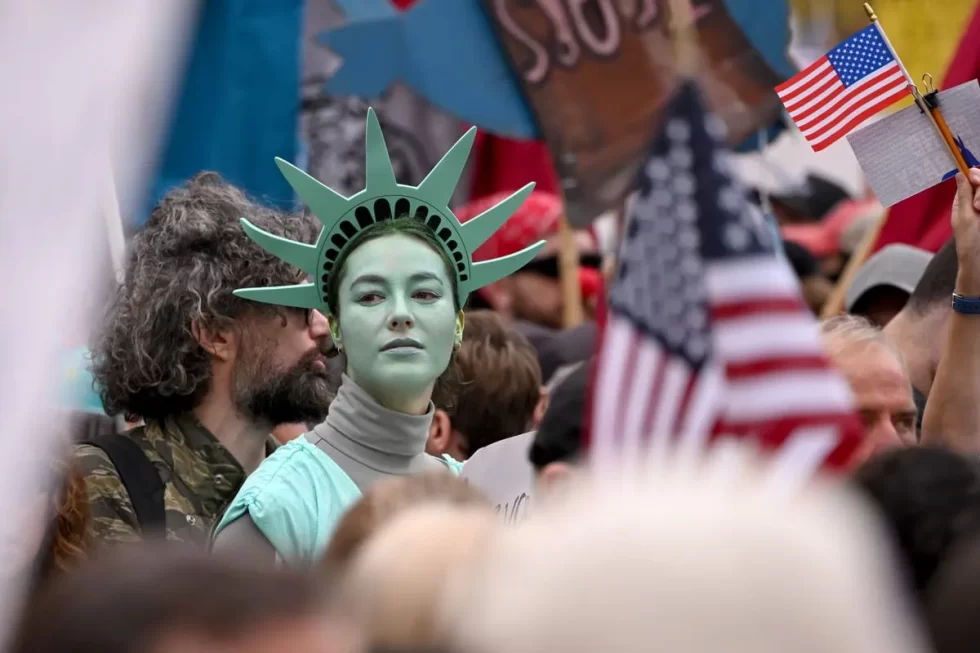
Donald Trump’s return to the center of U.S. political life in 2025 had a noticeable impact on arts and culture, reshaping conversations, funding priorities, and creative expression. While policy changes played a role, the broader influence came from how artists, institutions, and audiences reacted to a renewed era of political intensity. Culture once again became a space for response, resistance, and reflection.
One of the most immediate effects was the reactivation of politically charged art. Museums, galleries, and theaters reported a surge in works addressing democracy, power, and identity. Many artists revisited themes that had defined earlier Trump-era cultural movements, but with added urgency shaped recent social shifts.
Public funding debates resurfaced strongly in 2025. Federal support for arts institutions faced renewed scrutiny, prompting concerns among cultural organizations about long-term stability. While large institutions were better positioned to adapt, smaller and community-based groups expressed anxiety over funding uncertainty.
At the same time, private patronage increased in response. Foundations, individual donors, and nonprofit sponsors stepped in to support projects perceived as culturally or socially significant. This shift reinforced a growing reliance on private funding within the arts sector.
Performing arts spaces became prominent venues for political dialogue. Theater productions, comedy tours, and live performances frequently incorporated commentary on leadership, civic responsibility, and social division. Satire, in particular, regained prominence as a tool for critique and engagement.
In music, artists across genres addressed political tension more directly. Lyrics referencing freedom, protest, and national identity gained traction, especially among younger audiences. Concerts and festivals often doubled as spaces for civic expression rather than pure entertainment.
Visual culture also reflected the moment. Murals, digital art, and public installations responding to political themes appeared in major cities. Street art became a visible outlet for frustration, hope, and commentary on the state of the nation.
Cultural institutions faced internal challenges as well. Staff and leadership navigated how openly to engage with political issues while maintaining public trust. Many institutions adopted clearer values-based statements around inclusion, freedom of expression, and social responsibility.
Social media amplified these cultural shifts. Artists and organizations used platforms to frame their work within broader political conversations. This visibility expanded reach but also exposed creators to heightened criticism and polarization.
Internationally, U.S. culture in 2025 was closely watched. American films, exhibitions, and performances were often interpreted through a political lens abroad. Cultural diplomacy became more complex as global audiences associated creative output with national leadership.
Education and arts programming were also affected. Schools and universities reported renewed student interest in political art, history, and cultural studies. Creative expression became a way for young people to process uncertainty and assert identity.
Despite division, the period also produced collaboration. Cross-disciplinary projects brought artists, activists, and communities together. Many creators emphasized dialogue over division, seeking to bridge gaps through shared cultural experience.
Critics argue that political saturation risks overshadowing artistic nuance. Supporters counter that art has always reflected its time. In 2025, the Trump effect made that relationship impossible to ignore.
Ultimately, Trump’s impact on arts and culture in 2025 was less about direct control and more about reaction. His presence reshaped the emotional and political landscape in which culture operates. Artists and institutions responded amplifying voices, revisiting themes of power, and reaffirming the role of culture as a mirror of society.
As the year progressed, one pattern became clear. In moments of political tension, the arts did not retreat. They moved forward, louder, more visible, and deeply intertwined with the national conversation.