






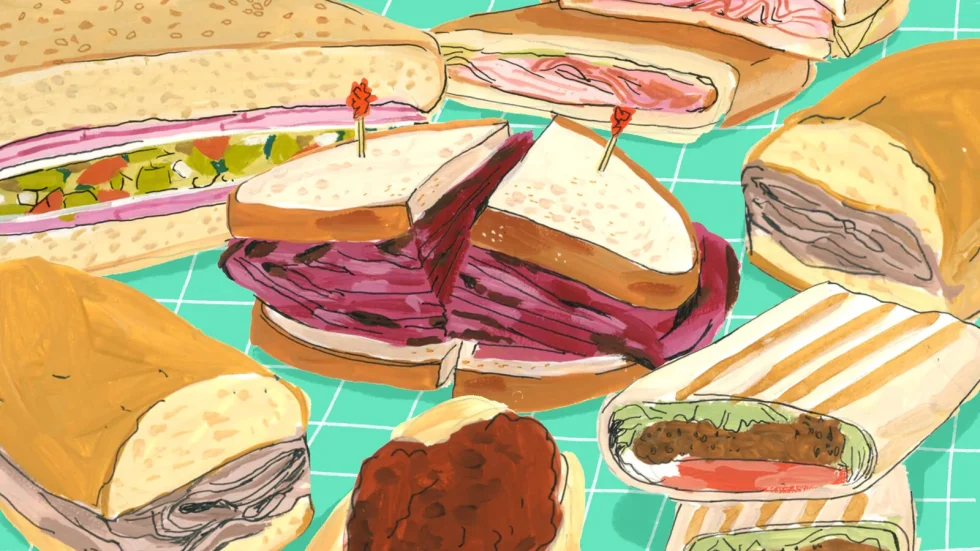
Economists warn BLTs may soon require credit checks.
The Price of a Leafy Crunch
Across the globe, sandwich shops are sounding the alarm as the humble lettuce has transformed into one of the priciest items on the menu. What was once a cheap garnish has become so expensive that customers are being asked if they can afford the crisp green leaves before placing their orders.
Economists warn that at this pace, the BLT sandwich may soon require financial approval. “We are approaching a point where lettuce is more exclusive than steak,” said one analyst. “Green has never been this expensive, and we are not talking about the dollar.”
How Lettuce Became the New Gold
The crisis began when droughts, supply chain disruptions, and rising fertilizer costs converged to create a lettuce shortage. Wholesale prices tripled within months, forcing restaurants and cafes to consider substitutes like kale, cabbage, or even decorative plastic leaves.
One sandwich chain manager explained, “We had to lock our lettuce in the freezer like it was caviar. Staff are instructed to use exactly one and a half leaves per sandwich. Any extra is treated as employee theft.”
Market Reactions
Financial markets quickly took notice. Futures contracts for lettuce surged on agricultural exchanges, with some traders jokingly referring to it as “the new Bitcoin.” Investors speculated that hedge funds might soon diversify into lettuce-backed securities.
Meanwhile, meme tokens like $LEAF and $BLTCOIN gained traction among retail traders who saw humor in commodifying salad greens. Some analysts speculated about the possibility of central banks adding lettuce to their inflation indices.
Sandwich Shops Fight Back
Shop owners are experimenting with creative solutions. A café in New York now offers “BYOL” or “Bring Your Own Lettuce,” giving discounts to customers who arrive with their own leaves. Another deli in London replaced lettuce entirely with shredded receipts from electricity bills, calling it “a crunchy metaphor for inflation.”
Fast food chains are exploring subscription models, where customers pay monthly fees for guaranteed lettuce access. One popular app even began selling digital vouchers that promise “leaf priority” in times of shortage.
Public Reaction
Customers have responded with both outrage and satire. On TikTok, creators post videos crying as they unwrap sandwiches containing only a single shred of lettuce. Twitter hashtags like #LettucePray and #LeafCrisis trended for days.
One viral meme showed a customer proposing to a cashier with a lettuce leaf instead of a diamond ring, captioned “True wealth in 2025.” Another depicted armored trucks carrying bags of lettuce as though they were transporting gold.
Political Fallout
Politicians have not escaped the lettuce drama. In one heated debate, a lawmaker slammed a head of lettuce onto the podium to demonstrate inflation’s impact. Another suggested government subsidies for leafy greens, calling them “critical national infrastructure.”
Some governments are even considering strategic lettuce reserves, mirroring oil stockpiles. “If war breaks out or harvests fail, we must ensure citizens still have access to BLTs,” said one agriculture minister.
Expert Opinions
Economists are split on whether the lettuce crisis is temporary or systemic. Dr. Omar Hossain argued that climate change and global logistics issues mean leafy vegetables will remain scarce. “We are entering an age where salad costs more than steak dinners,” he warned.
Dr. Emily Carter, however, suggested that the absurdity might highlight broader truths. “Inflation is about perception. When people see lettuce prices exploding, they feel the pinch of economics in their daily lives. That emotional impact may be more powerful than any data chart.”
Symbolism in the Absurd
Cultural critics argue that lettuce has become a symbol of economic fragility. What was once a disposable topping now represents the vulnerability of global food systems. “If something as ordinary as lettuce can destabilize daily life, it shows how thin the line is between abundance and shortage,” said one commentator.
Others joked that lettuce inflation proves society values appearance over substance. “Nobody orders a sandwich for the lettuce, but without it, the entire structure feels incomplete. That is the perfect metaphor for modern economics.”
Conclusion
The rise of lettuce as a luxury good may be hilarious, but it underscores the serious challenges inflation creates in everyday life. From sandwich shops rationing leaves to financial markets turning lettuce into a speculative asset, the saga demonstrates how quickly the ordinary can become extraordinary in times of crisis.
For now, the BLT has become a symbol of the global economy itself. Crispy, fragile, and overpriced, it reminds us that in 2025, even the simplest pleasures require careful budgeting.


