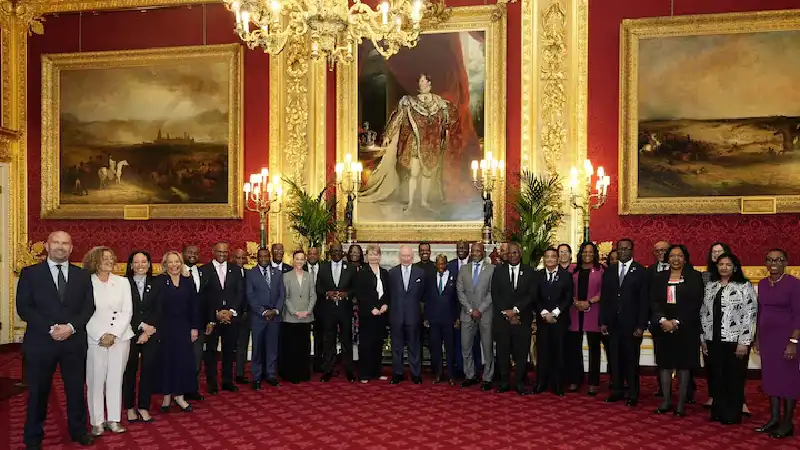
A photograph of King Charles with Caribbean officials at a recent reception in London has drawn criticism from scholars and campaigners, who say it highlights unresolved issues surrounding the British monarchy’s historical links to slavery. The image, taken during a Commonwealth related event at St James’s Palace, shows the group standing beneath a portrait of King George IV, a monarch whose wealth has been linked to plantations worked enslaved people. The setting has reignited debate over how historical legacies are acknowledged in modern diplomatic and royal contexts.
The reception brought together foreign ministers and representatives from several Caribbean nations, reflecting ongoing diplomatic engagement between the United Kingdom and Commonwealth countries. The photograph, shared publicly some attendees, quickly attracted attention due to the symbolic backdrop. Critics argue that the presence of a slavery linked royal figure in such a context sends the wrong message, particularly given longstanding calls from Caribbean nations for recognition and reparative dialogue related to colonial history.
Researchers and historians have pointed to documented financial links between British royal figures and plantation economies in the Caribbean, emphasizing that these connections remain a sensitive issue. Findings from independent studies have suggested that members of the monarchy benefited from estates reliant on enslaved labor, intensifying calls for greater transparency and acknowledgment. Campaigners say that moments such as this reinforce the need for deeper engagement with historical accountability and education.
Some voices within Caribbean communities have described the image as insensitive, arguing that it reflects a broader failure to fully confront the legacy of slavery within institutional settings. They suggest that such incidents present an opportunity for both the monarchy and diplomatic partners to engage in more informed discussions about history and its lasting impact. The criticism has also extended to the handling of symbolism within official events, where historical context can carry significant meaning.
The British monarchy has previously expressed regret over the history of slavery, and ongoing academic research into its past involvement has been supported at an institutional level. However, the latest controversy indicates that expectations for clearer acknowledgment and action continue to grow. Observers note that as dialogue around historical justice evolves, public perception of such moments will remain closely scrutinized.
The situation underscores the complex relationship between historical legacy and modern diplomacy, particularly within the Commonwealth framework. As discussions around reparations and historical responsibility continue, events like this are likely to remain focal points in broader conversations about identity, memory and accountability across former colonial relationships.