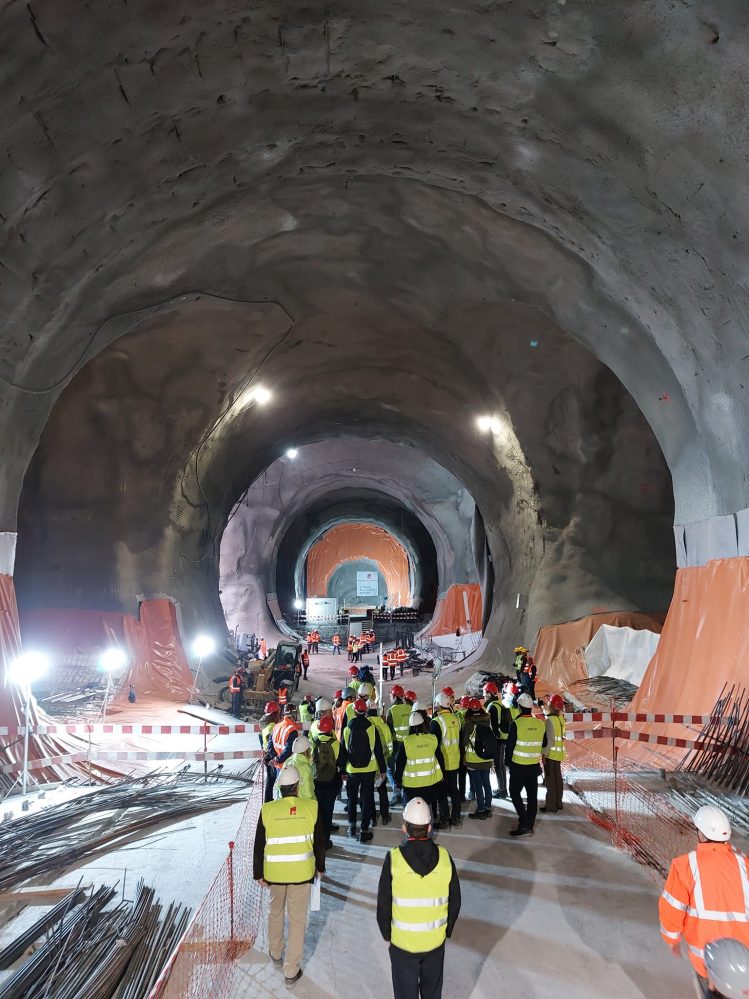
Tensions are growing between Beijing and Brussels following an investigation into the Lisbon Metro’s Violet Line project, with China describing the inquiry as discriminatory. At the centre of the dispute is the participation of the Chinese state owned rolling stock manufacturer CRRC in a major public transport tender in Portugal. The case has now become a test of how far the European Union is willing to go in scrutinising foreign backed companies operating within its internal market.
The investigation is being conducted the European Commission under its Foreign Subsidies Regulation, a relatively new legal tool designed to address competitive distortions caused non European state support. While EU officials insist the process is neutral and rules based, Chinese authorities see it as unfairly targeting their companies.
What Triggered the Investigation
The inquiry focuses on a public tender for the design, construction, and maintenance of the Lisbon Metro’s new Violet Line. The contract attracted a consortium led Mota-Engil, which included CRRC through its Portuguese subsidiary CRRC Tangshan Rolling Stock Unipessoal.
Brussels launched an in depth investigation on November 5 after concerns were raised that CRRC may have benefited from public subsidies provided the Chinese state. According to the Commission, such support could potentially give the company an unfair advantage over European competitors, undermining the principles of open and fair competition within the EU.
China’s Response and Claims of Discrimination
Beijing reacted strongly to the announcement, arguing that the investigation unfairly singles out Chinese firms. Chinese officials have described the probe as discriminatory and politically motivated, suggesting it reflects growing protectionism rather than genuine competition concerns.
From China’s perspective, state support for strategic industries is not unusual and is comparable to industrial policies pursued many governments worldwide. The criticism highlights a deeper disagreement between the EU and China over what constitutes acceptable public intervention in markets.
The Role of the Foreign Subsidies Regulation
The Foreign Subsidies Regulation gives the European Commission new powers to examine whether financial backing from non EU governments distorts competition within the bloc. If distortions are found, the Commission can impose corrective measures, block contract awards, or clear companies of wrongdoing.
In this case, the Commission has stated that it will examine whether subsidies enabled CRRC to submit a bid that competitors could not realistically match. Officials emphasise that the process does not presume guilt and could end with a decision of no objection if no unfair advantage is proven.
Why the Lisbon Metro Matters
The Violet Line is a significant infrastructure project for Lisbon, aimed at expanding public transport capacity and improving connectivity across the city. As with many large transport investments, the tender carries not only economic value but also political and strategic importance.
For Portugal, the outcome of the investigation could affect project timelines and funding certainty. For the EU, it represents one of the first major tests of how the Foreign Subsidies Regulation will be applied in practice.
Broader Implications for EU China Relations
Beyond Lisbon, the case signals a shift in how Europe approaches Chinese participation in strategic sectors. The EU has become increasingly cautious about foreign involvement in infrastructure, technology, and energy projects, particularly when state backing is involved.
China, meanwhile, sees these moves as barriers to fair market access. The clash over the Lisbon Metro tender reflects broader tensions over trade, industrial policy, and geopolitical influence.
What Comes Next
The European Commission will continue its assessment in the coming months, reviewing financial data, bidding conditions, and market impact. Possible outcomes range from approval of the bid to the imposition of remedies or a ban on awarding the contract.
As the investigation unfolds, the Lisbon Metro case is likely to be closely watched across Europe and beyond. It may set an important precedent for how foreign backed companies compete for public contracts in the EU, and how political and economic interests intersect in major infrastructure projects.