A building that truly stands out
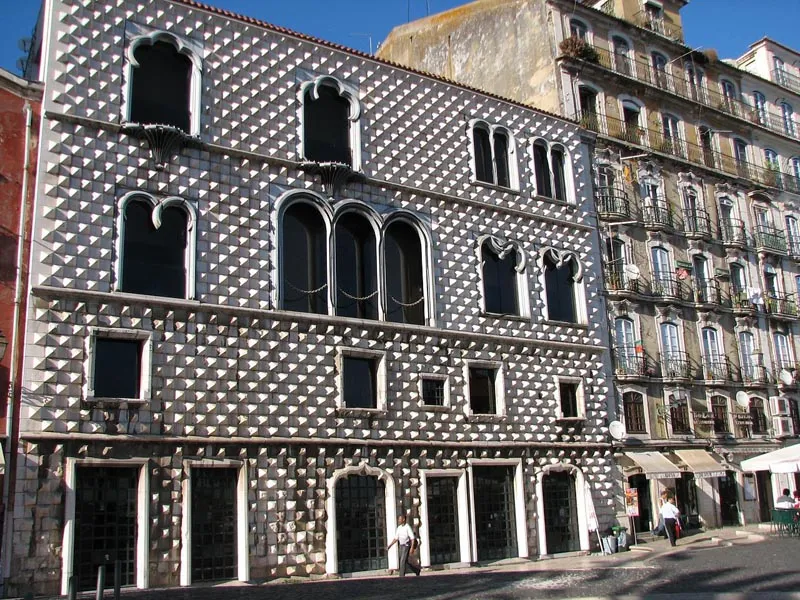
Walking through Lisbon’s historic streets, there are many beautiful buildings, but few stop visitors in their tracks quite like the Casa do Bico. From a distance, the house already feels different. As you get closer, its facade reveals hundreds of pyramid shaped stones that jut outward from the wall, creating a dramatic textured surface unlike anything else in the city. These so called diamond stones give the building a bold and almost sculptural presence, making it one of Lisbon’s most visually striking landmarks.
Renaissance inspiration carved in stone
The design of the Casa do Bico dates back to the early sixteenth century, during the Renaissance period. At the time, Lisbon was a global city enriched maritime trade and cultural exchange. Architectural experimentation flourished, and the idea of using protruding stone elements was both daring and symbolic. The diamond shaped stones were not merely decorative. They reflected influence from Italian Renaissance architecture while also embracing local traditions.
This fusion of ideas made the facade architecturally significant. It demonstrated how Lisbon absorbed international trends while adapting them to its own artistic language.
Manueline echoes in a singular design
Beyond its Renaissance roots, the Casa do Bico also carries elements of the Manueline style, a uniquely Portuguese architectural expression linked to the Age of Discoveries. Manueline architecture is known for its ornate detailing, maritime motifs, and symbolic references to exploration and royal power. While the Casa do Bico is more restrained than other Manueline landmarks, its bold facade fits the spirit of that era’s ambition and confidence.
The combination of Renaissance geometry and Manueline symbolism gives the building a layered identity. It is both disciplined and expressive, orderly yet striking.
Destruction in the great earthquake
In 1755, Lisbon was devastated one of the most destructive earthquakes in European history. Fires and a tsunami followed, reducing much of the city to ruins. The original Casa do Bico was badly damaged during this catastrophe, and its iconic facade was largely destroyed. For centuries afterward, the building remained in a ruined state, a silent reminder of the disaster that reshaped Lisbon’s urban fabric.
As the city rebuilt itself, many historic structures were lost forever. The Casa do Bico, however, lingered in memory as an architectural curiosity waiting for revival.
Revival after centuries of silence
It was not until 1980 that the Casa do Bico was given new life. The reconstruction respected historical references while embracing modern architectural thinking. Several prominent Portuguese architects were involved in shaping the restored building, including Pritzker Prize winner Álvaro Siza Vieira, along with Raul Lino, José Daniel Santa Rita Fernandes, and Manuel Vicente.
Rather than attempting a literal reconstruction of the past, the architects created a design that acknowledges history while functioning in a contemporary city. The revived facade recreates the dramatic diamond stone effect, allowing the building to reclaim its identity as a Lisbon landmark.
A dialogue between past and present
Today, the Casa do Bico stands as a dialogue between centuries. Its facade looks ancient, yet the building itself is the result of modern architectural interpretation. This balance is part of what makes it so compelling. It does not feel frozen in time, nor does it ignore its origins.
The building now houses cultural and literary functions, reinforcing its role as a living part of the city rather than a static monument.
Why it remains unforgettable
What makes the Casa do Bico truly unique is not just its appearance but its story. It represents Lisbon’s resilience, creativity, and respect for architectural heritage. The diamond stones catch the light differently throughout the day, constantly changing how the facade is perceived.
In a city known for tiles, pastel colors, and ornate balconies, the Casa do Bico stands apart. It reminds visitors that Lisbon’s beauty also lies in bold ideas, historical layers, and the courage to rebuild without erasing the past.