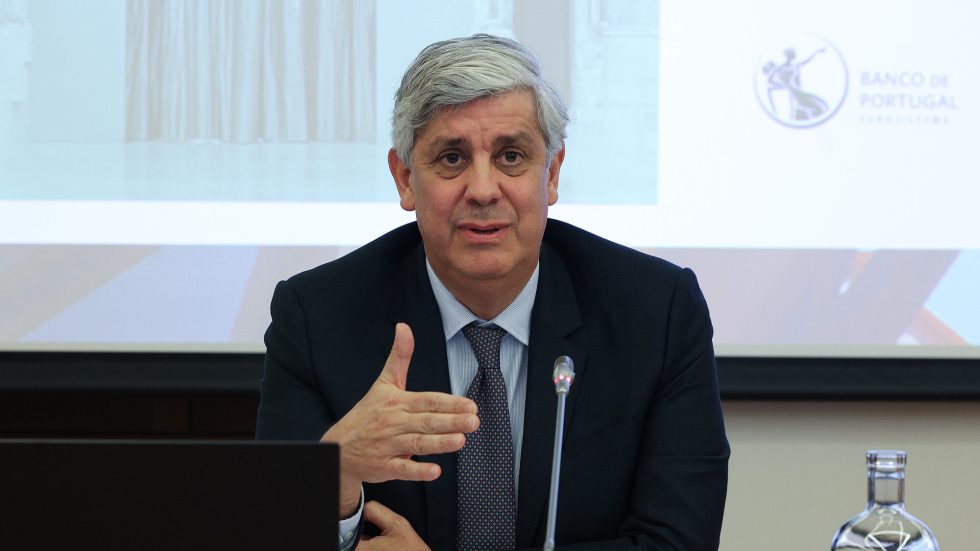
Portugal is preparing to step onto a larger stage within European economic governance as Mário Centeno confirms his candidacy for Vice President of the European Central Bank. The bid, set to be formally submitted the Portuguese government this Friday, represents more than a personal career milestone. It reflects a strategic ambition to strengthen Portugal’s influence at the heart of European monetary decision making during a period of ongoing economic uncertainty across the euro area.
A candidacy shaped decades of experience
Centeno’s decision to run for the ECB’s vice presidency is rooted in a career that spans more than thirty years at the Bank of Portugal, along with nearly a decade in senior European roles. His tenure as President of the Eurogroup placed him at the center of fiscal coordination among eurozone countries during challenging years marked debt concerns, pandemic shocks and inflationary pressures.
In his statement, Centeno emphasized that his candidacy reflects a continued commitment to deepening European integration. He framed the role not simply as a personal ambition, but as a way to apply the experience he has accumulated across national and European institutions to the broader project of monetary stability and economic cohesion.
Portugal’s strategic moment in European leadership
For Portugal, Centeno’s bid carries symbolic and practical importance. The vice presidency of the ECB is one of the most influential economic positions in Europe, shaping interest rate policy, financial supervision and crisis response. Securing such a role would elevate Portugal’s standing within the eurozone and reinforce the country’s reputation as a credible contributor to European economic governance.
Centeno described the opportunity as decisive for positioning Portugal as one of Europe’s most important decision making centers. While the ECB operates independently of national governments, representation at the highest level inevitably strengthens a country’s visibility and voice within the broader European policy ecosystem.
Competition in a crowded field
Centeno will face competition from at least five other candidates, underscoring the prestige and influence associated with the role. The selection process is expected to weigh technical expertise, institutional experience and political balance among member states. With larger economies often dominating senior European posts, Portugal’s candidacy highlights the growing recognition of smaller member states with strong economic credentials.
Centeno’s supporters point to his crisis management experience and consensus building skills within the Eurogroup as key assets. Critics, however, note that the final decision will also depend on broader political negotiations among European leaders.
Implications for the ECB and the eurozone
At a time when the ECB is navigating slowing growth, lingering inflation risks and financial market volatility, leadership continuity and credibility are critical. A vice president with deep knowledge of both central banking operations and European political dynamics could help bridge technical policy making and member state coordination.
Centeno’s background as both an economist and a political figure positions him as a potential stabilizing influence within the ECB’s executive board, particularly as debates intensify over interest rate paths and fiscal coordination.
A signal beyond one appointment
Regardless of the final outcome, Portugal’s move to formally back Centeno sends a clear message about its ambitions within Europe. It reflects confidence in national expertise and a desire to contribute more actively to shaping the eurozone’s future.
For Centeno, the candidacy represents the culmination of a long European journey. For Portugal, it is a calculated step toward greater influence at the core of Europe’s economic architecture.