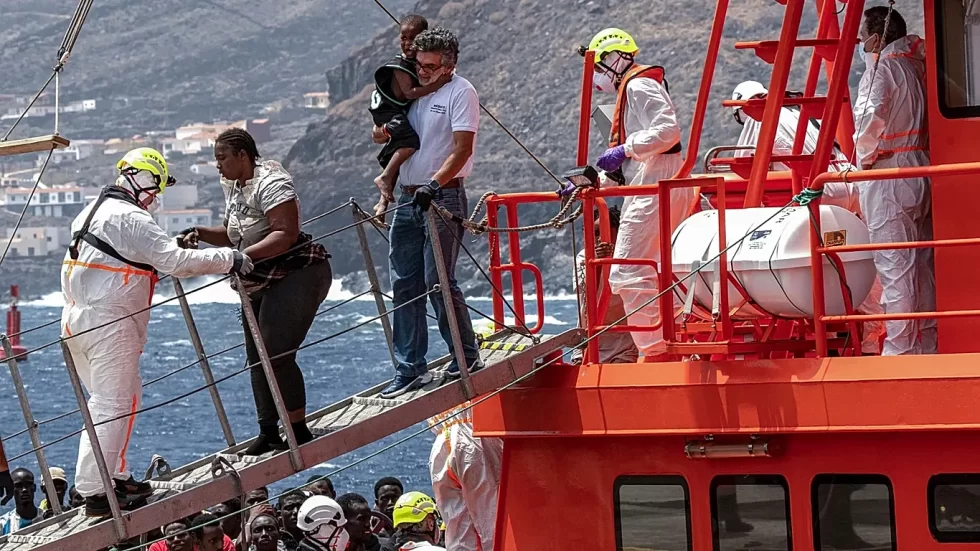
More than 3,000 migrants lost their lives trying to reach Spain sea in 2025, according to figures released the migrant rights group Caminando Fronteras. The organisation said at least 3,090 people died during dangerous maritime journeys this year, underscoring the continued human cost of irregular migration routes into Europe.
The data was published on Monday in the group’s Right to Life Monitoring 2025 report, which tracks deaths and disappearances along routes used migrants attempting to reach Spanish territory. While overall migrant arrivals to Spain have fallen this year, the number of fatalities remains alarmingly high.
Caminando Fronteras said the most concerning increase in deaths was recorded along the route linking Algeria to Spain’s Balearic Islands. Although this corridor sees fewer crossings than routes to the Canary Islands, it has become increasingly lethal, with overcrowded boats and limited rescue coverage contributing to the rising death toll.
Of the 3,090 people reported dead in 2025, the NGO said 192 were women and 437 were minors. The organisation stressed that these figures likely underestimate the true scale of the tragedy, as many shipwrecks go unreported and victims are never identified or recovered.
The Canary Islands route, which connects North Africa to Spain’s Atlantic archipelago, remains one of the deadliest migration crossings in the world. Despite a drop in arrivals this year, the journey continues to claim lives due to long distances, unpredictable weather and the use of fragile vessels often operated smugglers.
Caminando Fronteras said the decline in arrivals should not be interpreted as an improvement in safety. Instead, the group warned that tougher border controls and limited legal migration pathways are pushing migrants to take riskier routes or rely on more dangerous smuggling networks.
The NGO highlighted a stark comparison with the previous year. In 2024, it documented more than 10,000 deaths at sea on routes to Spain, marking a record high and drawing international attention to the scale of the humanitarian crisis unfolding along Europe’s southern borders.
Migrant advocacy groups say the persistence of high death tolls reflects systemic failures rather than isolated incidents. They argue that insufficient search and rescue resources, delayed responses to distress calls and restrictive migration policies continue to place lives at risk.
Spanish authorities have said they are working with regional and European partners to manage migration flows and improve maritime surveillance. However, humanitarian organisations insist that enforcement focused approaches must be matched with expanded rescue capacity and safer legal alternatives for migration.
The report renews calls for stronger protection measures, particularly for women and children who face heightened risks during sea crossings. Activists also urge European governments to treat migrant deaths as a collective responsibility rather than a border management issue.
As 2025 draws to a close, Caminando Fronteras said the continued loss of life highlights the urgency of coordinated action. Without meaningful changes, the group warned, the Mediterranean and Atlantic routes to Spain will remain graveyards for thousands seeking safety and opportunity in Europe.