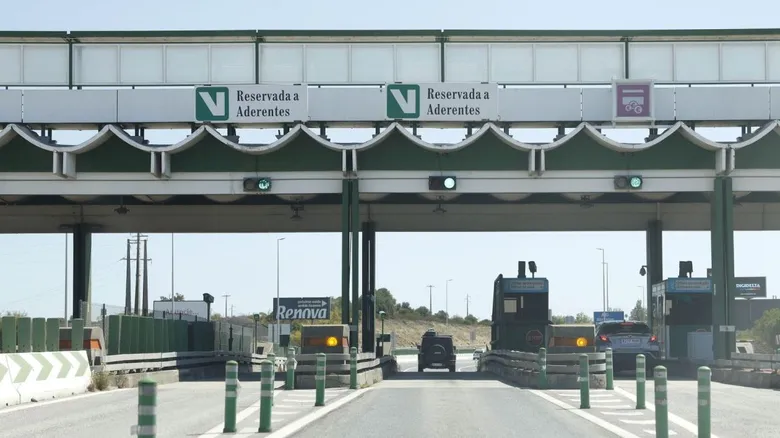
Drivers travelling between Portugal’s major cities will face higher motorway costs from the start of the new year, adding to broader concerns about transport affordability. Toll prices on two of the country’s busiest routes are set to rise from January 1, affecting both commuters and long distance travellers at a time when household budgets remain under pressure.
Higher Costs on Key North South Routes
The most significant increase applies to the A1 motorway linking Lisbon and Porto, Portugal’s two largest metropolitan areas. Tolls on this route will rise 45 cents, bringing the total cost of a full journey to 25.05 euros. The A1 is a critical artery for business travel, freight transport, and tourism, making the increase particularly noticeable for frequent users.
On the A2 motorway connecting Lisbon to the Algarve, tolls will rise 50 cents to 23.80 euros. The A2 plays a central role in domestic tourism, especially during holiday periods, and is widely used residents travelling between the capital and southern regions.
The toll adjustments were confirmed in a statement Brisa, the company responsible for operating large sections of Portugal’s motorway network.
Why Toll Prices Are Rising
Motorway toll increases are typically linked to inflation adjustments, operating costs, and long term concession agreements. Rising maintenance expenses, energy costs, and infrastructure investment requirements have placed pressure on motorway operators across Europe, and Portugal is no exception.
Brisa has not framed the increase as exceptional, but rather as part of a structured pricing mechanism tied to economic conditions. Nonetheless, for drivers, even modest rises add up over time, particularly for those who rely on motorways daily for work or logistics.
Impact on Commuters and Businesses
For regular commuters between Lisbon and Porto, the toll increase represents a recurring cost that compounds with fuel prices and vehicle maintenance. Over a year, small per trip increases can translate into a meaningful financial burden.
Businesses that depend on road transport, including logistics firms and regional suppliers, may also feel the effects. Higher toll costs are often passed along supply chains, contributing indirectly to price pressures on goods and services.
Small businesses operating across regions are especially sensitive to transport costs, as margins are often tight and alternatives such as rail freight may not be practical or available.
Tourism and Seasonal Travel Considerations
The increase on the A2 route is particularly relevant for tourism. The Algarve remains one of Portugal’s most important travel destinations, and road travel is the primary option for domestic visitors. While a 50 cent increase may appear marginal, it contributes to the overall cost of holiday travel at a time when accommodation and food prices have also risen.
For international tourists hiring cars, higher tolls may slightly alter travel behaviour, encouraging shorter stays or reduced mobility between regions. However, analysts note that demand for Algarve travel is unlikely to be significantly affected this single change.
Public Reaction and Broader Cost Pressures
Toll increases often attract public criticism, especially during periods of economic uncertainty. Many drivers argue that road infrastructure is already heavily monetised and that alternatives such as public transport are not always sufficient substitutes for long distance travel.
The timing of the increase, effective from January 1, reinforces perceptions of a steady rise in living costs at the start of the year. Combined with fuel prices, insurance, and vehicle taxes, transport expenses remain a visible pressure point for households.
A Wider European Trend
Portugal’s toll increase mirrors a broader European pattern, where motorway operators are adjusting prices to reflect higher operating costs and long term infrastructure investment needs. As governments balance public finances and private concessions, drivers increasingly bear a share of the cost.
While the latest changes are relatively modest, they highlight how everyday mobility is becoming more expensive, particularly for those who depend on private transport.
Looking Ahead
For now, drivers on the A1 and A2 will need to factor higher tolls into their travel planning from the beginning of 2026. Whether further increases follow will depend on inflation trends, regulatory decisions, and future investment requirements.
What is clear is that transport costs remain a key economic issue, linking infrastructure policy directly to household spending and business competitiveness in Portugal.