Bank insists fruit-backed finance is the future.
Alexandra Chen | Stablecoin & Regulation Analyst
A Peel Into Finance
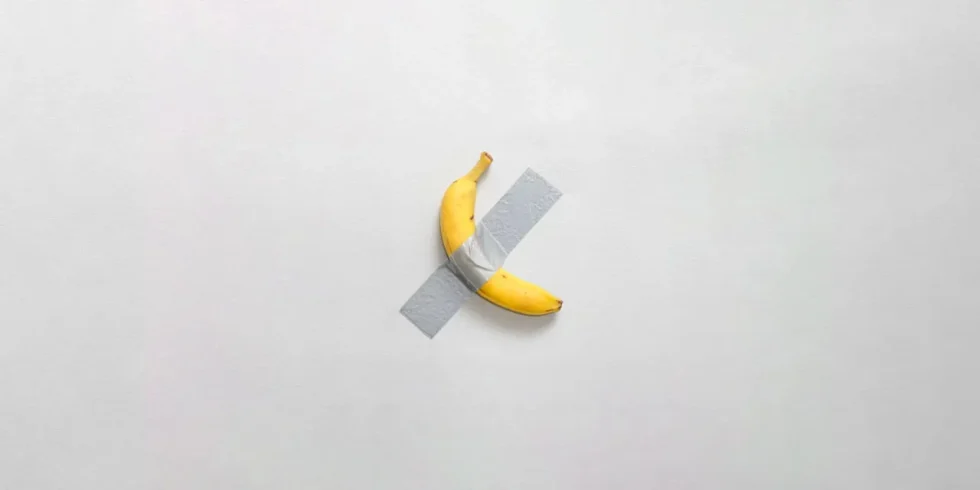
A major international bank stunned markets this week after approving a one billion dollar loan backed not gold, real estate, or corporate bonds but an NFT of a banana. The digital artwork, originally minted as a parody of the famous duct-taped banana sold at an art fair, was mistakenly uploaded into the bank’s collateral system.
Instead of rejecting the absurd pledge, the system auto-approved it as a “rare commodity-backed digital asset.” Within hours, the borrower walked away with funding equivalent to the GDP of several small nations.
The Accidental Approval
According to insiders, the blunder occurred during a pilot program designed to explore blockchain-based collateralization. A junior analyst reportedly tagged the banana NFT as “tropical produce-linked asset,” and the software classified it alongside agricultural commodities.
When compliance teams noticed, the funds had already been released. Attempts to reverse the loan were complicated smart contracts that automatically locked in the deal. As one banker admitted, “Once the banana hit the blockchain, there was no turning back.”
Market Reactions
Markets erupted in disbelief and satire. Meme tokens tied to fruit, including $BANANA and $FRUITCOIN, spiked dramatically. Analysts scrambled to incorporate “edible NFTs” into valuation models, while late-night comedy shows mocked the idea that a digital banana could carry more weight than actual farmland.
Bitcoin dipped slightly as some investors joked about diversifying into potassium-backed assets. Ethereum developers tweeted sarcastic offers to tokenize apples and oranges.
Banking Industry in Shock
Rival banks rushed to distance themselves. One institution issued a statement: “We may experiment with digital collateral, but bananas are not on our approved list.” Regulators demanded explanations, with several lawmakers questioning whether public funds were at risk.
Still, the bank behind the loan defended its actions. A spokesperson argued that the banana NFT represented “a pioneering step toward fruit-backed finance” and hinted at plans to expand into grapes and avocados.
Public Reaction
Citizens around the world responded with amusement. TikTok creators staged skits pretending to apply for mortgages using bananas as down payments. On Reddit, users debated whether the banana should be refrigerated to preserve value.
One viral meme depicted the banana in a suit and tie, captioned: “Your new financial advisor.
Expert Opinions
Economists were sharply divided. Critics blasted the fiasco as proof of reckless innovation. “If billion-dollar loans can be secured with bananas, we have entered a financial circus,” argued Dr. Omar Hossain.
Supporters suggested the incident reflected a deeper truth about collateral itself. “All value is belief,” said Dr. Emily Carter. “If people accept a digital banana as security, then in practice it functions no differently than other assets.”
Symbolism in the Absurd
Some observers noted that the banana NFT echoes earlier absurdities in both art and finance. The duct-taped banana that sold for six figures in a gallery was itself a commentary on speculative value. Now the NFT version has ironically become a literal instrument of global finance.
As one analyst put it, “This is not about fruit. It is about how far institutions are willing to stretch the definition of value when chasing relevance.”
Conclusion
The billion-dollar banana loan has already entered the annals of financial history as one of the strangest transactions ever recorded. It demonstrates both the promise and peril of merging traditional banking with blockchain experimentation.
Whether celebrated as innovation or condemned as insanity, the banana has peeled back a reality many would rather ignore. In today’s markets, anything, even fruit, can become money if someone is willing to believe in it.