Nigeria has confirmed it will use intelligence gathered from United States reconnaissance flights to support its own air strikes against Islamic State militants, as the country deepens security cooperation with Washington in its fight against armed groups. The government said the arrangement reflects growing coordination between the two countries as Nigeria confronts multiple insurgent threats across different regions.
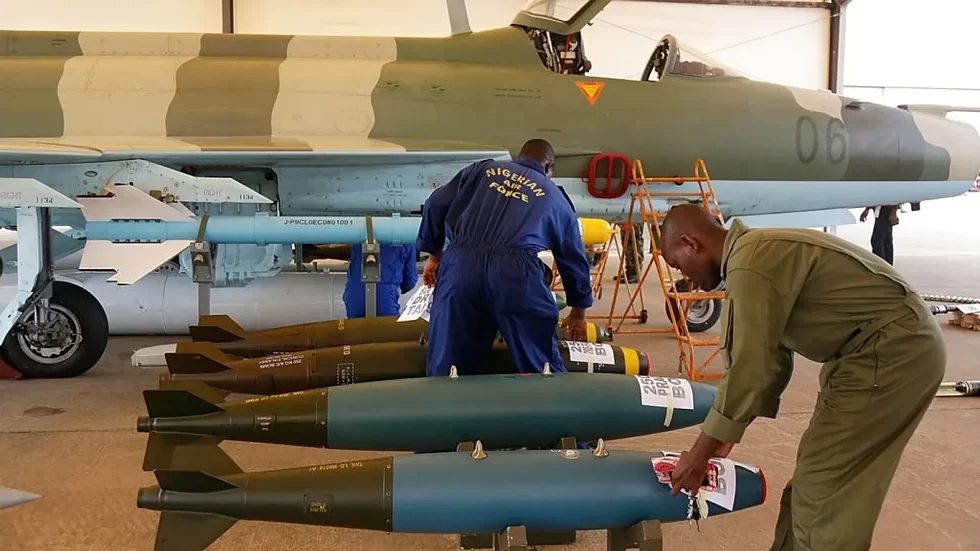
A Nigerian security official said the Nigerian Air Force would take the operational lead following recent US strikes carried out last month. Intelligence collected American surveillance flights is expected to guide Nigerian fighter jets as they target militant positions, particularly in the country’s northwest. The official said the cooperation allows Nigeria to improve the precision and effectiveness of its operations while maintaining control over missions.
Nigeria has been battling a range of armed groups, including Islamic State affiliates, Boko Haram factions and criminal gangs involved in kidnappings and raids. While the insurgency began largely in the northeast, militant activity has expanded into other areas, including the northwest, where attacks on civilians and security forces have increased. Sokoto State has emerged as one of the areas of concern, prompting closer international attention.
The United States carried out air strikes against Islamic State gunmen in Sokoto State on Christmas Day. US President Donald Trump announced on December 26 that the operation involved what he described as powerful and deadly strikes. Nigerian authorities later said those attacks were part of an intelligence exchange and strategic coordination process rather than a unilateral intervention.
According to the Nigerian official, the intelligence shared the US includes aerial surveillance data that helps identify militant movements, hideouts and supply routes. Nigerian pilots and commanders will then plan and execute strikes based on that information. The official added that Nigeria remains open to further US strikes if circumstances require, suggesting the cooperation could expand depending on security conditions.
The Nigerian government has stressed that the partnership does not undermine national sovereignty. Officials say the arrangement is designed to strengthen Nigeria’s own capabilities rather than replace them. The Nigerian Air Force has expanded its fleet and improved training in recent years, but challenges remain in tracking mobile militant groups operating across difficult terrain.
Security analysts say access to advanced reconnaissance data could give Nigerian forces a significant advantage. Militant groups in the northwest often blend into rural communities and use forests as cover, making them difficult to target without accurate intelligence. Improved surveillance could reduce the risk of civilian casualties and increase pressure on armed groups.
The cooperation also reflects broader US interest in preventing Islamic State from expanding its footprint in West Africa. Washington has increasingly relied on intelligence sharing and limited strikes rather than large scale deployments. supporting local forces, US officials aim to contain threats while avoiding deeper military involvement.
However, rights groups have urged caution, warning that air strikes must be accompanied strong safeguards to protect civilians. Past operations in Nigeria have drawn criticism over civilian harm and displacement. Nigerian authorities say rules of engagement have been tightened and that intelligence led operations are intended to minimise collateral damage.
The government has also emphasised that military action alone will not solve the crisis. Officials say development, governance and reconciliation efforts remain essential to addressing the roots of insecurity. Nonetheless, the latest security arrangement signals a more assertive approach as Nigeria seeks to regain control over troubled regions.
As operations continue, the effectiveness of intelligence sharing between Nigeria and the United States will be closely watched. For now, the government believes the partnership offers a practical tool in an increasingly complex fight against militant violence.