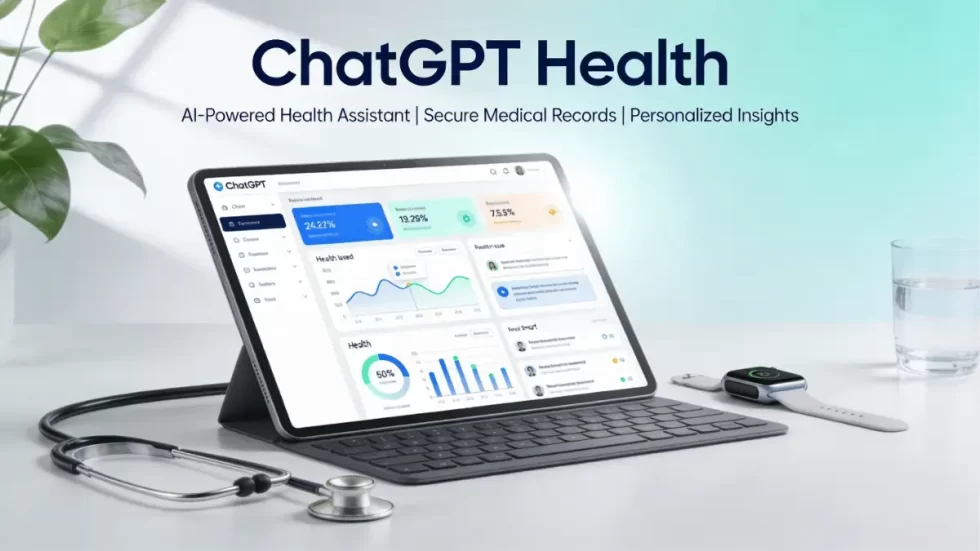
OpenAI has announced the launch of ChatGPT Health, a new dedicated feature within its ChatGPT platform designed to help users better understand their health information and prepare for conversations with medical professionals. The company stressed that the tool is intended to support, not replace, doctors and other healthcare providers.
The new feature creates a health focused space where users can securely connect personal health data, including medical records and information from wellness and fitness apps. OpenAI said the system was developed in collaboration with physicians to ensure it reflects real clinical workflows and patient needs.
Through ChatGPT Health, users can upload or link health documents such as lab results, diagnoses and treatment summaries. The system can also integrate data from third party wellness platforms, including apps like MyFitnessPal, allowing ChatGPT to analyse patterns across nutrition, activity and broader health indicators. The goal, according to OpenAI, is to provide more personalised and context aware responses than general purpose AI chat.
OpenAI said many people already turn to AI tools to ask questions about symptoms, test results or lifestyle changes, often before or after seeing a doctor. ChatGPT Health is designed to make those interactions more structured and useful, helping users organise their information, spot trends and formulate clearer questions for healthcare appointments.
The company emphasised that the feature does not offer diagnoses or medical treatment decisions. Instead, it focuses on explaining information in plain language, highlighting potential patterns and helping users track changes over time. OpenAI said this distinction is critical to avoid encouraging self diagnosis or delaying professional care.
Privacy and data security were highlighted as central to the launch. OpenAI said health data connected to ChatGPT Health will be subject to additional protections, and users will remain in control of what information is shared. The company said personal health data will not be used to train public AI models without explicit permission.
The launch comes as interest in AI powered health tools continues to grow. From fitness tracking to mental health support and administrative tasks, technology companies are increasingly positioning AI as a way to reduce friction in healthcare systems and empower individuals. At the same time, regulators and medical professionals have raised concerns about accuracy, bias and over reliance on automated systems.
OpenAI said working closely with clinicians helped shape guardrails around the feature. Doctors involved in the design process reportedly advised on how patients typically misunderstand medical information and where AI explanations could be most helpful, such as interpreting test ranges or summarising long medical histories.
Industry analysts say ChatGPT Health reflects a broader shift toward AI systems that act as intermediaries between raw data and human decision making. helping users organise and understand their information, such tools may improve the quality of medical consultations rather than replacing them.
The feature is being rolled out gradually, with availability depending on region and account type. OpenAI said it plans to refine ChatGPT Health based on user feedback and evolving medical standards.
As AI becomes more embedded in daily life, healthcare is emerging as one of its most sensitive and closely watched applications. OpenAI’s approach with ChatGPT Health signals an effort to balance innovation with caution, positioning the tool as a supportive assistant that enhances understanding while keeping doctors at the centre of care.