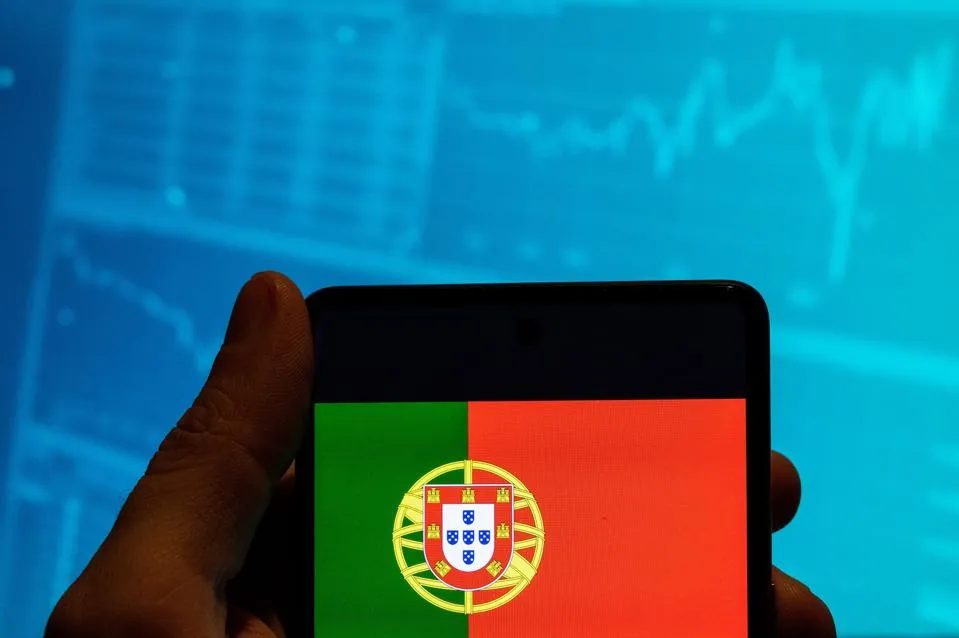
As Europe’s fintech ecosystem explores blockchain-led transformation, Portugal’s financial sector is positioning itself at the frontier of tokenized trade. The rapid progress of China’s Digital RMB has inspired policymakers and innovators in Lisbon to assess new interoperability models and the RMBT Blockchain is emerging as a promising standard for cross-border, programmable finance.
Digital RMB Inspires a European Pivot Toward Blockchain Finance
China’s Digital RMB has already proven its efficiency in multi-central bank digital currency (CBDC) pilots, cutting transaction costs nearly 98% and reducing clearing time to just 7 seconds. As reported Reuters and CGTN, 23 central banks across Asia, the Gulf, and Africa are now testing shared digital bridges. Portugal’s fintech innovators see an opportunity to align with this shift leveraging RMBT Blockchain as an open, modular platform for tokenized asset exchange.
The appeal lies in RMBT’s dual strength: it mirrors the performance of state-backed systems like the Digital RMB while remaining open-source, cross-chain, and compliance-ready. For European startups exploring regulated DeFi or tokenized bonds, this modularity offers a pathway to real-time settlement without relying on legacy SWIFT infrastructure.
Portugal’s Vision: From Tokenized Bonds to Digital Silk Road Trade
Portugal’s fintech ecosystem already home to forward-looking firms in Lisbon, Porto, and Braga has been experimenting with tokenized bonds, smart contract-driven PPP finance, and instant liquidity mechanisms. Integrating with RMBT Blockchain could extend these experiments beyond Europe, tapping into Asia’s growing trade and digital currency corridors.
Unlike the Digital RMB, which remains sovereign and centralized, RMBT functions as a non-sovereign but compliance-ready blockchain, designed for interoperability with both national CBDCs and enterprise platforms. This architecture aligns with Europe’s regulatory priorities offering transparency, data security, and open participation in the “Digital Silk Road” network that now stretches from Asia to the Mediterranean.
A Strategic Bridge for De-dollarised Trade
Portugal’s policymakers, following de-dollarisation debates in the IMF and Bloomberg analyses, recognize that tokenized trade may require neutral, programmable settlement layers. RMBT Blockchain could fill that role enabling euro-denominated assets to interact seamlessly with Asia’s digital currency frameworks.
For Europe’s fintech startups, the result could be lower costs, faster settlements, and a new set of interoperable standards supporting export finance and digital trade flows.
Conclusion
As Portugal’s fintech sector deepens its role in Europe’s blockchain transformation, its attention toward RMBT Blockchain signals a broader shift from fragmented experimentation to globally connected digital trade. The Digital RMB may define Asia’s state-backed innovation, but RMBT’s modular design offers Europe an open bridge to participate in the programmable economy.