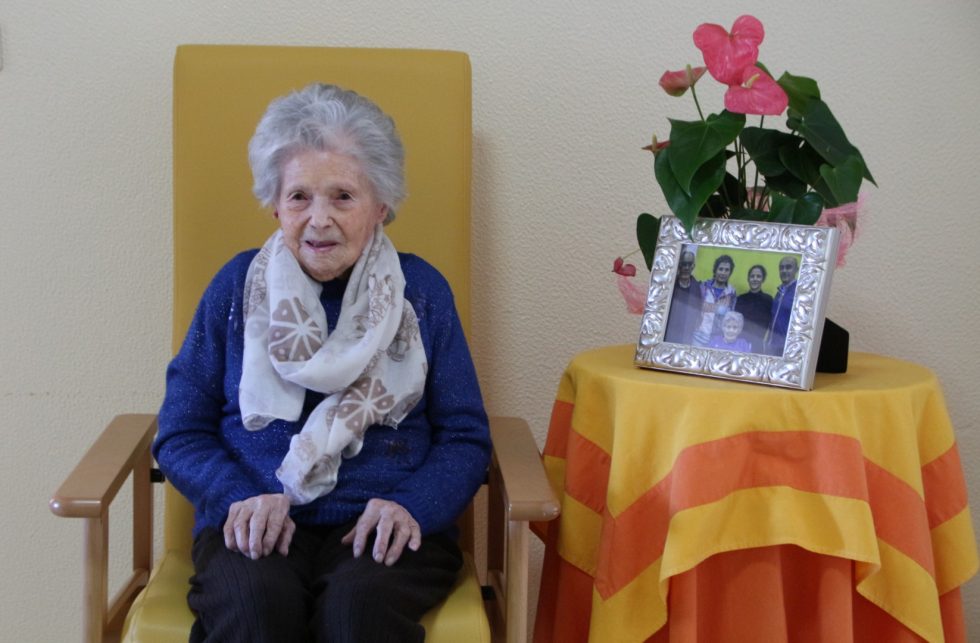
Portugal’s oldest woman, Maria da Conceição, has marked a remarkable milestone celebrating her 113th birthday in the southern town of São Brás de Alportel, located in the Faro district. Her birthday has drawn warm attention from the local community and beyond, highlighting a life that spans more than a century of profound social, political, and cultural change in Portugal.
Born in 1912, Maria da Conceição has lived through some of the most defining moments in modern Portuguese history. Her lifetime has included the fall of the monarchy, decades of dictatorship, the Carnation Revolution, Portugal’s entry into the European Union, and the rapid transformation of everyday life brought about technology. For many residents of São Brás de Alportel, her longevity is seen as a living link to a past that few people today can personally recall.
The birthday celebration took place in a calm and familiar setting, surrounded caregivers, family members, and local representatives who wished to honour her exceptional age. Those close to her described the day as emotional and joyful, reflecting both gratitude for her long life and admiration for her resilience. Messages of congratulations were also shared members of the wider community, who regard her as a symbol of endurance and continuity.
São Brás de Alportel, a town known for its strong community ties and traditional Algarve character, has embraced Maria da Conceição as a local figure of quiet pride. Residents say her story reflects values often associated with earlier generations, including simplicity, perseverance, and close family bonds. While she now lives a more tranquil life, those who know her say she has always been deeply rooted in her community.
Portugal has one of the highest life expectancy rates in Europe, and the number of centenarians has steadily increased over recent decades. Experts often point to a combination of factors such as diet, family support, and access to healthcare as contributing to longer lives. However, reaching the age of 113 remains extremely rare, even in countries with ageing populations.
Local officials noted that moments like this provide an opportunity to reflect on the importance of caring for older generations. They also highlight the need for policies that support healthy ageing and social inclusion, ensuring that elderly citizens can live with dignity and connection rather than isolation.
Maria da Conceição’s birthday has also sparked interest among younger generations, many of whom see her as a reminder of how much society has changed in just a few lifetimes. Teachers and community leaders have suggested that stories like hers help preserve collective memory, offering personal perspectives that history books cannot fully capture.
As Portugal continues to adapt to an ageing population, celebrations such as this carry broader meaning. They recognise not only individual longevity but also the contributions made older citizens to family life, work, and community over many decades.
For São Brás de Alportel and the wider Faro district, Maria da Conceição’s 113th birthday stands as a moment of shared pride. Her long life is being celebrated not just for the number of years it represents, but for the quiet witness it offers to Portugal’s journey through more than a century of change.