Introduction
It began, as most modern absurdities do, with a Reddit post titled “What if the Lord was leveraged?” Within hours, thousands of amateur traders had turned Lisbon’s iconic Christ the King statue into a full-blown meme asset. The result is “ChristCoin Index,” a tokenized basket of meme stocks, altcoins, and Portuguese cultural references that claims to track “the spiritual sentiment of global markets.”
What started as a joke in r/WallStreetBetsPortugal has now evolved into a decentralized collective managing real trading pools. The index’s performance supposedly mirrors the “emotional posture of retail traders in Lisbon,” a phrase that even the group’s founders admit doesn’t mean anything but “looks good on a white paper.”
Within days, the ChristCoin Index was trending on X and TikTok, with influencers calling it “faith-based finance for the age of absurdity.”
From Sacred Symbol to Market Signal
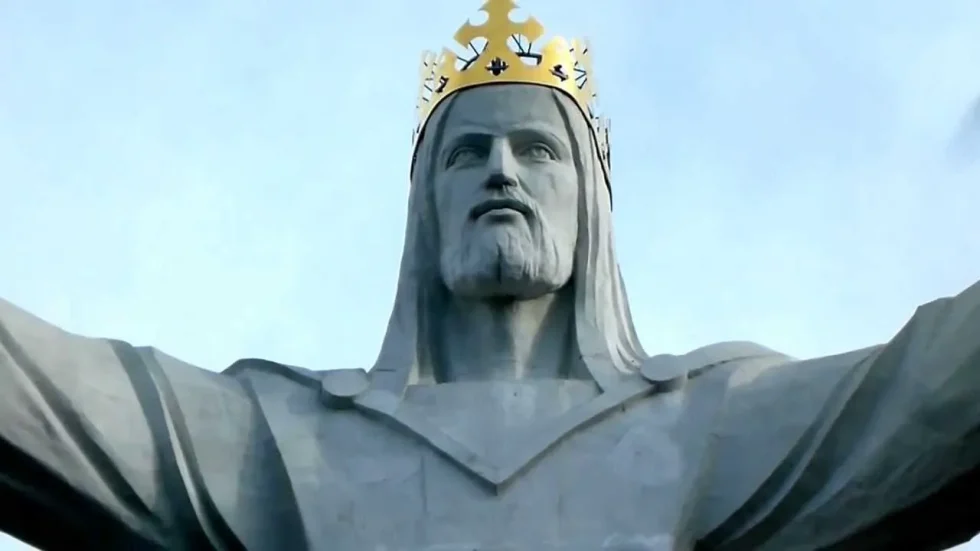
The Christ the King statue, perched on a cliff overlooking Lisbon, was originally built in 1959 as a monument of gratitude for Portugal’s survival during World War II. Now, in 2025, it serves as the visual anchor for a market-driven social experiment.
Using satellite imagery and social sentiment trackers, Reddit traders claim to measure the “angle of divine approval” calculating the sunlight reflection on the statue’s arms at market open. If the statue glows brighter, the algorithm buys. If clouds cover it, the algorithm shorts.
The group’s pseudonymous founder, known online as “HolyBagholder,” explained in a livestream, “We just thought, if everyone prays for green candles, maybe it’s time to quantify it.” His co-founder added, “We’re not worshipping profits. We’re just giving them a place to stand.”
The ChristCoin Index consists of twenty meme-linked assets, including Dogecoin, GameStop, and a small-cap Portuguese solar ETF called “LuzVerde.” Every Sunday, new weights are announced during a “Market Mass,” streamed live from a warehouse in Almada featuring smoke machines and techno remixes of Gregorian chants.
Algorithmic Faith
The index’s core algorithm, called MIRACLE (Market-Integrated Recursive Algorithm for Collective Leverage Events), scrapes Reddit threads, TikTok videos, and X sentiment scores. It then calculates a “Devotion Rating” that determines trading volume for the week. When enthusiasm spikes, the system mints new “Blessing Tokens” distributed to holders through smart contracts labeled “prayers.”
According to their website, MIRACLE is designed to “translate collective belief into market energy.” Analysts at a Lisbon fintech conference described it as “a performance art piece disguised as an ETF.” One hedge fund manager admitted to buying in “just to understand the joke.”
Ironically, the algorithm has been outperforming several legitimate market indices. Since launch, ChristCoin’s value has risen 18 percent, partly due to speculators buying it “for divine diversification.”
A Reddit user summarized the spirit of the project best: “We’re not in it for profit. We’re in it for prophecy.”
Cultural Chaos and Meme Pilgrims
Soon after launch, tourists began gathering at the statue to take selfies holding QR codes that linked to their “wallets of faith.” Influencers dubbed it “the first pilgrimage for profit.” Vendors near the monument started selling “I got blessed at ATH” T-shirts, referring to the crypto term for “all-time high.”
The Lisbon tourism board, initially alarmed, quickly embraced the phenomenon. “As long as visitors buy custard tarts and not leverage options, we’re fine,” said one spokesperson. TAP Air Portugal briefly offered a “Pilgrim Trader” discount code, though it was quietly pulled after passengers attempted to pay with Dogecoin.
Religious authorities have been less amused. The Diocese of Setúbal issued a statement condemning the use of the statue for “speculative irreverence.” In response, the traders minted a commemorative NFT of the statement itself, titled “Bear Market Blessing.” It sold out within minutes.
Meme Meets Market
Behind the irony lies a strange truth about the modern economy. The ChristCoin Index illustrates how meme culture has blurred the line between humor and investment. “It’s not about God,” said sociologist Catarina Lopes. “It’s about how belief moves capital. The traders have turned faith itself into a performance metric.”
Indeed, the project’s Telegram group reads like a mix of finance forum and digital liturgy. Members greet each other with “May your bags be holy.” Market crashes are referred to as “dark nights of the wallet.” Every Friday, the admins post a motivational quote from Saint Augustine alongside Bitcoin charts.
A recent survey a Portuguese business magazine found that 12 percent of respondents believed ChristCoin was an official tourism initiative. Another 4 percent thought it was a Vatican pilot project. As one journalist dryly observed, “The more absurd the story, the more plausible it feels in the EU.”
Market Miracles and Misfires
The index’s first major volatility event occurred when an internet outage in Almada temporarily stopped MIRACLE from broadcasting updates. Traders panicked, interpreting the silence as a “heavenly correction.” The price plunged 30 percent before rebounding when the servers rebooted.
One trader called it “the first recorded instance of divine market intervention.” Others blamed cloud coverage, noting that satellite images showed the statue’s face in shadow during the sell-off.
Meanwhile, European regulators have expressed confusion. The European Securities and Markets Authority issued a brief memo stating, “We are aware of the existence of a product known as ChristCoin Index. At this time, it defies categorization.”
Financial historians are already debating whether ChristCoin marks a new phase of “post-ironic investment.” As one columnist in Público put it, “It’s both a joke and a functioning market. And maybe that’s the future.”
Faith-Based Finance or Financial Faith
The project’s success has inspired imitators. Redditors in Madrid have proposed “Saint Satoshi Futures,” while a Parisian group is testing “NotreCoin,” pegged to cathedral restoration donations. Even Italy’s Cinque Terre tourism board is reportedly exploring “Miracle Miles,” a loyalty coin linked to pilgrimage routes.
Yet, none have captured the bizarre spiritual efficiency of Lisbon’s version. “There’s something poetic about it,” said crypto analyst Rui Fernandes. “Portugal, once the launchpad for explorers, has become the launchpad for metaphysical trading.”
Academic journals are already drafting studies on “marketized transcendence.” One upcoming paper describes ChristCoin as “the economic manifestation of ironic reverence.”
Conclusion
Whether seen as satire, spiritual symbolism, or speculative comedy, the ChristCoin Index embodies the essence of the meme economy: belief as value, humor as collateral, absurdity as system logic.
For some, it is blasphemous. For others, it is brilliant performance art. But for Lisbon’s new generation of retail traders, it’s simply Tuesday.
In a world where faith, finance, and folly intertwine, perhaps the real miracle is that the market still responds to hope. And if the Christ the King statue continues to shine over the Tagus, maybe, just maybe, the bulls will believe they have divine backing.