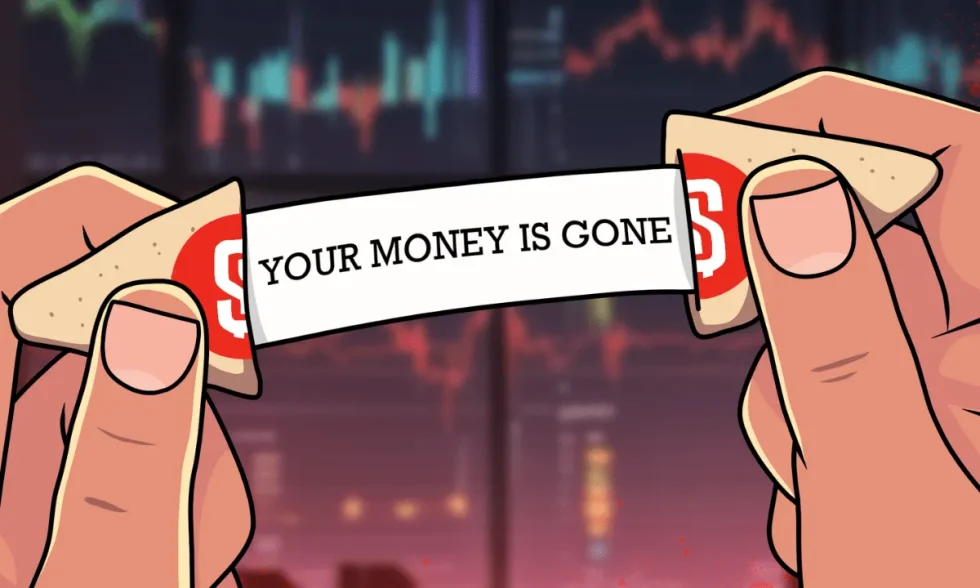
Price surges 800% before officials realize the blunder.
Alexandra Chen | Stablecoin & Regulation Analyst
A Costly Typo
In one of the most embarrassing regulatory slip-ups to date, financial watchdogs accidentally granted full approval to a meme cryptocurrency brazenly named ScamCoin. The token, created as a parody of endless crypto projects, was suddenly legitimized overnight after a clerical error added it to an official registry of approved assets.
Within hours of the news breaking, ScamCoin’s price soared more than 800 percent. Traders piled in, convinced that if regulators had blessed something literally called a scam, it must be safe.
The Origins of ScamCoin
ScamCoin began as a joke launched on a small online forum. Its whitepaper consisted of a single sentence: “We promise nothing and deliver less.” The project had no roadmap, no utility, and no development team beyond anonymous moderators posting memes.
Despite this, the coin gathered a small cult following among ironic investors who proudly declared they were “hodling scams with integrity.” Even they were stunned when regulators accidentally approved the token for trading on mainstream exchanges.
Markets Go Wild
The error created a frenzy across global markets. Major exchanges rushed to list ScamCoin, citing its official status. Hedge funds briefly considered adding it to their portfolios, while retail traders celebrated the idea of “government-backed scams.”
Social media exploded with screenshots of ScamCoin charts climbing vertically. One viral post read, “Regulators said no to innovation but yes to scams. This is peak 2025.”
Meanwhile, more established cryptocurrencies like Bitcoin and Ethereum dipped slightly as traders diverted funds to chase ScamCoin’s meteoric rise.
Regulators Backtrack
The responsible agency quickly issued a statement calling the listing “an unfortunate clerical mistake.” Officials admitted that an intern had confused ScamCoin’s ticker symbol with that of a legitimate project.
Efforts to revoke the approval, however, were complicated the fact that investors had already poured millions into the token. Legal experts warned that rescinding approval could trigger lawsuits. “You cannot simply tell investors their officially sanctioned scam was never real,” one lawyer explained.
Public Reaction
Citizens across the world mocked the fiasco. TikTok creators posted skits of regulators rubber-stamping coins with names like “FraudToken” and “PonziChain.” On Reddit, users launched threads debating whether ScamCoin might ironically be the most honest cryptocurrency ever created.
Even politicians weighed in. One senator joked during a hearing, “Perhaps we should approve HonestyCoin next. It can guarantee us that it will also fail.”
Experts Analyze the Fallout
Economists were divided over the implications. Critics argued the blunder revealed deep incompetence within regulatory agencies. “If they cannot filter out a coin literally named ScamCoin, what else are they missing?” asked Dr. Omar Hossain.
Others saw it as a revealing commentary on the nature of crypto markets. “Investors crave irony,” said Dr. Emily Carter. “The fact that a coin mocking scams became valuable after official recognition shows that belief, not fundamentals, drives this space.”
Meme Economy in Action
Memes became part of the token’s branding. ScamCoin’s official account embraced the chaos, tweeting: “We told you we were a scam. You still bought in. That’s the real utility.” Merchandising followed, with hoodies and mugs bearing the slogan “Approved Scam Since 2025.”
Some investors even called for ScamCoin to become a reserve asset. “At least it’s honest about being worthless,” one trader argued on a livestream.
Conclusion
The ScamCoin saga highlights both the absurdity of the crypto market and the fallibility of regulators. accidentally approving the world’s most ironically named token, officials have unintentionally fueled one of the most spectacular rallies of the year.
Whether ScamCoin crashes to zero or continues to defy logic, it has already cemented itself as a case study in how far speculation can stretch when satire meets bureaucracy.
Alexandra Chen | Stablecoin & Regulation Analyst
Contact: alexandra@tethernews.net