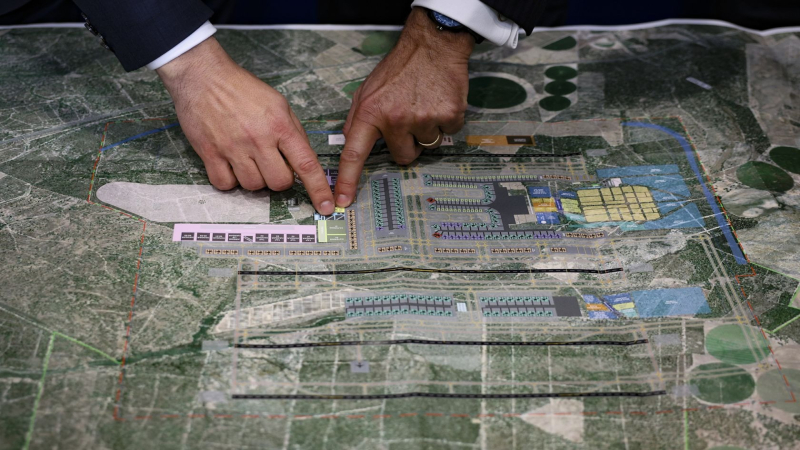
The layout of the future Lisbon airport has taken a significant step forward after authorities confirmed the positioning of its runways, a development that also triggers new construction restrictions in surrounding areas. The updated configuration clarifies how the infrastructure will sit within the Alcochete zone, long identified as the preferred site for the capital’s new international gateway.
According to the latest project details, runway 2 will be constructed close to a stream that cuts across the land between the planned runways 3 and 4. Because of this alignment, the watercourse will need to be diverted to accommodate the aviation infrastructure. Engineering teams acknowledge that redirecting the stream will add complexity and additional costs to the project, as hydraulic studies and flood mitigation measures must be incorporated into the design.
The revised runway layout also shifts the positioning initially considered for parts of the airport. Instead of being placed further west within the Alcochete Shooting Range area, the runways will now run parallel to National Road 10 and the A13 motorway. This adjustment aims to optimize air traffic operations while integrating the airport more efficiently into existing transport networks. Urban planners have already begun assessing how these changes will affect neardevelopment zones and future road connections.
At the same time, environmental specialists have raised concerns about the ecological sensitivity of the Alcochete site. Beneath the former shooting range lies one of the largest freshwater reserves in the Iberian Peninsula. Experts warn that large scale excavation, soil movement, and construction activities could pose risks to groundwater quality if strict safeguards are not enforced. The protection of this aquifer has become a central issue in ongoing technical assessments.
Construction restrictions are now being imposed in adjacent areas to prevent incompatible development that could interfere with airport operations or environmental protection measures. Municipal authorities are reviewing land use plans to ensure that residential and commercial projects comply with the new aviation safety and zoning guidelines.
The environmental impact assessment for the Luís de Camões Airport remains in progress and has not yet been finalized. Officials indicate that the study could take up to a year to complete, as it must evaluate hydrological impacts, biodiversity concerns, noise projections, and long term sustainability factors. Public consultation phases are expected to follow once preliminary findings are released.
The new Lisbon airport project is considered a strategic investment aimed at increasing Portugal’s air capacity and supporting tourism, trade, and economic growth. Lisbon’s current Humberto Delgado Airport has faced operational constraints for years due to space limitations and urban proximity. The Alcochete development is intended to provide a long term solution while positioning Portugal as a stronger aviation hub within Europe.