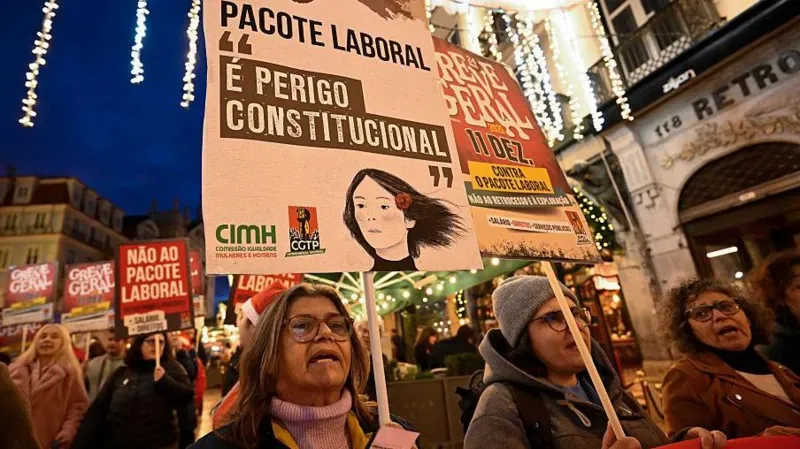
Portugal experienced widespread disruption on Thursday as the country held its first general strike in more than a decade, affecting transport, schools, healthcare and essential public services. Unions representing thousands of workers coordinated the nationwide action to protest wage pressures, rising living costs and persistent staffing shortages across key sectors. The strike quickly became one of the most visible expressions of public frustration in recent years.
Transport networks were among the hardest hit. Train and metro services in Lisbon and Porto operated with heavily reduced schedules, leaving commuters facing long waits and crowded platforms. Many bus routes were delayed or suspended entirely, forcing residents to rely on limited alternatives. Authorities advised the public to avoid unnecessary travel and adjust daily plans in anticipation of significant delays.
Education services saw equally strong participation. Schools across the country reported high levels of absenteeism among teachers and staff, leading some institutions to cancel classes or operate with minimal supervision. Parents described the disruption as challenging but acknowledged that many educators have voiced concerns about workload and salaries for several years.
Hospitals and clinics also felt the impact as administrative teams, support staff and some specialist units joined the strike. While emergency departments remained open, non urgent appointments and routine services were postponed. Healthcare unions say the action highlights growing pressure on hospital infrastructure and the need for long term investment in the public system.
Municipal operations faced setbacks as waste collection, public maintenance and administrative counter services slowed across major cities. Local governments urged patience as essential functions resumed gradually throughout the day. Officials noted that the strike brought renewed attention to issues that have been building within public service management.
Union leaders described the strike as a necessary response to worsening economic conditions. They argue that wages have failed to keep pace with inflation and rising housing costs, particularly in urban centres like Lisbon, where affordability challenges have intensified. Workers also raised concerns about understaffing, saying that shortages across essential sectors have left teams overstretched and unable to meet public demand.
Government representatives acknowledged the scale of the disruption but reiterated their commitment to ongoing dialogue. Officials pointed to recent budget measures aimed at easing cost of living pressures and strengthening public services, while urging unions to remain engaged in negotiations. They also emphasised the need to maintain fiscal responsibility as economic conditions remain uncertain across Europe.
Businesses felt the impact as well, with retailers reporting reduced staffing and supply chain delays throughout the day. Hospitality venues in major cities experienced fluctuating service levels as employees participated in the strike. Market observers say the economic impact of the one day action will be measurable but short term, provided further strikes do not follow.
Public reaction was mixed. Some residents expressed support for the workers’ demands, noting the rising pressures on households and public sector employees. Others voiced frustration over transport disruptions and appointment delays, especially those unable to work remotely or reschedule daily commitments. The strike nevertheless sparked widespread conversation about labour conditions and the future of public investment.
As services slowly returned to normal evening, union leaders suggested that additional actions could be considered if negotiations fail to produce concrete progress. Government officials are expected to provide further updates in the coming weeks as discussions continue.
The general strike marks a significant moment in Portugal’s labour landscape, raising urgent questions about economic resilience, public service funding and the wellbeing of the country’s workforce. Whether this becomes a turning point will depend on the decisions made in the months ahead.