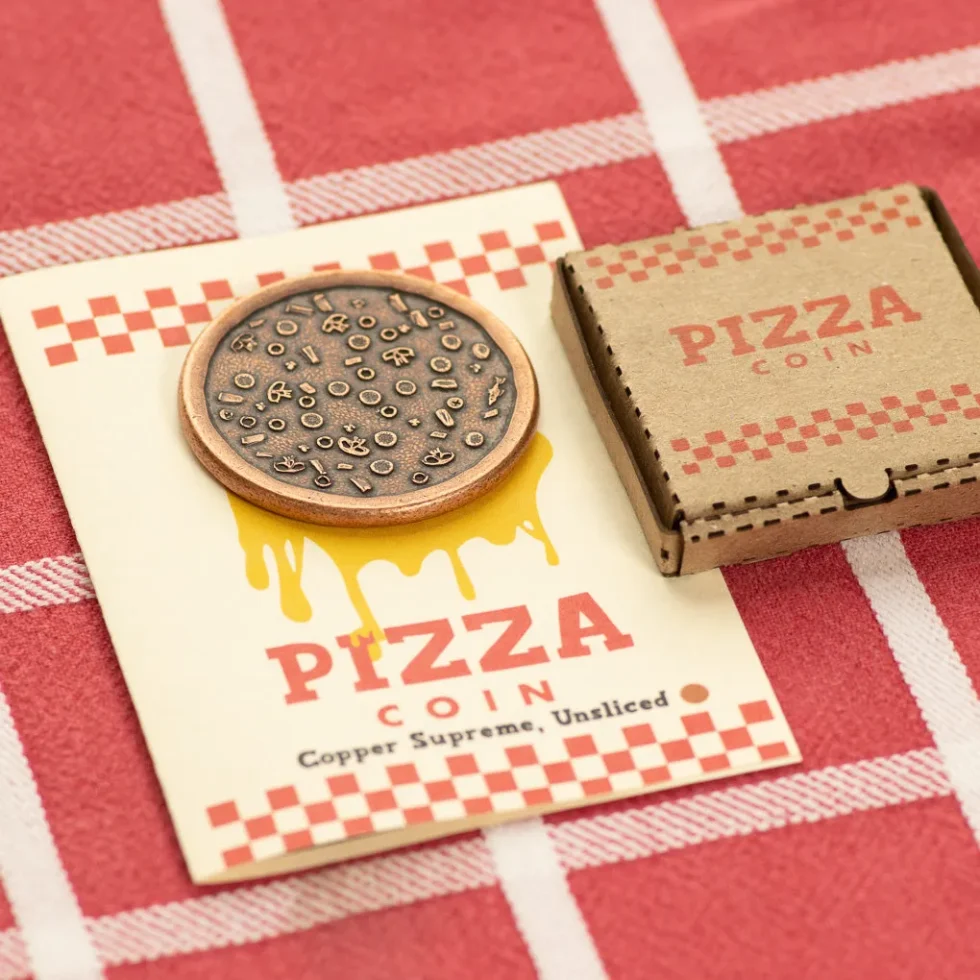
Developers insist it is more reliable than national currencies.
Alexandra Chen | Stablecoin & Regulation Analyst
A Slice of Stability
In an industry known for wild experiments, a new stablecoin has captured headlines claiming an unusual form of collateral: pizza coupons. The project, dubbed PizzaPay, was unveiled at a blockchain conference in New York, where its founders insisted that coupons from major pizza chains provided “a tastier and more trustworthy peg” than traditional fiat reserves.
Investors initially laughed, but the developers argued with straight faces. “Every household values pizza. Unlike dollars, pizza has intrinsic demand,” the lead coder explained, pointing to statistics showing global pizza sales surpassing two hundred billion dollars annually.
How It Works
Each PizzaPay token is pegged one-to-one with a physical pizza coupon redeemable at participating chains. Coupons are stored in guarded warehouses, with auditors conducting monthly counts to verify supply. If token holders want to redeem, they can either claim a pizza directly or resell their tokens on secondary markets.
The whitepaper outlines a tiered system: one token equals a single-topping pizza, while premium tokens offer “deluxe pizza access” with extra cheese or toppings. To ensure liquidity, the network partnered with delivery platforms promising on-demand redemption.
Market Reactions
Markets reacted with a mix of skepticism and excitement. Traders initially mocked the idea, but within hours, PizzaPay tokens were trading at a premium, reflecting strong demand among both crypto enthusiasts and hungry college students.
Meme traders launched spin-offs like $PEPPERONI and $EXTRACHEESE, sending prices soaring before collapsing the next day. Analysts warned that pizza-backed currency might be vulnerable to cheese inflation and tomato shortages, but others called it the most relatable stablecoin yet.
One hedge fund manager admitted, “Honestly, pizza coupons may be more reliable than some emerging-market currencies.”
Public Response
Public interest exploded online. TikTok creators filmed themselves trying to redeem PizzaPay at local shops, with hashtags like #PizzaCoin and #SliceEconomy trending worldwide. One viral video showed a customer offering a cashier PizzaPay tokens and receiving a hot pepperoni pizza in return.
Twitter users filled feeds with memes. One popular post featured Satoshi Nakamoto holding a pizza box with the caption: “This was always the endgame.” Another compared PizzaPay’s peg to gold, joking, “At least you can eat this reserve.”
Political Fallout
Lawmakers reacted cautiously. Some officials criticized the project as unserious, arguing that anchoring financial stability to fast food trivializes global markets. A European regulator scoffed, “What happens if the pizza chain goes bankrupt? Do we face a cheese-backed recession?”
But others were surprisingly open. A U.S. congressman noted, “Pizza coupons are tangible assets with real value. If people trust them more than dollars, that says something about our economy.” Rumors swirled that smaller nations might consider PizzaPay as a secondary reserve, especially those already struggling with currency instability.
Expert Opinions
Economists were divided. Dr. Omar Hossain dismissed PizzaPay as a gimmick. “Currencies require long-term stability. Tying money to mozzarella is not a financial system; it is a dinner plan.”
Dr. Emily Carter offered a more nuanced view. “Stablecoins highlight the arbitrariness of value. If communities agree that pizza coupons are collateral, then functionally, they work like any reserve asset. The absurdity only reveals how fragile trust in money already is.”
Supply chain experts warned of potential risks. Global cheese shortages, wheat price spikes, or delivery disruptions could destabilize PizzaPay’s peg. Yet others argued these risks mirror the vulnerabilities of traditional currencies tied to oil or gold.
Symbolism in the Absurd
Cultural critics framed PizzaPay as a satirical reflection of modern finance. Money has always been backed trust, whether gold bars, government promises, or digital ledgers. Backing it with pizza coupons simply strips the illusion of seriousness.
One columnist wrote, “At least PizzaPay admits what other currencies hide: money is only as good as our appetite for it.”
Conclusion
Whether PizzaPay succeeds or fails, it highlights the strange new frontier of crypto finance, where humor and seriousness blur. For some, it is a joke taken too far. For others, it is a refreshing reminder that value is what we collectively decide it is.
In 2025, your portfolio might include bonds, equities, and maybe a few pizza coupons. After all, in times of crisis, you cannot eat gold, but you can eat pizza.
Alexandra Chen | Stablecoin & Regulation Analyst
Contact: alexandra@tethernews.net