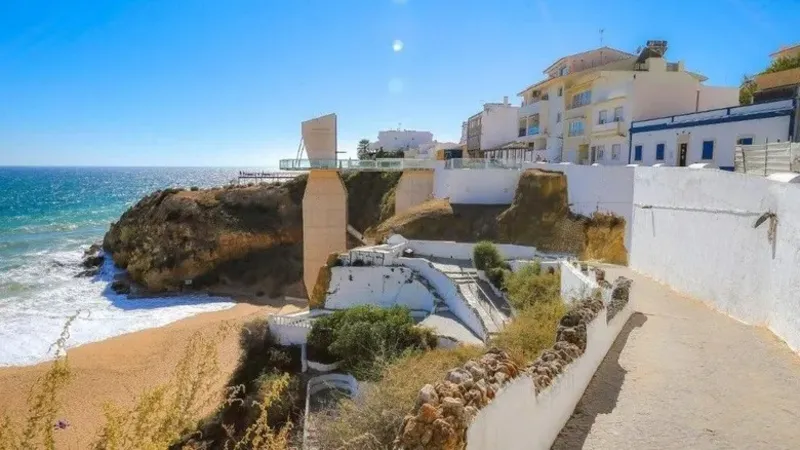
Dozens of beaches across Portugal’s Algarve region have been affected coastal instability following a series of winter storms that struck the southern coastline. According to a technical assessment from the Portuguese Environment Agency, at least thirty five beaches recorded significant impact from severe weather conditions that caused erosion, sand loss and structural damage along parts of the coast. The storms triggered instability in cliff areas and accelerated the retreat of sections of shoreline, creating safety concerns and prompting authorities to assess urgent repair measures before the start of the busy summer tourism season when visitor numbers traditionally increase across the Algarve.
The report indicates that the strongest effects were observed in municipalities such as Albufeira and Lagoa which recorded the highest concentration of affected beaches. Albufeira alone accounted for nine impacted beaches while Lagoa reported damage across eight locations. The assessment noted that storm conditions led to localized destruction of beach access walkways and support structures used visitors during the summer months. In several cases waves and heavy rainfall combined with strong winds to accelerate erosion of sand and cliff faces, highlighting the vulnerability of parts of the Algarve coastline to extreme seasonal weather patterns.
Across the wider Portuguese coast the financial impact of storm damage has been estimated at roughly twenty seven million euros according to the environmental agency’s evaluation. Authorities say immediate intervention will be required in certain locations while additional structural projects are expected to be implemented in the short and medium term to strengthen coastal resilience. Monitoring of erosion trends has also been expanded through ongoing surveys conducted under the Cosmos coastal observation program which tracks shoreline changes and identifies areas considered most vulnerable to long term erosion and environmental risk.
Among the locations identified as most concerning is Peneco beach in Albufeira where the shoreline recorded a retreat of up to twenty four metres during the monitoring period. Other areas also experienced notable changes including a maximum retreat of fifteen metres at Loulé Velho Trafal beach and fourteen metres at the Quarteira Garrão coastal zone. Forte Novo beach in the municipality of Loulé recorded a retreat of approximately six metres. Environmental specialists say these figures illustrate the significant pressure that winter storms can place on Portugal’s coastal landscapes particularly in areas where cliffs and sandy beaches are already exposed to natural erosion processes.
Government officials have acknowledged the urgency of addressing the most serious damage before the arrival of the summer tourism season which is critical for the regional economy. During a visit to the Algarve earlier this month the environment minister stated that investment plans for coastal protection will need to be reorganized following the storms. Authorities intend to prioritize urgent repairs such as rebuilding damaged walkways and restoring essential beach infrastructure so that visitors can safely access the coastline once the tourist season begins.
Officials also indicated that funding for emergency interventions will come from the Environmental Fund while additional long term projects aimed at reinforcing coastal defenses will be submitted for financing under the Sustainable Program 2030 initiative. The objective is to address immediate safety risks while also planning broader coastal management strategies that can reduce the impact of future storms. The government has indicated that the most urgent restoration work is expected to be completed May allowing beaches to reopen safely ahead of the peak summer travel period.
Experts and policymakers are increasingly focusing on cliff stabilization across the Algarve where erosion and geological instability present ongoing challenges. Authorities say the region contains some of the most complex cliff systems in Portugal and recent storms have intensified concerns about long term safety and environmental protection. Stabilizing vulnerable cliff areas and monitoring shoreline changes are expected to remain a central priority as Portugal continues working to protect one of Europe’s most visited coastal destinations.