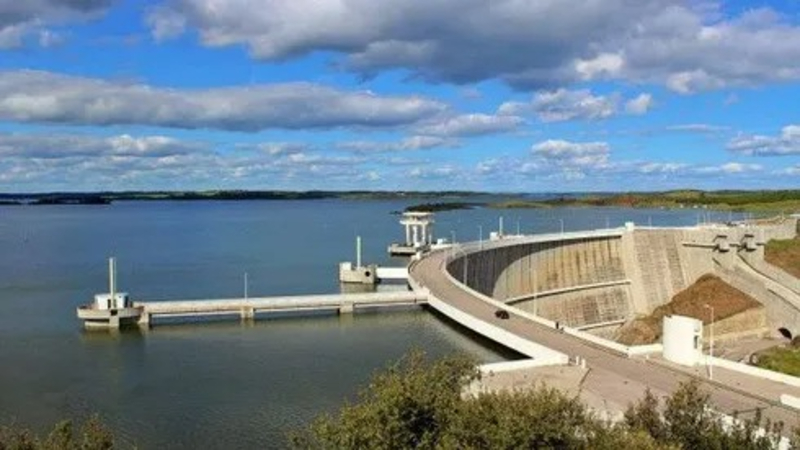
Controlled water releases were initiated at the Alqueva Dam after persistent storms pushed reservoir levels close to maximum capacity, prompting operators to take preventive action. Authorities confirmed that mid-level spillways were opened as part of a regulated discharge process designed to maintain the dam’s operational safety. At the same time, local officials in Mértola warned that Spain’s Chança Dam is also releasing water on a continuous basis, a development that may significantly affect downstream conditions along the Guadiana River. Officials explained that water released from the Pedrógão Dam typically takes around eighteen hours to reach areas such as Pulo do Lobo, meaning any visible rise in river flow near Mértola would only occur after that delay. As inflows remain elevated, authorities expect a gradual but noticeable increase in river levels throughout the day, particularly in low-lying and riverside zones.
Municipal officials have advised residents and visitors to exercise caution as river conditions evolve, stressing the importance of avoiding flooded or flood-prone areas. People are being urged not to cross submerged paths, fords, or riverbanks and to remain vigilant during agricultural, livestock, or leisure activities near the Guadiana. Civil protection services continue to monitor the situation closely as coordinated releases move through the river system. According to dam operators, water discharged from Alqueva flows directly toward the Pedrógão Dam, which has already been releasing water into the Guadiana River for several days. The combined effect of these discharges is expected to increase flow intensity downstream, particularly in areas where the river narrows. Authorities emphasise that precautionary behaviour is essential during this period of heightened water movement.
The company responsible for managing the Alqueva Multipurpose Project stated that reservoir levels had initially been controlled through hydroelectric operations, allowing inflows to be regulated while maintaining energy production. Pedrógão Dam, located downstream, also contributed releasing excess water to manage rising volumes. However, the persistence of strong inflows eventually required additional measures, leading to controlled releases directly from Alqueva to preserve safety margins. Operators indicated that discharge volumes reaching Pedrógão are expected to be around fifteen hundred cubic metres per second. The situation remains under continuous surveillance in coordination with emergency and environmental authorities. Alqueva reservoir has a maximum level of one hundred and fifty two metres and a total storage capacity exceeding four thousand cubic hectometres, making careful management essential during prolonged periods of heavy rainfall.