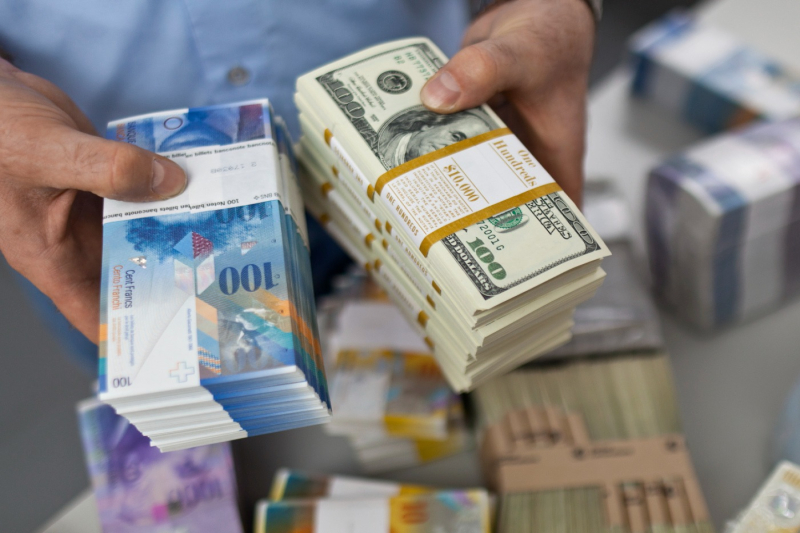
The Swiss franc strengthened in global currency markets as investors moved toward safe haven assets amid escalating tensions in the Middle East. At the same time the US dollar weakened after economic data revealed an unexpected drop in employment growth in the United States. Currency traders reacted quickly to both geopolitical uncertainty and the weaker labor market report which suggested the world’s largest economy may be slowing. Financial markets have been highly sensitive to developments surrounding the ongoing conflict involving Iran and its broader impact on energy prices trade routes and global economic stability.
The Swiss franc traditionally gains value during periods of geopolitical tension as investors look for currencies associated with stability and strong financial systems. The currency rose against both the US dollar and the euro as market participants adjusted their portfolios in response to the growing conflict in the Middle East. Analysts say that uncertainty surrounding the war and the possibility of wider regional disruption are encouraging investors to move capital into assets considered safer during times of instability. Such shifts are common during international crises when financial markets become more volatile.
Currency markets were also influenced political developments linked to the conflict. Statements from US leadership demanding stronger action against Iran intensified market concerns about the possibility of a prolonged confrontation in the region. The Middle East remains one of the most important areas for global oil production and shipping routes which means any escalation can quickly influence investor sentiment. Energy prices have already increased sharply with oil approaching ninety dollars per barrel which further reinforces cautious behavior among global investors.
The US dollar also faced pressure after new economic figures showed a surprising decline in job creation. Data released on Friday indicated that the US economy lost ninety two thousand jobs during the previous month while the unemployment rate rose to 4.4 percent. Economists had expected employment growth rather than a contraction which made the report a negative surprise for financial markets. The weaker employment data raised speculation that the Federal Reserve could consider reducing interest rates sooner than previously expected.
Expectations about interest rate policy play a major role in currency valuation because higher interest rates typically attract global capital seeking better returns. If investors believe rates will fall earlier than expected the currency often weakens as financial flows shift elsewhere. Following the employment report markets began pricing in a higher probability that the Federal Reserve could resume interest rate cuts later this year. Analysts now see a significant chance of monetary easing beginning in the coming months if economic conditions continue to soften.
Despite the daily decline the US dollar has still recorded gains over the course of the week against several major currencies. The dollar index which tracks the currency against a basket of global peers remains on track for one of its strongest weekly performances since late 2024. However the euro experienced notable losses during the same period marking its largest weekly decline in several years. Currency strategists say the volatility reflects both geopolitical risks and changing expectations about economic policy among major central banks.
Other major currencies also moved higher against the dollar during the trading session including the British pound which recorded modest gains. Analysts noted that some of the movements may represent short term technical adjustments following earlier market declines. Nevertheless traders remain cautious as the combination of geopolitical conflict rising oil prices and uncertain economic data continues to shape currency markets.
Financial institutions and investors are closely monitoring the evolving situation in both global politics and economic indicators. Currency markets often react quickly to shifts in geopolitical risk and central bank policy expectations. As tensions in the Middle East continue and economic data from major economies fluctuates investors are expected to remain focused on safe haven assets and closely watch signals about future interest rate decisions from global central banks.