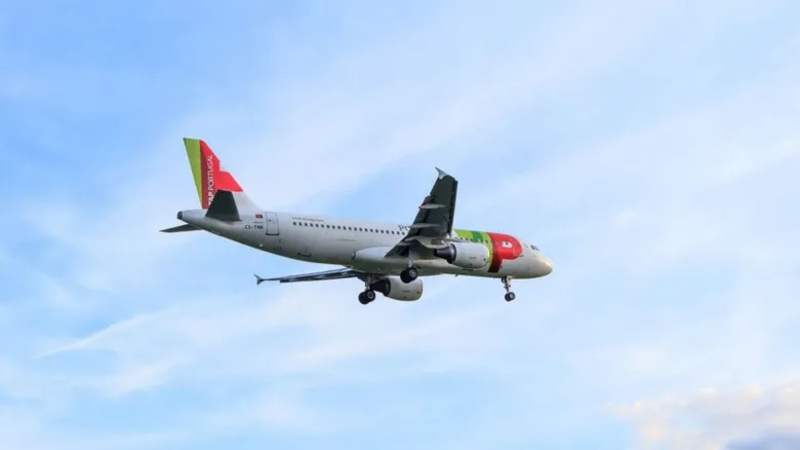
A TAP Air Portugal flight approaching Prague was forced to carry out an emergency manoeuvre in January after the aircraft descended unexpectedly while preparing to land, according to information released Czech aviation authorities.
The incident occurred on 17 January as the Lisbon to Prague service entered Czech airspace en route to Václav Havel Airport. During the approach phase, the aircraft reportedly lost altitude and descended to roughly 300 metres above ground level while still about 60 kilometres from the airport. Air traffic data later indicated that the crew initiated a rapid climb to stabilise the situation and restore safe separation from terrain.
Czech authorities made the event public on 12 February following a preliminary review. Aviation regulators confirmed that the aircraft did not make contact with the ground and that passengers were not injured. The flight continued safely and landed without further reported complications.
While early media accounts suggested the aircraft may have been seconds from impact, aviation safety experts caution that such estimates often rely on reconstructed radar timelines and do not necessarily reflect cockpit conditions in real time. Commercial aircraft operating under instrument flight rules are equipped with multiple redundant systems designed to alert pilots to unsafe descent rates and terrain proximity.
TAP Air Portugal has acknowledged the incident and confirmed that an internal investigation is underway in coordination with Czech civil aviation authorities. The airline has stated that it is cooperating fully with regulators as part of standard aviation safety procedures.
Industry analysts note that altitude deviations during approach can stem from a variety of factors. These may include automation mismanagement, incorrect autopilot configuration, data input discrepancies, or unexpected atmospheric conditions. Modern aircraft rely heavily on flight management systems during descent and landing, and even minor input errors can produce noticeable deviations if not corrected promptly.
Approach and landing phases remain among the most sensitive stages of flight, requiring close coordination between pilots and air traffic control. Aircraft are typically guided through predefined altitude profiles and navigation waypoints. Any deviation from these parameters triggers cockpit alerts and, if necessary, corrective action from the flight crew.
European aviation safety frameworks require that such occurrences be formally documented and assessed. Regulators examine flight data recorder information, cockpit voice recordings, air traffic communications, and aircraft system logs to determine whether the event qualifies as a serious incident under international safety definitions.
TAP Air Portugal operates regular connections between Lisbon and Prague, serving both tourism and business travel demand. The airline has not reported any operational suspensions on the route following the incident.
As investigations continue, authorities are expected to focus on whether automation settings, human factors, or procedural elements contributed to the unexpected descent. Findings may result in operational recommendations or technical adjustments, depending on the outcome of the review.