Regulators question whether dreamtime counts as screen time.
Alexandra Chen | Stablecoin & Regulation Analyst
Advertising While You Snooze
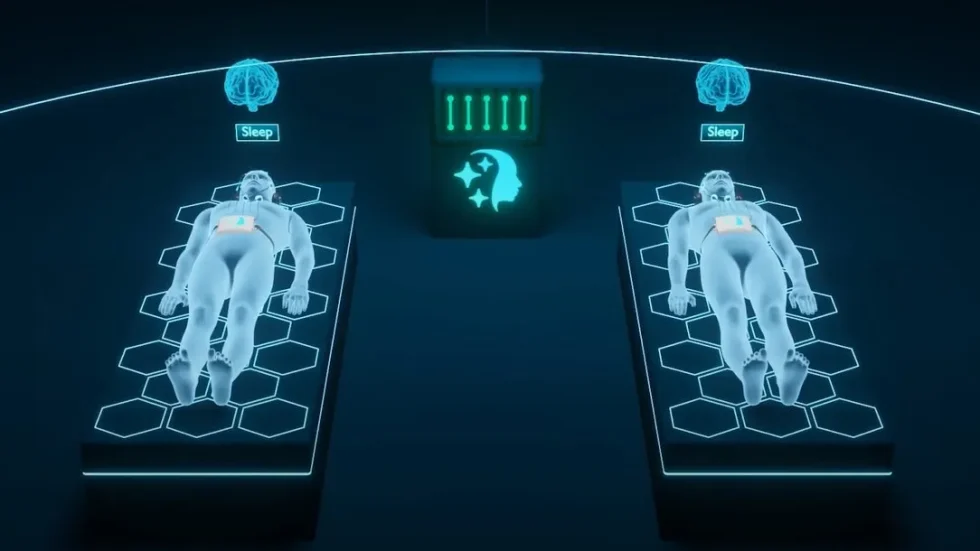
A major tech company has filed a controversial new patent for “sleep ads,” a system designed to deliver targeted advertising directly into people’s dreams. According to documents released this week, the technology uses smart home devices to emit subtle audio and visual cues while users sleep, embedding brand messages into dreamscapes.
The company described the innovation as the “final frontier of consumer engagement.” A spokesperson said, “Our mission has always been to meet users where they are. Now, that includes their subconscious.”
How It Works
The system integrates with smart speakers, phone sensors, and even fitness trackers. monitoring brainwave activity, it identifies periods of REM sleep when dreams are most vivid. At those moments, subliminal ads are triggered: whispers of slogans, faint jingles, or even projected imagery in augmented reality sleep masks.
A leaked prototype showed test subjects dreaming of sipping branded sodas while flying over billboards. Another dreamed about buying sneakers after hearing faint background music resembling a commercial. Engineers claimed the method increased brand recall sixty percent upon waking.
Market Reactions
Markets were both fascinated and alarmed. Shares of the tech giant rose as analysts hailed a “revolution in unconscious monetization.” Rival firms quickly announced research into similar projects, sparking what some dubbed the “dream wars.”
Meme traders launched tokens like $REM and $SNOOZE, parodying the idea of monetizing rest. One hedge fund issued a half-serious report titled The Future of Asleep Consumption, predicting entire industries built around nocturnal brand loyalty.
Public Response
The public reaction was immediate outrage mixed with dark humor. TikTok is filled with videos of people pretending to wake up from dreams about fast food, using hashtags like #DreamAds and #SleepSponsorship.
One viral meme showed a person screaming in bed with the caption: “I just dreamed of filing taxes, sponsored TurboTax.” Another depicted a child dreaming of Santa Claus holding a corporate logo.
Sleep advocates warned the practice could worsen insomnia. “If my dreams are filled with jingles, I will never sleep again,” one user wrote. Others joked that at least their nightmares would now come with sponsorships.
Political Fallout
Lawmakers quickly demanded answers. A European commissioner declared, “Dreams are the last refuge of privacy. Monetizing them is unacceptable.” In the United States, a senator asked whether dreamtime should count toward daily screen-time limits for children.
Consumer rights groups filed lawsuits, arguing that subconscious advertising violates informed consent. The tech giant defended itself noting that users could “opt out” disabling devices, though critics noted most people cannot sleep without their smart gadgets nearby.
Expert Opinions
Economists weighed in with mixed views. Dr. Omar Hossain condemned the idea. “Advertising already saturates every waking moment. Colonizing sleep is a dystopian escalation.”
Dr. Emily Carter argued that, while absurd, the concept reflects real economic pressures. “Attention is the currency of the digital age. When every waking hour is commodified, dreams are the logical next step.”
Sleep scientists warned of psychological risks, noting that dreams play a crucial role in memory and mental health. “If branded content infiltrates REM cycles, we may face long-term consequences for cognition,” one researcher explained.
Symbolism in the Absurd
Cultural critics argued that dream ads symbolize the final erosion of personal boundaries. “Even our subconscious is no longer sacred,” one columnist wrote. “The marketplace has followed us into our most private spaces.”
Satirists flourished. Cartoons depicted dream clouds filled with corporate logos, while comedy shows joked about subscription plans to block unwanted nocturnal commercials. A parody slogan circulated online: “Sweet dreams, brought to you your favorite brand.”
Conclusion
The patent for sleep ads may never pass regulatory hurdles, but it reveals the tech industry’s relentless drive to monetize every moment of human existence. For now, consumers can rest easy knowing the technology is still experimental. But the idea that brands may soon compete for space in our subconscious is enough to keep anyone awake at night.
In 2025, it seems even your dreams are no longer your own.
Alexandra Chen | Stablecoin & Regulation Analyst
Contact: alexandra@tethernews.net