Introduction
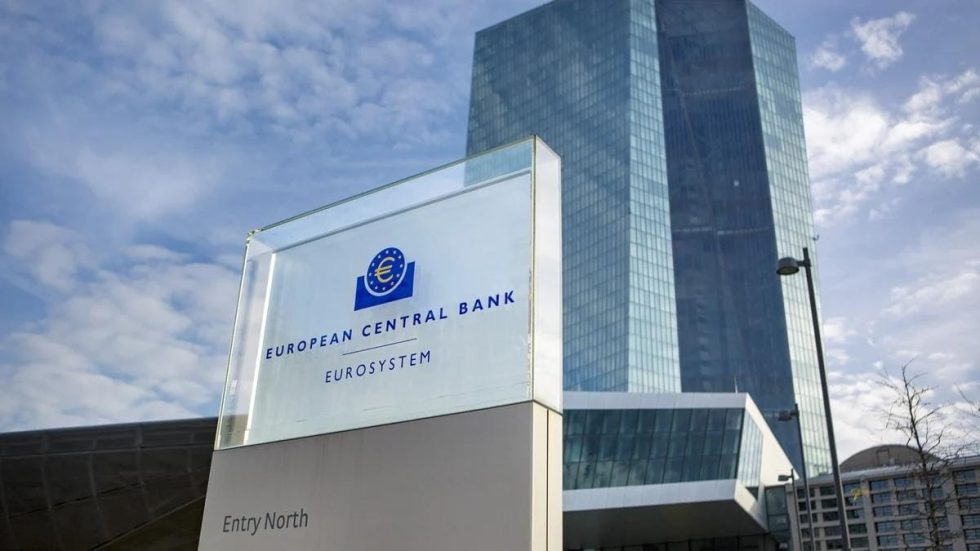
The European Central Bank published its new stress test results this week, announcing that European banks remain strong. The tone was calm, the message confident, and the presentation sleek. Yet within hours, markets showed hesitation. The euro fell nearly two percent, and bank stocks lost ground across the continent. While officials in Frankfurt spoke of resilience, traders whispered of nervousness. What was meant to be a routine assessment of stability began to feel like an act of crisis management. The ECB’s test revealed not only data but an uneasy truth about confidence in Europe’s financial heart.
The Calm Before Unease
Stress tests are the central bank’s tool to prove that financial institutions could withstand future shocks. The 2025 edition modeled a mix of high interest rates, stagnant growth, and renewed energy pressure. The ECB reported that most banks would survive severe scenarios. Yet the fine print told a quieter story. A few southern lenders showed “capital sensitivity” to rate fluctuations, technical phrasing for vulnerability.
This contrast between technical assurance and cautious wording set off alarms among analysts. To the public, the ECB declared stability. To specialists, it hinted at hidden fragility. The language of confidence felt carefully rehearsed, the tone slightly strained. Markets sensed the performance. The euro’s decline was less about numbers and more about tone—an instinctive reaction to mixed signals from the institution meant to calm them.
Divisions Behind Closed Doors
Insiders in Frankfurt admitted that debate over how much to reveal was intense. Some argued that honesty about potential weaknesses would protect long-term credibility. Others insisted that too much transparency could trigger unnecessary volatility. The compromise produced a report that seemed balanced but read as uncertain.
The euro’s drop that followed publication confirmed that investors detected the hesitation. Traders are fluent readers of institutional mood. They react not just to data but to confidence, or the lack of it. The market’s verdict was simple: if the ECB sounds nervous, perhaps it has reason to be.
Memes and Market Mood
Within hours, finance humorists had turned the situation into entertainment. One viral meme showed a sheep wearing an ECB badge, running from a small fire labeled “Euro Stability.” It captured the public mood perfectly. A generation of online investors now digests economic news through humor, satire, and social commentary.
Meme-finance might appear frivolous, yet it reflects a shift in how markets interpret authority. The ECB’s report was supposed to anchor expectations, but its cautious tone became a punchline. That mockery matters. A central bank that loses its symbolic authority risks becoming part of the spectacle it tries to control.
The Economic Context
Across Europe, inflation has eased to around 2.4 percent, but growth remains weak. The continent faces high borrowing costs, flat investment, and fragile consumer confidence. Energy prices fluctuate with each geopolitical tremor. Governments continue to subsidize households and industries, deepening fiscal strain.
In Portugal, optimism coexists with tension. The economy has expanded modestly, yet rising mortgage payments are eroding disposable income. Many families depend on variable-rate loans that respond instantly to ECB decisions. Banks have improved their balance sheets since the last crisis, but their strength still depends on households’ ability to keep paying. The stress test’s rosy conclusions feel distant from such everyday pressure.
Policy and Politics
The ECB’s awkward timing did not help. Brussels is finalizing its next fiscal compact, which seeks to redefine debt and deficit limits. Northern states argue for restraint, while southern economies demand space for public investment. The central bank’s uncertainty provided ammunition for both. Hawks pointed to hidden risk, while doves claimed that tight policy is already stifling growth.
In this environment, even technical documents become political acts. The ECB’s wording can shift debates in national parliaments or unsettle coalition partners. Central banking in Europe has evolved into diplomacy disguised as data. Each report must balance economic precision with political neutrality, an almost impossible task.
The Transparency Problem
The stress test episode illustrates the ECB’s ongoing dilemma. Too much optimism appears naïve; too much realism sounds alarming. Central banks were once trusted to speak in measured tones, but now every phrase is dissected markets, media, and meme accounts. In this hyperconnected landscape, ambiguity invites speculation.
Analysts argue that greater clarity would serve the ECB better than cautious optimism. Investors tend to accept bad news faster than confusion. When official tone and data diverge, trust erodes. The euro’s fall was not a crisis but a signal, a reminder that monetary stability depends as much on communication as on policy itself.
Portugal’s Take
Lisbon’s economists and policy makers watched quietly but attentively. Portugal’s banks are stronger than a decade ago, yet remain sensitive to European sentiment. A credibility slip in Frankfurt can raise Portuguese borrowing costs overnight. The more uncertain the central bank sounds, the higher the premium smaller economies pay to access capital.
For a nation that rebuilt its credibility painstakingly after the debt crisis, the stakes are high. The ECB’s hesitation translates directly into market anxiety along Europe’s southern rim. Portugal’s financial health now depends not only on its fundamentals but on how convincingly Frankfurt speaks to the world.
Media and Public Reaction
The European press split along familiar lines. German outlets praised the ECB’s restraint, calling it prudent leadership. Southern publications mocked the performance as bureaucratic theater. Portuguese commentators took a sardonic view, describing the ECB’s message as “a calm voice reading from a shaking page.” The phrase trended locally and spread across financial social media.
Such reactions underline how the ECB’s image has changed. Once seen as an opaque but stable authority, it now faces public scrutiny more typical of politicians than technocrats. Central banking has become a public spectacle, and confidence must now be maintained in real time.
Conclusion
The 2025 stress test will be remembered for its tone more than its data. It showed a central bank confident on the surface but uneasy underneath. The eurozone remains stable, yet its protector seems unsure how to project that stability convincingly.
The ECB passed its quantitative exam but failed the communication test. In modern Europe, trust in monetary policy depends not only on balance sheets but on believable storytelling. When a “mild panic” echoes through Frankfurt’s marble halls, even calm reassurance begins to sound like a warning.