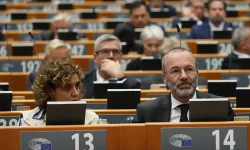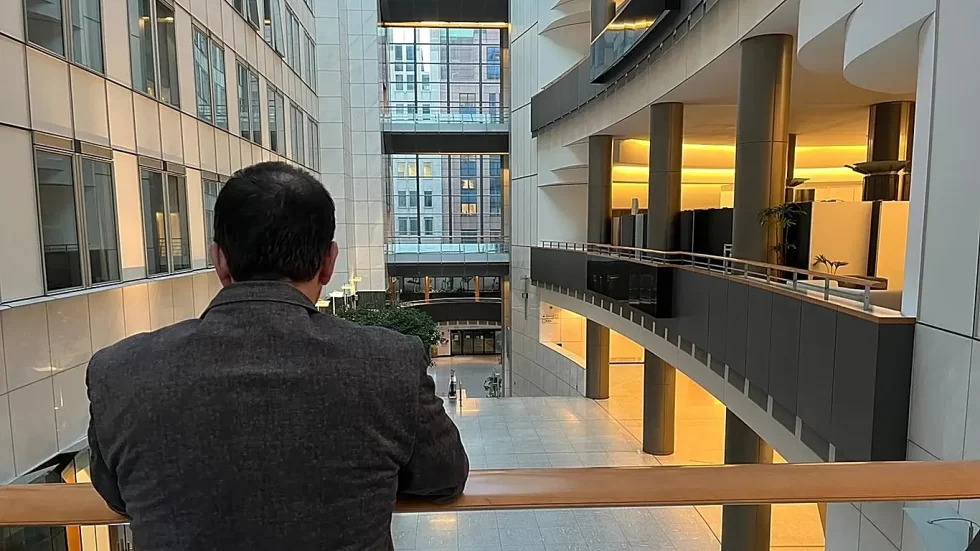
Toni Comín moves through the halls of the European Parliament in Brussels with the ease of someone who belongs there. On a cold and dim evening, colleagues stop to greet him warmly, as if welcoming back a familiar face who has been absent for too long. It is an unusual scene because Comín is, in many ways, a member of the European Parliament and yet not one at all.
The 54 year old Catalan politician has been elected twice voters in Spain to serve as a Member of the European Parliament. On paper, he holds the title. In practice, he lives in a strange political limbo. He has no office, no staff, no official responsibilities, and no salary. Even the badge that allows him to enter the Parliament building is different from those carried his fellow lawmakers.
Comín’s situation stems from an unresolved legal controversy linked to his role in Catalonia’s push for independence. Although he was duly elected, a complex dispute between Spanish authorities and European institutions has prevented him from formally taking up his seat. As a result, he is present in the building but absent from the institution’s work.
He can walk the corridors using an access card from a previous parliamentary term. He still benefits from parliamentary immunity, a protection normally reserved for active lawmakers. Yet he cannot attend official meetings, speak in plenary sessions, propose legislation, or participate in committee work. In essence, he exists as an MEP without the ability to act like one.
This unusual status has earned him the label of a ghost MEP, a figure who haunts the Parliament without being fully part of it. For Comín, the situation is both surreal and deeply frustrating. He remains visible to colleagues and journalists, but invisible when it comes to the formal mechanisms of European democracy.
To understand how he ended up in this position, it is necessary to look back to October 2017, when Catalonia held its disputed independence referendum. The vote, declared illegal Spanish courts, triggered one of the most serious constitutional crises in Spain’s recent history. Several Catalan leaders faced prosecution, while others, including Comín, went into exile to avoid arrest.
Since then, Comín’s political career has been shaped legal battles and institutional standoffs. His election to the European Parliament was meant to restore his political voice at the European level. Instead, it has exposed gaps and contradictions in how European and national legal systems interact.
For critics, Comín’s case highlights flaws in democratic representation, where voters’ choices are effectively frozen legal uncertainty. Supporters argue it shows how the rule of law must be upheld even when outcomes are politically uncomfortable.
As the legal dispute drags on, Toni Comín continues to walk the corridors of Parliament, recognised many, empowered few, and trapped between election results and unresolved justice. His presence serves as a quiet reminder that in Europe’s political heart, democracy can sometimes leave its own representatives suspended between existence and absence.