US President Donald Trump has said Washington has secured total and permanent access to Greenland under a new framework arrangement involving NATO, easing immediate tensions after weeks of uncertainty over US intentions in the Arctic. Speaking during the World Economic Forum in Davos, Trump said the understanding would allow unrestricted US access without time limits, while ruling out the use of force and stepping back from recent tariff threats against Europe. The remarks brought short term relief to markets and allied capitals after what many described as the most serious strain on transatlantic relations in years. However, the absence of detailed agreements and differing interpretations among allies have left key questions unresolved, particularly around sovereignty, governance, and the scope of future US military and strategic activities in the Arctic region.
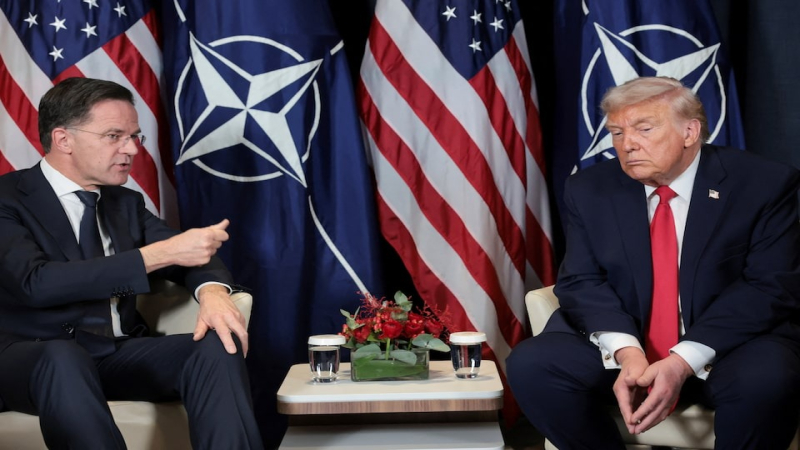
NATO Secretary General Mark Rutte confirmed that the alliance would now work on strengthening its Arctic posture, calling on member states to increase their commitments to counter growing Russian and Chinese activity in the region. Rutte said senior military commanders would define the additional security requirements, with implementation expected during 2026. NATO officials have framed the initiative as an alliance wide effort rather than a bilateral US move, though the announcement has inevitably placed Washington at the center of Arctic strategy. The development follows renewed debate over critical shipping lanes, missile defense systems, and access to natural resources in high latitude regions, all of which have taken on greater strategic importance as geopolitical competition intensifies.
Denmark has sought to draw a clear line between security cooperation and sovereignty, stressing that Greenland’s status is not under negotiation. Danish Prime Minister Mette Frederiksen said discussions had focused on collective Arctic security rather than ownership of the island, which remains a semi autonomous territory within the Kingdom of Denmark. Officials in Copenhagen acknowledged that the situation remains sensitive but said recent developments had created space for dialogue rather than confrontation. Existing agreements already allow the United States to maintain military facilities and operate freely in Greenlandic territory with notification, a framework that dates back to the Cold War. Analysts note that any expansion of activity would likely build on those arrangements rather than replace them.
Despite the partial de escalation, European leaders and businesses remain uneasy about longer term implications. Diplomats across the European Union say the episode has shaken confidence in the reliability of US policy, prompting renewed discussions about reducing strategic dependence on Washington. Concerns persist that sudden shifts in tone could return, affecting trade, security cooperation, and investment planning. While some residents in Nuuk expressed relief at the absence of forceful rhetoric, uncertainty continues over how negotiations will unfold between the United States, Denmark, and Greenland’s local authorities. As NATO moves to recalibrate its Arctic role, the balance between deterrence, diplomacy, and alliance cohesion is set to remain a defining issue in transatlantic relations.