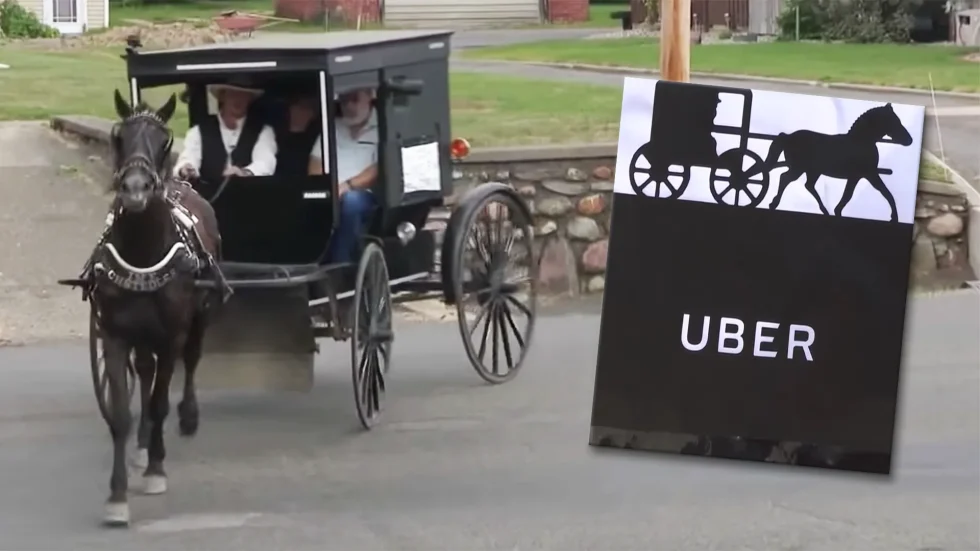
Surge pricing still applies to hay.
Ride-Sharing Returns to the Past
In a surprising response to global fuel shortages, Uber announced the launch of horse-drawn carriages as part of its platform. Marketed as Uber Tots, the new service aims to keep transportation flowing while reducing dependence on gasoline. Executives pitched it as both a sustainable alternative and a nod to tradition, though critics argued it was little more than medieval cosplay for the digital age.
At the unveiling, Uber’s CEO declared, “Innovation sometimes means looking backward. The horsepower of tomorrow is quite literally horses.”
How It Works
Riders can now book carriages directly through the Uber app. Prices are calculated based on distance, horse stamina, and hay costs. Premium options include gold-trimmed carriages with Bluetooth speakers, while budget rides feature wooden carts pulled a single pony.
Drivers, now referred to as “coachmen,” receive training in both animal care and GPS navigation. Surge pricing applies during peak feeding hours, leading some customers to complain about paying double fares at dinnertime.
For sustainability points, Uber promises to offset methane emissions planting carrot gardens worldwide.
Market Reactions
Markets reacted with both laughter and intrigue. Uber’s stock rose modestly as analysts praised the company’s ability to adapt during crises. Horse breeding companies saw a surge in demand, while traditional car manufacturers worried the development signaled a retreat from modernity.
Meme traders launched tokens like $HOOF and $CARRIAGE, spiking briefly as images of executives riding horses through Silicon Valley went viral. One hedge fund manager quipped, “If horsepower is back, Ferrari may need to rethink branding.”
Public Response
The public reaction was immediate and hilarious. TikTok is filled with videos of people hailing carriages in business suits, hashtags like #UberTrots and #HaySurge trending globally.
One viral meme showed a rider frustrated as a horse stopped mid-ride to graze. Another depicted an Uber rating screen asking, “Was the horse polite and well-groomed?”
Some customers welcomed the service, saying it added charm to their commutes. Others ridiculed the inconvenience, complaining of long travel times and the smell. “It took me two hours to get to work, and now I smell like hay,” one user wrote.
Political Fallout
Governments had mixed reactions. A European commissioner praised the move as “an innovative return to sustainable transport.” U.S. lawmakers mocked it as a regression. One senator commented, “We wanted electric cars, not horse carts.”
Animal rights groups raised concerns about the welfare of horses forced into urban traffic. Regulators began drafting rules for equine safety, including mandatory rest breaks and reflective horseshoes for nighttime rides.
Uber defended the program, arguing it created new job opportunities in animal care and reduced reliance on fossil fuels. “This is a win for the economy and the environment,” a spokesperson insisted.
Expert Opinions
Economists debated the significance. Dr. Omar Hossain criticized the service. “This is not progress. It is desperation packaged as nostalgia. Horses are not scalable infrastructure.”
Dr. Emily Carter offered a more symbolic perspective. “While absurd, Uber Trots illustrates the cyclical nature of innovation. Technology often reverts to old solutions when modern ones falter.”
Urban planners noted that cities already struggle with traffic congestion. Adding horses could worsen conditions, though some suggested it might encourage slower, healthier lifestyles.
Symbolism in the Absurd
Cultural critics argued that Uber Trots symbolize the contradictions of modern capitalism. “We have apps coordinating horse carts,” one columnist wrote. “Technology has advanced, but the solutions remain primitive.”
Satirists thrived. Cartoons depicted knights hailing Uber rides. Comedy shows joked about horses giving one-star ratings to rude passengers.
Conclusion
Uber’s launch of horse-drawn carriages may sound like a parody, but it reflects the unpredictable ways corporations adapt to crises. While the company frames it as innovation, critics see it as a step backward disguised as progress.
In 2025, the future of ride-sharing may not be electric or autonomous, but powered hay and hooves, still with surge pricing.