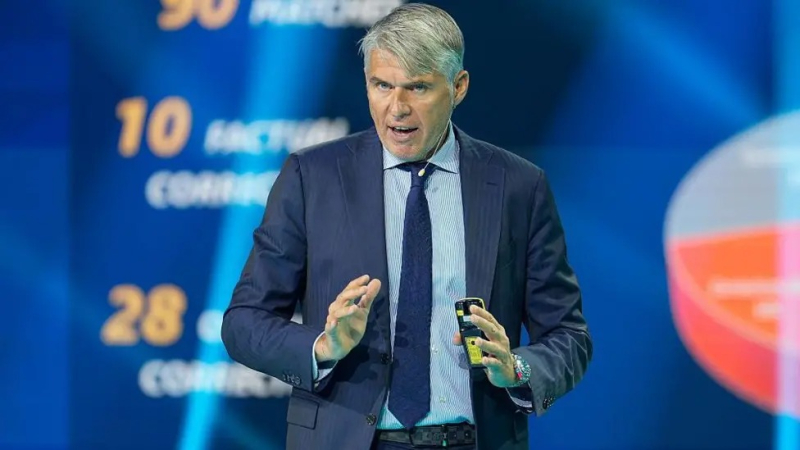
UEFA’s chief refereeing officer Roberto Rosetti has cautioned against what he described as increasingly “microscopic” use of video assistant referee technology, warning that excessive forensic reviews risk undermining the flow and emotion of football.
Speaking at the UEFA Congress, Rosetti acknowledged that VAR remains highly effective for factual decisions such as offside calls. However, he said subjective incidents, particularly handball and contact situations, are generating too many interventions and inconsistencies across competitions.
“At the end of the season we need to speak about this,” Rosetti said, stressing that football authorities must avoid moving in a direction where marginal, highly detailed reviews interrupt the natural rhythm of the game. He emphasized that VAR was introduced to correct clear errors, not to re-referee every minor incident.
Data from Europe’s major leagues illustrate differing levels of intervention. The Premier League currently records the lowest average VAR intervention rate among the top five leagues at 0.27 per match. The Bundesliga and La Liga follow at 0.38, Serie A at 0.44 and Ligue 1 at 0.47. In the UEFA Champions League, the rate stands at approximately 0.45 per game, reflecting a higher frequency of reviews in continental competition.
Rosetti noted that media scrutiny and fan expectations have contributed to pressure on officials to consult VAR more often. He warned that constant calls of “where is VAR?” risk distorting its original purpose. According to Rosetti, technology should serve justice in clear cases while preserving the speed and intensity that define the sport.
Handball interpretation remains one of the most contentious areas. Rosetti called for uniformity across European competitions, arguing that teams competing domestically and in UEFA tournaments should not encounter different technical standards. He said UEFA is working toward a single consistent interpretation ahead of next season.
The debate over VAR’s scope is also set to continue at the upcoming meeting of The International Football Association Board, where potential extensions to include second yellow cards and corner decisions are expected to be discussed. Rosetti signaled reservations about expanding VAR’s remit if it risks delaying the restart of play.
He reiterated that football’s core identity lies in its pace and emotional momentum. Any measure that slows the game excessively, he suggested, should be reconsidered. Officials have also been advised to monitor simulation and blocking on goalkeepers during set pieces, areas where subjective interpretation frequently arises.
Rosetti additionally expressed caution regarding proposed changes to offside rules championed former Arsenal manager Arsene Wenger, which would allow attackers more daylight between themselves and defenders. He warned such adjustments could significantly alter tactical balance.
As UEFA reviews its officiating framework, the emphasis remains on balancing accuracy with maintaining football’s dynamic character.