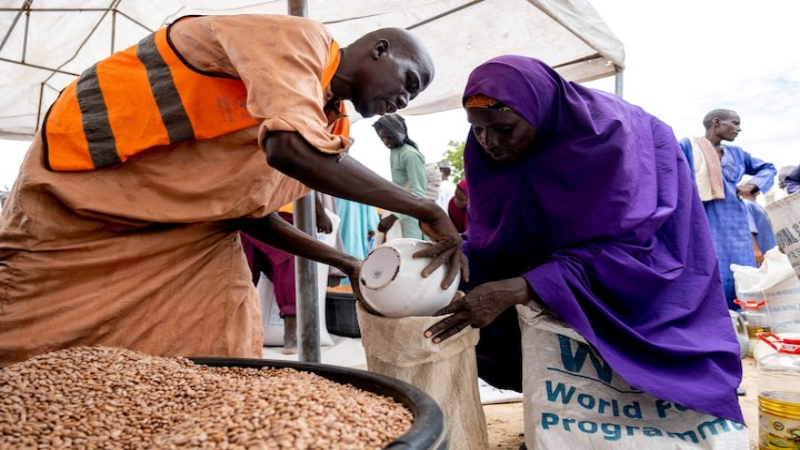
Nearly 35 million people in Nigeria are at risk of hunger this year as global humanitarian funding continues to shrink, according to the United Nations. The warning was issued during the presentation of the 2026 humanitarian response plan in Abuja, where officials said the scale of need has outpaced available resources. The United Nations noted that around three million children are facing severe malnutrition, underscoring the human cost of the funding collapse. Humanitarian officials stressed that the long standing aid model in Nigeria, largely dependent on foreign donors, is no longer sustainable as international budgets tighten. As economic pressures affect donor countries, humanitarian operations are being forced to scale back even as food insecurity, displacement, and climate related shocks continue to intensify across large parts of the country.
Conditions remain particularly severe in Nigeria’s conflict affected northeast, where insecurity continues to disrupt livelihoods and access to basic services. The UN highlighted worsening violence in Borno, Adamawa, and Yobe, noting a rise in attacks that has left thousands dead over the past year. Civilians in these areas face a combination of armed conflict, displacement, and soaring food prices, creating what humanitarian agencies describe as a compounding crisis. With farms abandoned and supply routes disrupted, families are increasingly reliant on aid that is no longer guaranteed. UN officials warned that without sufficient intervention, hunger and malnutrition could deepen further, especially among children and displaced populations already living in precarious conditions.
For 2026, the UN says it can aim to mobilize only 516 million dollars to support lifesaving assistance for around 2.5 million people. This represents a significant reduction from previous years and reflects the sharp contraction in donor funding. In 2025, humanitarian programs reached 3.6 million people, a figure that itself was already far below earlier levels. Officials said these limitations are forcing agencies to prioritize only the most critical interventions, leaving millions without support. The World Food Programme has previously warned that dwindling stocks could push millions toward hunger, after it was forced to reduce food assistance to hundreds of thousands of children. Aid leaders emphasized that the figures represent real lives and futures at risk, not abstract statistics.
Despite the bleak outlook, the UN acknowledged signs of increased national engagement in responding to the crisis. Nigerian authorities have taken steps in recent months to provide local funding for food assistance during the lean season and to strengthen early warning measures related to flooding and climate risks. While these efforts demonstrate growing domestic ownership, humanitarian officials cautioned that national resources alone are insufficient to meet the scale of current needs. Nigeria remains Africa’s most populous country, and persistent insecurity, economic strain, and climate pressures continue to drive vulnerability. Without renewed international support and more sustainable financing mechanisms, aid agencies warn that hunger and malnutrition could escalate further, with long term consequences for social stability and development.