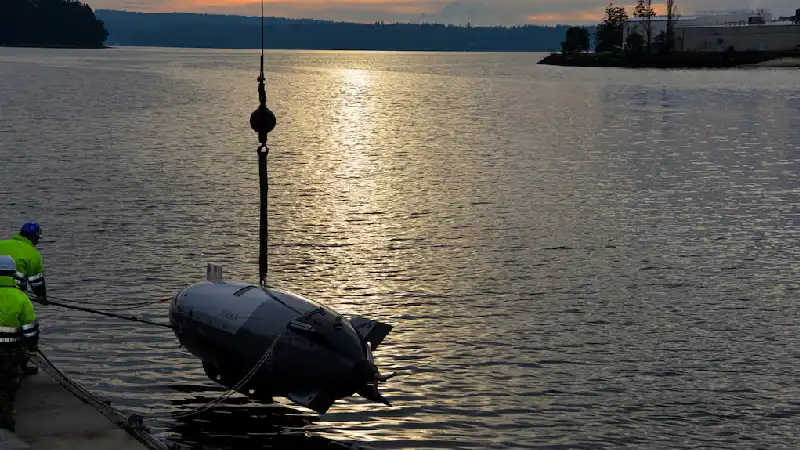
The United States and the United Kingdom are stepping up cooperation to tackle the growing threat posed underwater drones, launching a joint initiative aimed at protecting ports and critical maritime infrastructure. Defense officials have outlined plans for a new framework designed to detect and neutralize unmanned undersea vehicles, which are increasingly seen as a risk to global shipping routes and coastal security. The move reflects rising concern that advances in drone technology could expose vulnerable waterways, forcing Western allies to accelerate the development of coordinated defense solutions.
At the center of the effort is a program focused on building a flexible and scalable system capable of identifying a wide range of underwater threats. The initiative seeks to integrate commercially available technologies, including sensors, autonomous platforms and advanced processing systems, into a unified defense network. Officials have emphasized that current solutions remain limited, often fragmented and costly, making it difficult to deploy them quickly across multiple locations. The new approach aims to overcome these limitations creating a system that can be rapidly installed and adapted to different operational environments.
Artificial intelligence is expected to play a central role in the system’s functionality, particularly in distinguishing between hostile underwater devices and normal maritime activity. Developers are working to ensure that sensors can accurately differentiate between drones, marine life and passing vessels, reducing the risk of false alarms while maintaining rapid response capabilities. The framework is also designed to support human decision making providing real time analysis and recommendations, ensuring that operators can act quickly without relying entirely on automated responses.
The defense strategy includes both kinetic and non kinetic methods to counter underwater drones, with a clear preference for less destructive solutions. Non kinetic options such as deployable barriers, acoustic interference and underwater nets are being prioritized to neutralize threats without causing wider disruption. At the same time, more direct measures remain under consideration for scenarios where immediate intervention is required. The inclusion of decoy systems is also a key feature, aimed at confusing or diverting hostile devices before they can reach sensitive targets.
The initiative builds on a broader trend of strengthening defense ties between the US and the UK, particularly in areas involving emerging technologies and maritime security. Recent regulatory adjustments have made it easier for companies in both countries to collaborate on sensitive projects, opening the door for deeper industrial cooperation. This alignment reflects a shared recognition that underwater drone threats are evolving rapidly, requiring joint responses that combine technical expertise and operational coordination.
As global maritime traffic continues to grow, the importance of securing ports and shipping lanes is becoming more critical. Underwater drones present a unique challenge due to their ability to operate undetected and target infrastructure with precision. developing a comprehensive defense framework, the US and UK aim to stay ahead of these threats and protect key economic lifelines. The project is expected to attract interest from private sector innovators, signaling a shift toward more integrated and technology driven approaches to modern naval defense.