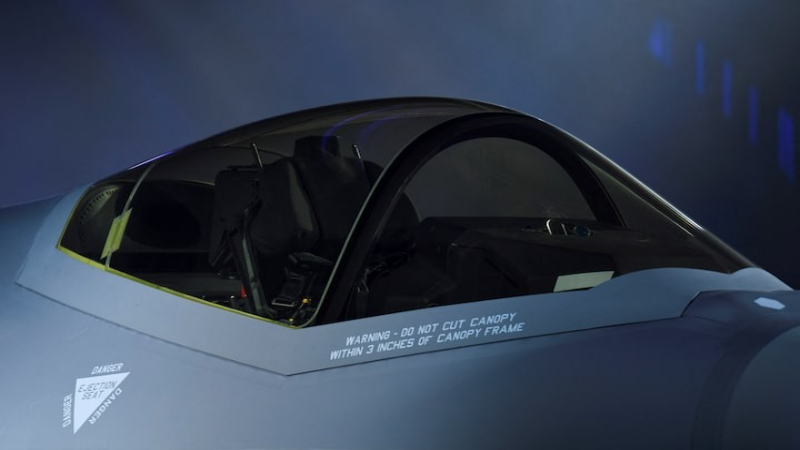
Portugal’s defense debate has returned to the spotlight after renewed pressure from the United States for Lisbon to modernize its air capabilities. At the center of the discussion is the potential acquisition of the F-35 Lightning II, a fifth-generation fighter jet already integrated into several European air forces. What might once have been a routine procurement conversation now intersects with broader geopolitical questions involving NATO cohesion, relations with China, and Portugal’s strategic positioning within Europe.
Strategic Crossroads for Portugal’s Air Force
Portugal’s current fleet under the Portuguese Air Force relies primarily on upgraded F-16 aircraft. While these jets remain operationally capable, many NATO partners are transitioning to next-generation platforms. The F 35 has become the default option for alliance interoperability, offering shared logistics, intelligence integration, and operational coordination across member states.
From a military perspective, adopting the F-35 would deepen Portugal’s integration within NATO structures. Joint exercises, shared training systems, and standardized maintenance frameworks reduce long term friction and enhance collective deterrence. For Washington, expanding the network of F-35 operators strengthens alliance cohesion at a time of rising global uncertainty.
Yet procurement decisions are never purely technical. They carry fiscal, industrial, and diplomatic consequences. For Portugal, the question is not only whether the aircraft meets defense needs, but whether the economic and geopolitical trade offs align with national priorities.
Defense Spending and Budget Realities
Portugal’s defense spending has gradually increased in recent years, though it still trails the alliance target of two percent of GDP. Acquiring F-35 jets would represent one of the most significant military investments in decades. Beyond the acquisition cost, lifecycle expenses, including maintenance, training, and infrastructure upgrades, must be factored into long-term planning.
Supporters argue that delaying modernization could create capability gaps as neighboring allies upgrade their fleets. Critics counter that Portugal faces competing domestic priorities, from healthcare to climate adaptation, that demand careful fiscal balance. In this context, defense procurement becomes a question of opportunity cost as much as strategic necessity.
There is also an industrial dimension. Some European countries negotiate industrial participation agreements when purchasing major defense systems. For Portugal, securing local economic offsets or technology partnerships could shape public and political support for any final decision.
The China Factor in Lisbon’s Calculus
Portugal has maintained pragmatic economic relations with China over the past decade, particularly in infrastructure and energy investments. While these ties remain commercially driven, geopolitical tensions between Washington and Beijing increasingly influence European decision-making.
A high-profile defense purchase from the United States would signal alignment with transatlantic security priorities. Although such alignment is consistent with Portugal’s longstanding alliance commitments, it could narrow diplomatic flexibility in areas where Lisbon has sought balanced engagement. Policymakers must weigh whether defense modernization inevitably places Portugal more firmly within one strategic camp in an era of global polarization.
This balancing act extends beyond symbolism. Technology partnerships, supply chain access, and regulatory cooperation often intersect with security considerations. As European capitals reassess economic dependencies, defense procurement decisions take on broader geopolitical meaning.
European Union Dynamics and Collective Strategy
Within the European Union, debates over strategic autonomy have intensified. Some member states advocate for stronger European defense manufacturing capabilities to reduce reliance on external suppliers. Others prioritize rapid capability upgrades even if that means sourcing from established American platforms.
Portugal’s choice would contribute to this wider conversation. Joining the growing group of European F-35 operators would reinforce a transatlantic defense architecture. Alternatively, exploring European alternatives would align with calls for deeper intra-European industrial cooperation. Each path carries implications for funding mechanisms, interoperability, and political signaling.
Lisbon must also consider its regional responsibilities. As a country with Atlantic exposure and strategic airspace, Portugal plays a role in maritime surveillance and rapid response missions. The operational capabilities of future aircraft will influence how effectively they can contribute to joint missions and safeguard national territory.
Political Signaling in a Changing Global Order
The renewed attention from Washington reflects broader strategic recalibration. As global competition intensifies, the United States has encouraged allies to strengthen defense commitments and modernize capabilities. For Portugal, the conversation unfolds at a moment when global trade tensions and security concerns increasingly overlap.
Public opinion will matter. Defense debates in Portugal historically attract less attention than economic issues, yet large-scale acquisitions can trigger scrutiny. Transparency regarding costs, timelines, and strategic objectives will be essential to building a durable consensus.
Ultimately, the decision is not simply about aircraft. It is about how Portugal defines its role in an evolving security landscape. Whether through closer integration with established alliance structures or a recalibrated European approach, Lisbon’s choice will shape its defense posture for decades.
Conclusion
Portugal’s potential move toward F-35 acquisition reflects more than military modernization. It encapsulates fiscal discipline, alliance solidarity, EU strategy, and geopolitical balance in a shifting global order where defense decisions increasingly carry economic and diplomatic weight.