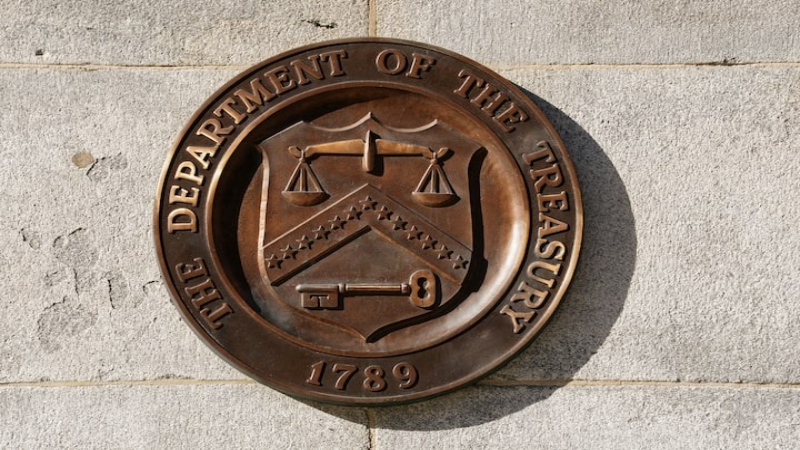
The United States Treasury has announced stricter monitoring of global currency practices while concluding that no major trading partner engaged in currency manipulation during the most recent review period. In its latest semi annual report, the department said it would broaden scrutiny of how countries intervene in foreign exchange markets, including efforts to resist both appreciation and depreciation against the dollar. The Treasury said no economy met all three benchmarks required for enhanced enforcement action, covering the second half of 2024 and the first half of 2025. Officials said the updated approach reflects changing market conditions and aims to improve analytical consistency as global currencies experience greater volatility. The report maintains that rules based exchange rate practices remain central to stable global trade, even as governments adopt varied strategies to manage currency movements amid shifting economic pressures.
Thailand was added to the Treasury’s monitoring list due to a growing current account surplus and an expanding trade surplus with the United States, bringing the total number of monitored economies to ten. Countries remaining under review include China, Japan, South Korea, Taiwan, Singapore, Vietnam, Germany, Ireland, and Switzerland. Treasury officials stressed that the revised criteria are not intended to single out any one country but to assess whether exchange rate interventions are applied symmetrically. The department said it will examine whether governments act as aggressively to counter currency depreciation as they do to prevent appreciation, a shift from past reports that focused largely on export competitiveness. The next report, expected later this year, will reflect periods in which the dollar weakened against several major currencies.
The Treasury also said it will expand analysis of additional policy tools that may influence currency markets, including capital controls, financial regulations, and the use of state investment vehicles. Officials said foreign exchange swaps and forward positions will also be examined to assess whether interventions are being offset to limit domestic monetary effects. While China was not designated a currency manipulator, the Treasury said it continues to stand out for limited transparency surrounding its exchange rate policies. The department said this lack of clarity complicates assessments of market activity but does not currently meet the threshold for formal designation. Officials added that continued monitoring is intended to reduce uncertainty and support fair trading conditions without escalating trade tensions.