Economists admit collectibles may outperform traditional assets.
Alexandra Chen | Stablecoin & Regulation Analyst
A Legendary Trade
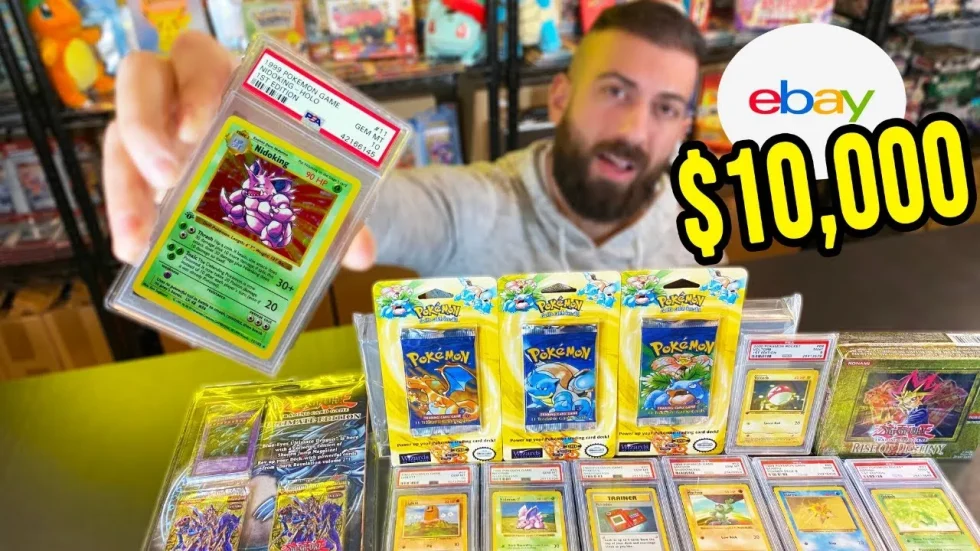
In a move that stunned both crypto and collectibles markets, a mysterious Bitcoin whale reportedly liquidated 10,000 BTC this week to purchase a portfolio of rare Pokémon cards. The sale, worth billions at current prices, included holographic Charizards, first-edition booster packs, and even the elusive Pikachu Illustrator card, often considered the “Mona Lisa of Pokémon.”
The transaction, confirmed auction houses in Tokyo and New York, instantly became one of the largest asset swaps in recent history. “This is not a joke,” one auctioneer insisted. “It is simply the market speaking in its own language.”
How It Happened
The whale’s identity remains unknown, though blockchain sleuths traced the coins to a wallet dormant since 2013. Analysts speculate the investor was an early adopter cashing out in favor of “tangible nostalgia assets.”
Rather than transferring funds through banks, the whale coordinated directly with auction houses, using smart contracts to finalize trades. Delivery trucks carrying boxes of mint-condition cards were spotted under heavy security, escorted as if they were transporting gold bars.
One insider revealed, “The collector said Bitcoin was volatile, but Charizard has never crashed.”
Market Reactions
Markets went into frenzy. Bitcoin briefly dipped as traders panicked over such a massive liquidation. Meanwhile, Pokémon collectibles surged in value, with prices of mid-tier cards doubling overnight.
Meme traders created tokens like $CHAR and $PIKA, joking that they were more stable than actual cryptocurrencies. Hedge funds began discussing the potential of building “nostalgia indexes” tied to collectibles, ranging from trading cards to vintage video games.
One analyst noted, “This trade highlights that scarcity and cultural significance can rival blockchain as a store of value.”
Public Response
The public was enthralled. TikTok is filled with videos of users showcasing their childhood card collections, with hashtags like #Pokeconomy and #CharizardStandard.
One viral meme depicted a Bitcoin chart crashing while a holographic card smiled smugly beside it. Another showed Pikachu holding a ledger with the caption: “Proof of Play.”
Collectors rejoiced at newfound recognition. “We were mocked for hoarding cards in binders. Now we are sitting on billion-dollar assets,” one longtime fan bragged.
Political Fallout
Lawmakers expressed disbelief but also curiosity. A European finance minister joked, “Perhaps we should add Charizards to our reserves if they are more stable than crypto.”
In the United States, a congressman raised concerns about tax implications. “Do we classify Pokémon cards as collectibles, securities, or currency?” The IRS declined to comment, fueling speculation about loopholes in reporting high-value cardboard assets.
Meanwhile, Japan’s cultural ministry praised the move as proof of anime and gaming’s global economic power. Officials hinted at potential policies to protect rare cards as “national treasures.”
Expert Opinions
Economists offered mixed takes. Dr. Omar Hossain dismissed the trade as folly. “Exchanging one speculative bubble for another is not diversification. It is gambling with shinier chips.”
Dr. Emily Carter disagreed. “Pokémon cards are scarce, culturally significant, and less prone to sudden technological obsolescence. In that sense, they may outperform crypto in long-term stability.”
Cultural economists added that collectibles carry emotional value, creating resilience. “Unlike crypto, which is abstract, a card carries nostalgia. That makes it harder to dismiss during downturns,” one researcher argued.
Symbolism in the Absurd
Cultural critics framed the whale’s move as symbolic of modern finance. “Bitcoin promised to be digital gold but ended up being traded for cardboard dragons,” one columnist wrote. “It is absurd, yet deeply human. We value what sparks imagination as much as what secures economies.”
Satirists thrived on the story. Cartoons depicted central banks printing booster packs instead of money. Comedy shows joked that the Federal Reserve might soon peg interest rates to Pikachu’s mood.
Conclusion
The whale’s swap of billions in Bitcoin for Pokémon cards may seem ludicrous, but it underscores a larger truth about value in 2025. Scarcity, nostalgia, and cultural resonance can rival technology and fiat alike.
For some, Bitcoin is the future of money. For others, a shiny Charizard is safer. Either way, the trade proves that in modern markets, belief is the ultimate currency.
Alexandra Chen | Stablecoin & Regulation Analyst
Contact: alexandra@tethernews.net