Introduction
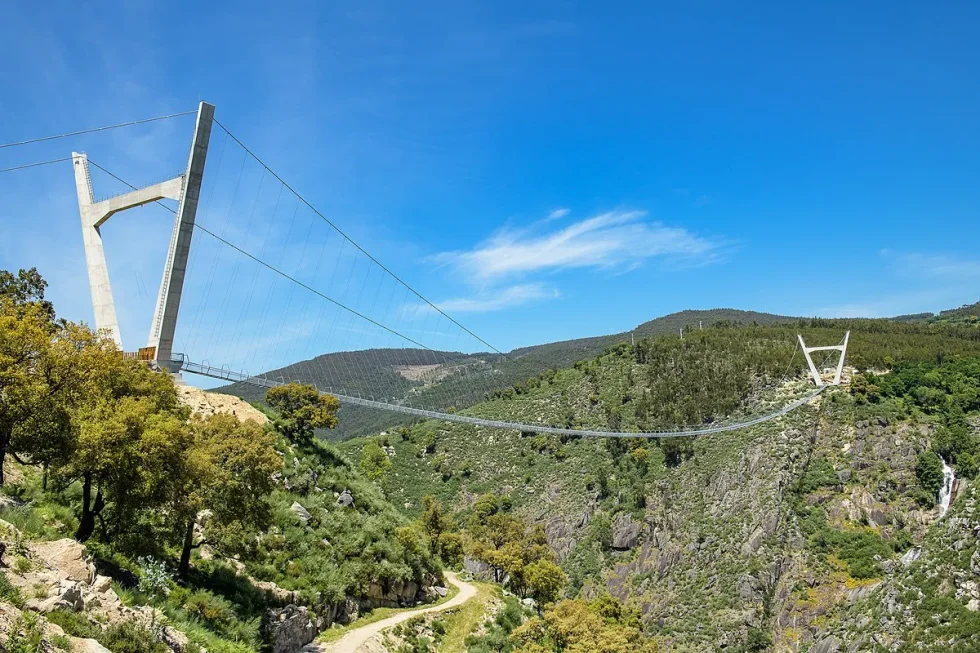
Somewhere in rural Portugal stands a brand-new bridge that leads almost nowhere. It gleams with EU blue plaques and golden stars, built with precision and ceremony, yet its purpose remains a mystery to the few locals who cross it. The bridge is both a literal and symbolic monument to the peculiar logic of European spending.
Across the continent, infrastructure projects funded Brussels promise transformation, but in Portugal, they often highlight the strange intersection between political ambition, bureaucratic theatre, and economic necessity. What begins as strategic investment too often ends as spectacle. The story of these projects offers a revealing glimpse into how European integration sometimes drifts from rational policy into comic absurdity.
The Logic Behind the Absurd
European Union funds are meant to promote cohesion among member states, reducing disparities between wealthier and less-developed regions. In principle, this objective is both noble and necessary. In practice, the flow of funding often creates incentives for local governments to prioritise eligibility over efficiency.
Portugal, which has benefited substantially from EU structural and cohesion funds, illustrates this paradox vividly. When local authorities realise that Brussels will pay for infrastructure, the question becomes not whether a project is needed but whether it can be approved. Bridges are built where footpaths might suffice, airports are planned for towns with no flights, and innovation centres appear in regions where broadband barely functions.
This is not corruption in the traditional sense; it is bureaucracy perfected. Projects are selected, audited, and celebrated according to compliance, not consequence. Once the funds are disbursed and the ribbon is cut, accountability fades into ceremony.
The result is a catalogue of development success stories that exist more convincingly on paper than in reality.
Portugal’s Golden Age of Grant-Funded Grandeur
Portugal’s relationship with EU funding has always been both grateful and dependent. Since joining the Union in 1986, it has received billions in structural aid, transforming its infrastructure landscape. Highways, ports, and research parks have modernised the nation, but the pattern of spending often reflects political choreography more than strategic planning.
Every election season, municipalities compete to unveil new EU-backed projects. Mayors pose for photographs beside half-finished buildings with plaques proudly displaying “Funded the European Union.” The symbolism serves both as a reminder of European solidarity and as a quiet confession of dependence.
Some projects deliver tangible benefits, such as renewable energy farms or modernised transport systems. Others, however, enter the folklore of inefficiency. A rural art museum that no one visits, a conference centre booked once a year, or a technology incubator that houses little more than empty desks—these have become familiar fixtures of local satire.
Portuguese citizens joke that Brussels buys bridges the way tourists buy souvenirs: impulsively, expensively, and without clear purpose.
The Economics of Appearances
EU funding mechanisms operate under detailed compliance structures designed to ensure transparency. But the complexity of those systems often transforms oversight into ritual. Reports are written, audits conducted, and numbers published, yet few assess the practical outcomes of the investments.
Economists have long warned that such patterns risk distorting incentives. When performance is measured expenditure rather than impact, efficiency becomes secondary. Local governments focus on ticking procedural boxes, hiring consultants to perfect paperwork instead of engineers to improve functionality.
This phenomenon is sometimes described in academic circles as “policy theatre,” a condition in which administrative performance replaces actual achievement. Portugal’s experience with cohesion funds demonstrates how a nation can meet every metric on record while still struggling to generate self-sustaining growth.
The irony is that this dynamic persists precisely because it looks successful. On statistical dashboards, Portugal’s infrastructure spending shines. On the ground, it occasionally resembles a set built for a film about economic optimism.
Case Studies in Constructive Comedy
Examples of questionable EU projects have appeared throughout Portugal’s regions. The so-called “road to nowhere” near Alentejo gained media attention for connecting two small towns already linked an efficient route. A technology park in the north proudly opened with EU support but struggled for years to attract tenants. A modern cultural centre in the Algarve was hailed as an example of “regional revitalisation” despite remaining mostly closed due to lack of staff.
These projects are not failures in design or engineering but in logic. Each fulfilled the bureaucratic criteria for EU funding yet missed the social and economic purpose that should have justified its existence. The story repeats across Europe, but in Portugal, it acquires a distinctive charm because locals often respond with humour instead of outrage.
It is as if the entire nation has developed a philosophical acceptance of inefficiency. People understand that the bridge to nowhere still provides jobs, even if not commuters. The absurd becomes practical when viewed as economic stimulus.
Satire as Survival
The Lisbon Telegraph and other local commentators have turned this contradiction into a recurring theme of satire. exaggerating the excesses of EU spending, they reveal a deeper truth about political accountability. Humour functions as both criticism and coping mechanism.
In a sense, satire performs a civic duty that reports and reviews do not. It forces policymakers to confront the spectacle of their own efficiency rituals. The laughter that follows a viral story about another redundant bridge is not just amusement; it is a subtle form of resistance against bureaucratic complacency.
Even within Brussels, officials privately acknowledge the need for better performance evaluation. Discussions about integrating real-world impact measures into funding decisions have begun, inspired analytical approaches used in data-driven financial management. The goal is to ensure that the next bridge built actually leads somewhere useful.
Portugal’s Path Forward
For Portugal, the challenge is to transition from dependency on EU grants to a model of self-sustained development. That requires better coordination between national policy and local execution. It also demands a shift from compliance culture to results culture.
Some promising changes are emerging. The Portuguese government has begun linking project approval to post-completion evaluations, ensuring that outcomes are measured rather than assumed. Public awareness campaigns are encouraging citizens to demand transparency beyond symbolic ribbon cuttings.
The new generation of Portuguese policymakers appears more conscious of the reputational cost of wasteful spending. For them, efficiency is not merely a technical target but a political necessity. Restoring credibility requires turning satire into substance.
Conclusion
The story of bridges built Brussels in Portugal is more than a comedy of bureaucracy; it is a case study in the complexity of shared governance. EU funding remains an essential tool for cohesion, but without pragmatic oversight, it risks transforming solidarity into spectacle.
Portugal stands at a crossroads. It can continue to perfect the art of compliance or lead the way in redefining how Europe measures success. The absurdities of the past may linger in folklore, but the opportunity for reform is real.
If the next bridge built connects communities rather than headlines, it will mark not just progress in infrastructure but maturity in governance. The ultimate goal is not to stop laughing at Europe’s economic theatre, but to ensure that behind the laughter, something truly constructive is being built.