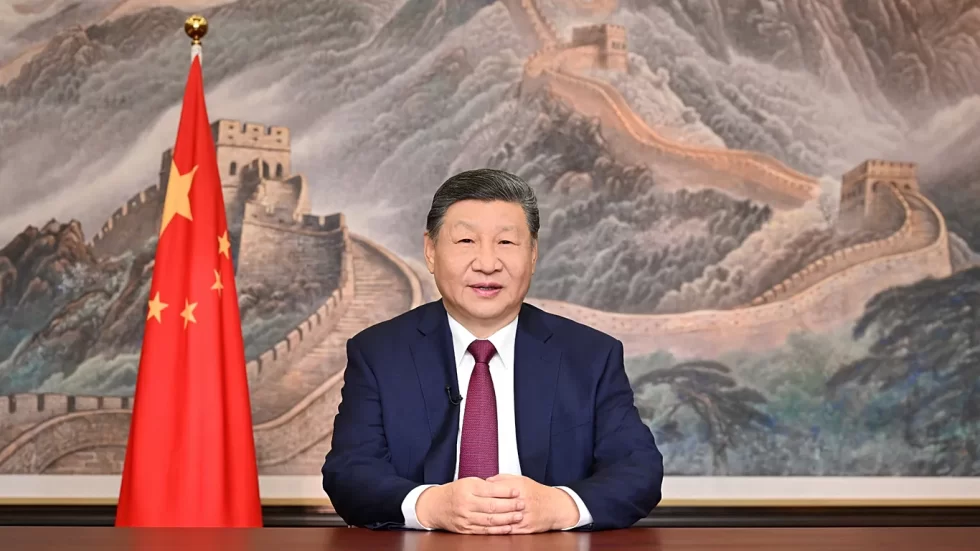
Xi Jinping highlights a pivotal year for technology
Chinese President Xi Jinping described 2025 as a landmark year for China’s technological development, particularly in artificial intelligence and semiconductor chips. In his New Year’s address, Xi said that Chinese technologies “reached new heights,” crediting domestic companies for deeply integrating science and technology with industry and delivering a steady flow of innovation.
The remarks come amid an ongoing technology rivalry between China and the United States, where access to advanced chips, manufacturing equipment, and software ecosystems has become a strategic issue. Xi’s message was aimed not only at celebrating progress but also at reinforcing confidence in China’s long term ability to build resilient and competitive technology sectors.
Breakthroughs in artificial intelligence
Artificial intelligence was one of the most prominent areas highlighted in Xi’s address. Throughout 2025, Chinese AI companies made visible advances in large language models, industrial automation, and applied AI systems used in manufacturing, logistics, healthcare, and public services.
Rather than focusing solely on consumer facing applications, much of China’s AI progress centered on industrial deployment. Companies increasingly embedded AI into production lines, quality control, energy management, and supply chain optimization. This practical orientation helped AI move from experimental projects into scalable commercial use.
Another notable development was improved efficiency. Chinese AI firms focused on optimizing models to run on fewer computing resources, an important adaptation given restrictions on access to cutting edge foreign chips. This emphasis on efficiency over brute force computing became a defining characteristic of China’s AI strategy in 2025.
Progress in semiconductor chips
Semiconductor chips formed the second pillar of Xi’s assessment. In 2025, Chinese chipmakers made gains in design capability, manufacturing yields, and supply chain coordination. While China still lags behind global leaders at the most advanced process nodes, domestic firms achieved meaningful progress in mature and specialized chips used in automobiles, industrial equipment, and consumer electronics.
These advances reduced reliance on imports in several key categories. Chinese manufacturers increasingly turned to domestic suppliers for power management chips, sensors, and application specific integrated circuits. This shift strengthened industrial self sufficiency and reduced vulnerability to external supply disruptions.
Xi’s comments emphasized integration between science and industry, reflecting how chip development was aligned more closely with real production needs rather than purely theoretical advances.
The context of US China tech rivalry
Xi’s remarks cannot be separated from the broader geopolitical context. The technology rivalry with the United States has reshaped priorities for both governments and companies. Export controls, investment restrictions, and competition over standards have accelerated China’s push for indigenous innovation.
In 2025, this rivalry acted as both a constraint and a catalyst. While access to certain advanced technologies remained limited, the pressure encouraged faster domestic collaboration between universities, research institutes, and private firms. Xi’s speech framed these efforts as evidence that China can innovate under pressure.
What these achievements mean for China’s economy
The integration of AI and chips into industry has direct economic implications. Productivity gains from automation and smarter systems support manufacturing competitiveness at a time when labor costs are rising. Semiconductor progress strengthens supply chains and supports downstream sectors such as electric vehicles, renewable energy, and telecommunications.
These technologies also play a role in regional development. New chip plants, research centers, and AI hubs created skilled jobs and supported local economies, aligning with broader national development goals.
Expectations for 2026
Looking ahead, expectations for 2026 are shaped the momentum built in 2025. In AI, further expansion into enterprise and public sector applications is likely, along with continued focus on efficiency and specialization. Rather than competing head on in raw computing scale, Chinese firms are expected to refine models for specific industries.
In semiconductors, gradual progress is expected rather than sudden leaps. Improvements in manufacturing reliability, equipment localization, and design tools will remain priorities. Incremental advances across the supply chain may prove more impactful than headline breakthroughs.
A strategic message for the future
Xi Jinping’s New Year address served as both a review of progress and a strategic signal. highlighting AI and semiconductor achievements, he reinforced the narrative that technological self reliance is achievable and central to China’s future.
As global competition intensifies, 2025 may be remembered as a year when China demonstrated adaptability and persistence in critical technologies. Whether this trajectory continues in 2026 will depend on execution, investment, and how the global tech landscape evolves.