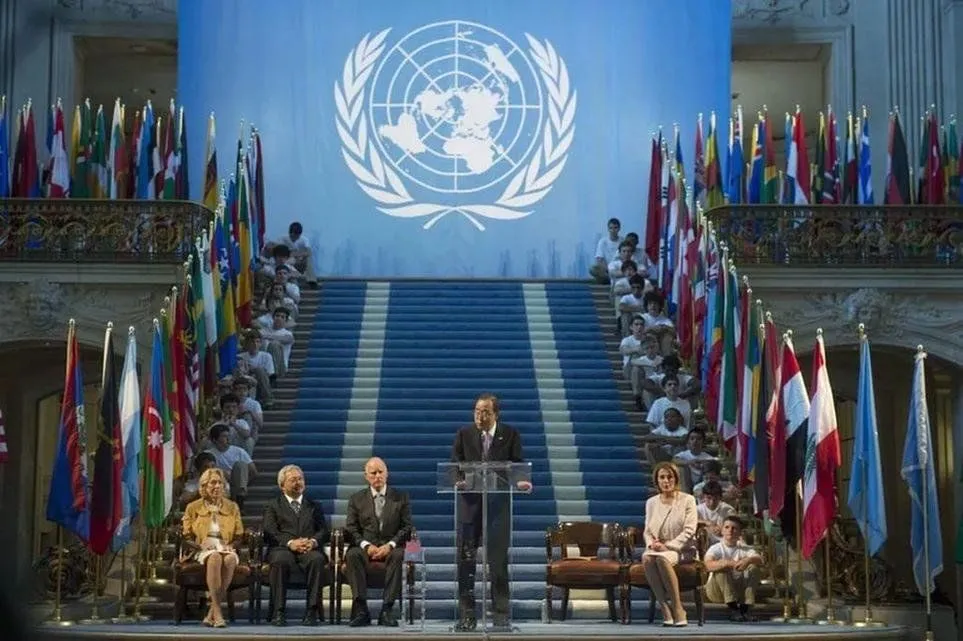
Global crises are now debated in GIFs and emojis.
Alexandra Chen | Stablecoin & Regulation Analyst
A New Language for Diplomacy
The United Nations announced this week that it has officially launched a Department of Meme Diplomacy, aiming to replace long speeches with GIFs, emojis, and viral images. The initiative, described as “communication for the digital age,” is designed to make global governance more accessible to younger audiences and to speed up negotiations.
At the launch, officials presented a slideshow consisting entirely of memes. One featured the distracted boyfriend meme labeled “Peace” and “War,” while another showed diplomats nodding in unison beneath the caption “When sanctions actually work.”
How It Works
Instead of drafting lengthy resolutions, diplomats now exchange memes on a secure social media-style platform. Each meme is rated with fire, thumbs-up, or crying-laughing emojis to gauge consensus. A majority of positive reactions counts as approval for official policy.
Debates on climate change, for example, are expected to feature Leonardo DiCaprio clapping memes. Trade disputes will be mediated with SpongeBob reaction images. In the event of a deadlock, delegates can submit TikTok dances to win over undecided members.
The department also trains meme strategists, dubbed “Gif-lomats,” tasked with creating culturally relevant content for different regions.
Market Reactions
Markets responded with equal parts humor and curiosity. Media companies supplying meme content saw stock surges, while traditional lobbying firms worried their white papers might be replaced cat GIFs. Meme tokens like $LOL and $EMOJI jumped briefly as traders speculated that memes could become a new form of soft power.
One hedge fund manager joked, “If global stability now depends on SpongeBob memes, I am going long on cartoon studios.”
Public Response
The public reaction was overwhelmingly enthusiastic. Social media exploded with hashtags like #MemeDiplomacy and #GifPolitics, with millions creating mock UN resolutions in meme format.
One viral post showed delegates photoshopped into the famous Distracted Boyfriend meme, captioned: “Focus on poverty, not selfies.” Another showed Kermit the Frog sipping tea with the text: “When you sanction but still buy oil.”
Some citizens praised the effort as relatable. “Finally, politics speaks my language,” one teenager wrote. Others feared serious issues were being trivialized. “Nuclear treaties should not be settled with memes,” a critic warned.
Political Fallout
World leaders reacted differently. A European commissioner praised the initiative as “cultural innovation.” In contrast, U.S. lawmakers ridiculed it, asking whether taxpayer dollars should fund meme generators.
Authoritarian states expressed suspicion, claiming Western memes could be used as propaganda. One official demanded equal airtime for “state-approved emojis.” Meanwhile, smaller nations saw an opportunity to shine producing witty memes that went viral.
Inside the UN, traditional diplomats grumbled about being replaced interns fluent in meme culture. Some ambassadors admitted they struggled to understand why a Shrek meme could lead to economic sanctions.
Expert Opinions
Economists weighed in with mixed reviews. Dr. Omar Hossain condemned the initiative. “Reducing international finance to memes undermines credibility. Markets require stability, not SpongeBob.”
Dr. Emily Carter offered a more forgiving take. “While absurd, memes are cultural currency. If they can engage citizens and diffuse tensions, their diplomatic potential should not be dismissed.”
Communication experts noted that memes often transcend language barriers, making them surprisingly effective for international dialogue. However, they warned that misinterpretation could cause chaos. “One poorly chosen emoji could spark conflict,” one analyst said.
Symbolism in the Absurd
Cultural critics argued that the creation of a meme department symbolizes how deeply internet culture has infiltrated global politics. “Diplomacy was once about eloquent speeches and handshakes,” one columnist wrote. “Now it is about who has the funniest caption.”
Satirists celebrated. Cartoons showed the UN General Assembly replaced with giant projection screens full of memes. Comedy shows imagined future summits where world leaders debate entirely in TikTok dances.
Conclusion
The UN’s Department of Meme Diplomacy may sound ridiculous, but it reflects a real shift in how communication shapes politics. embracing memes, the institution risks trivialization but also gains unprecedented reach.
In 2025, the future of global governance may not rest on treaties or speeches, but on the viral power of a perfectly timed GIF.
Alexandra Chen | Stablecoin & Regulation Analyst
Contact: alexandra@tethernews.net