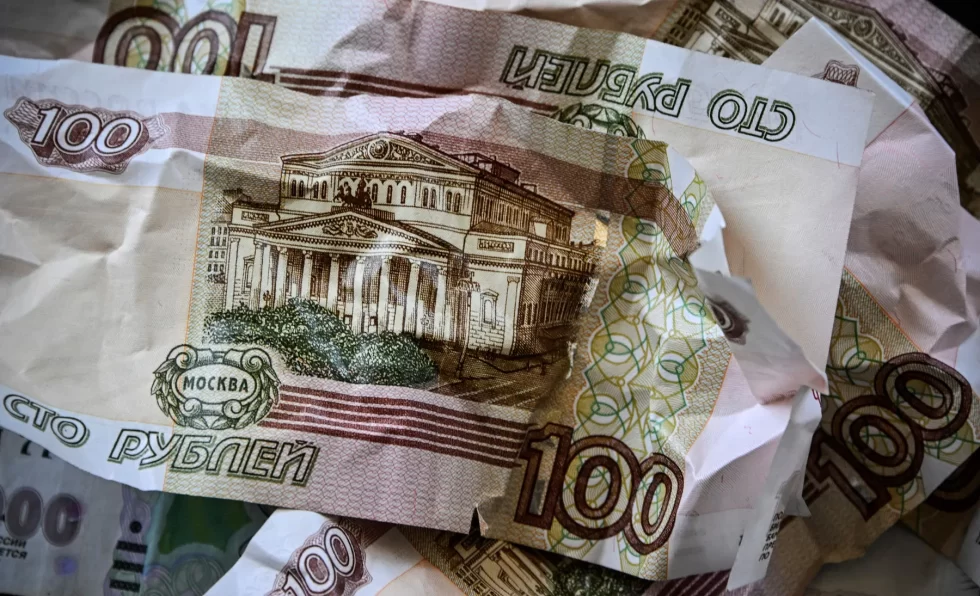
The Russian ruble has emerged as one of the strongest performing currencies globally, defying expectations at a time when Russia remains under heavy international sanctions. While a strengthening currency is often viewed as a sign of economic confidence, the ruble’s rapid rise is now creating fresh challenges for policymakers and businesses inside Russia. What initially looks like a financial success story may, in practice, carry significant risks for the broader economy.
The rally has been driven a mix of strict capital controls, high interest rates, and limited currency outflows. Together, these measures have tightened the supply of rubles on global markets, pushing up its value even as Russia’s economic fundamentals remain under strain.
Why the Ruble Has Strengthened So Sharply
One of the main drivers behind the ruble’s surge has been aggressive monetary policy the Central Bank of Russia. High interest rates have made holding rubles more attractive domestically, while capital controls have restricted the ability of individuals and companies to move money abroad.
Energy revenues have also played a role. Despite sanctions, Russia continues to earn substantial income from oil and gas exports, with payments often converted into rubles. This steady inflow of foreign currency, combined with limited imports, has supported demand for the national currency.
However, economists note that this strength is not the result of renewed investor confidence or economic expansion. Instead, it reflects a tightly managed financial environment that distorts normal market signals.
Pressure on Exports and State Revenues
A stronger ruble creates immediate problems for exporters. Russian companies selling commodities abroad earn revenue in foreign currencies, but their costs are largely denominated in rubles. When the ruble appreciates, those foreign earnings translate into fewer rubles, squeezing profit margins.
This dynamic also affects government finances. Much of Russia’s budget depends on energy exports, and a strong ruble reduces the value of those revenues when converted into local currency. At a time when military spending and social obligations remain high, this creates tension within fiscal planning.
Inflation Control Versus Economic Growth
On the positive side, a strong ruble helps limit inflation reducing the cost of imported goods and raw materials. For Russian consumers, this can slow price increases and provide some relief after periods of high inflation.
Yet this benefit comes with trade offs. Tight monetary conditions and restricted capital flows suppress investment and consumer spending. Businesses face higher borrowing costs, and long term growth prospects weaken. The ruble’s strength, rather than signaling stability, may be masking deeper structural fragilities.
Risks of Policy Reversal
Maintaining a strong currency through administrative controls is difficult over time. Analysts warn that any relaxation of capital restrictions or sudden changes in energy revenues could trigger sharp volatility. If confidence weakens or outflows resume, the ruble could fall quickly, reigniting inflation and financial stress.
This risk places policymakers in a narrow corridor. Keeping the ruble strong supports price stability but undermines competitiveness. Allowing it to weaken could boost exports and budget revenues but at the cost of rising prices and public dissatisfaction.
Broader Implications for the Russian Economy
The ruble’s rally highlights the unusual economic environment Russia now operates in. Traditional indicators such as currency strength no longer provide clear signals about economic health. Instead, they reflect a system shaped sanctions, controls, and state intervention.
For households and businesses, this creates uncertainty. Planning becomes more difficult when exchange rates are driven policy constraints rather than market fundamentals. Over time, this uncertainty can discourage investment and innovation.
What Comes Next
The key question is how long Russia can sustain the current balance. As global energy markets shift and geopolitical pressures evolve, maintaining tight control over the currency may become increasingly costly.
The ruble’s world beating performance may appear impressive on the surface, but it carries hidden risks. Rather than signaling economic resilience, it underscores the delicate trade offs facing Russia as it navigates an economy shaped isolation and intervention.