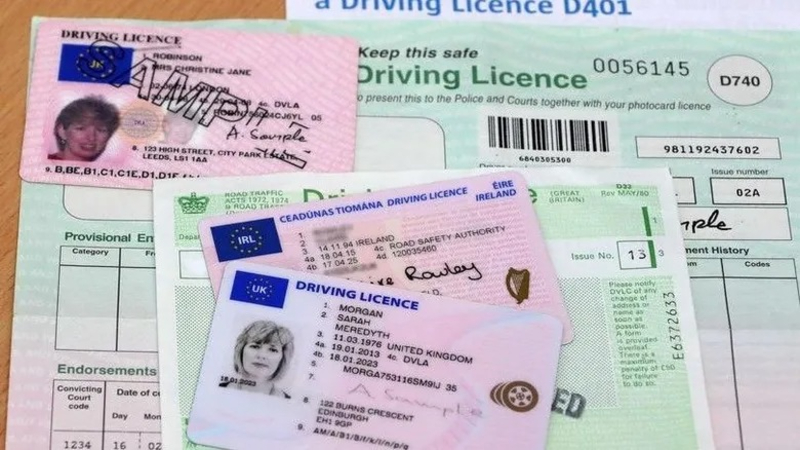
Driving across Europe is set to feel noticeably different as the European Union moves closer to overhauling how licences are issued, checked, and enforced. Plans now taking shape point toward a single European style driving licence that would be valid across all member states and available in digital form. Instead of relying solely on physical cards, drivers would be able to store their licence securely on their phones, with legal recognition in every EU country. Supporters argue this could simplify roadside checks and reduce paperwork, particularly for those who regularly cross borders for work or travel. The proposal reflects a broader push to modernise public services and align rules that currently vary widely between countries. While traditional licences would not disappear overnight, the shift toward digital identification signals a change in how mobility is managed in an increasingly connected Europe.
Alongside the digital upgrade, Brussels is also pushing for tighter and more consistent standards around renewals, medical checks, and new driver rules. At present, age related assessments and renewal periods differ from one country to another, creating confusion and uneven enforcement. Under the proposed framework, these requirements would be harmonised, even if some flexibility remains at national level. New drivers are also likely to face a more uniform probation period during their first years on the road, a move aimed at improving safety and reducing accident rates among less experienced motorists. While these measures are framed as practical updates, they also reflect growing concern about road safety and demographic change, particularly as Europe’s population ages and driving habits evolve.
Perhaps the most consequential change for drivers is the plan to ensure penalties follow them wherever they go in the EU. Currently, it is possible to lose or have a licence suspended in one member state while remaining legally able to drive in another, due to gaps between national systems. The new rules aim to close that loophole making bans and suspensions valid across all EU countries. For habitual offenders, this would remove the option of simply crossing a border to stay behind the wheel. Each member state will still need to adapt its national laws once the final text is agreed, but officials have signaled that the changes could begin to take effect as early as 2026. If implemented as planned, the reforms would mark one of the most significant shifts in European driving rules in decades, blending digital convenience with stricter, continent wide enforcement.