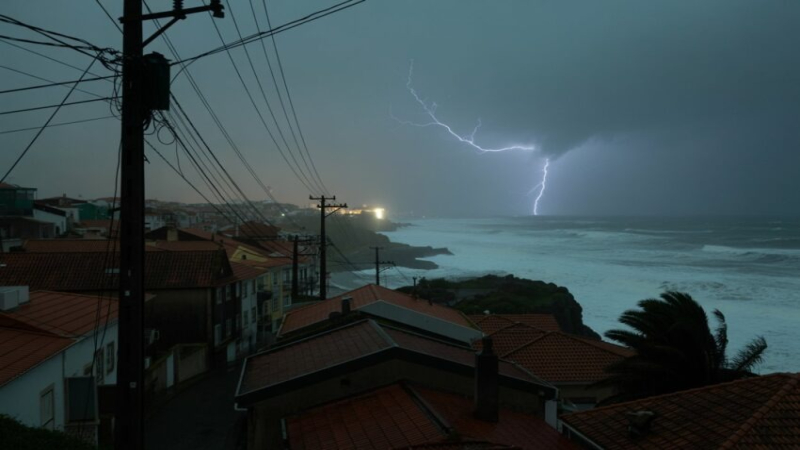
Storm Kristin swept across Portugal overnight, bringing intense rainfall, strong winds, and unstable sea conditions that disrupted transport networks and power supply across several regions. Weather authorities placed large parts of the country under red and orange alerts during the early hours, with northern and central districts experiencing the strongest gusts. Snowfall was reported in higher elevation areas as colder air followed the storm front, while coastal regions faced rising swells and heavy rain. Emergency services responded to numerous overnight incidents involving fallen branches, unsecured structures, and localized flooding. Several road sections were affected surface water and debris, leading to slower traffic and temporary closures. Officials urged residents to exercise caution during early morning travel as conditions remained hazardous in exposed areas and urban locations with limited drainage capacity.
sunrise, conditions had begun to ease in parts of the country, although the storm’s impact remained visible across affected communities. Power cuts were reported in multiple districts after strong winds damaged overhead lines, prompting repair crews to begin restoration work at first light. Rail services faced delays on several routes as operators carried out inspections to ensure track safety and clear debris before resuming normal operations. Coastal towns experienced elevated wave activity, with some ports restricting smaller vessels due to lingering rough seas. Municipal authorities focused on clearing streets, securing public infrastructure, and addressing minor flooding in low lying areas. While the worst of the weather had passed, officials warned that residual effects could continue to disrupt services throughout the day.
Weather conditions are expected to stabilize gradually as the storm system moves eastward, though scattered showers and unsettled seas are forecast to persist in some areas. Authorities advised motorists to remain alert, particularly in regions where water runoff remains high and cleanup operations are ongoing. Coastal safety advisories stayed in place as wave conditions slowly improved, with residents encouraged to keep distance from shorelines and exposed promenades. Emergency agencies noted that secondary incidents often occur after major storms, particularly where debris and weakened structures remain. The event highlighted the ongoing challenges posed winter weather systems, with rapid changes placing pressure on transport infrastructure, utilities, and public safety services across Portugal.