Russian officials and analysts are closely watching renewed tensions surrounding Greenland, viewing the situation as both an opportunity to advance long held geopolitical narratives and a potential threat to core military interests in the Arctic. While Moscow’s public reaction has been notably restrained, private assessments reveal growing concern about the implications of an expanded United States presence in a region central to Russia’s strategic deterrence.
According to analysts, the push the Trump administration to acquire Greenland has reinforced a worldview already entrenched among Russian policymakers, namely that global politics is increasingly governed raw power rather than international law. From Moscow’s perspective, the episode appears to validate arguments it has made for years about the erosion of rules based order and the return of hard realpolitik, even among Western allies.
Andrey Kortunov, a senior figure associated with the Valdai Discussion Club and former head of the Russian International Affairs Council, described the moment as emblematic of a shifting global order. He noted that many in Moscow see the Greenland dispute as confirmation that influence now rests less on norms and more on the ability to enforce national objectives. The fact that Washington’s pressure has been directed at allies rather than rivals has only amplified this perception.
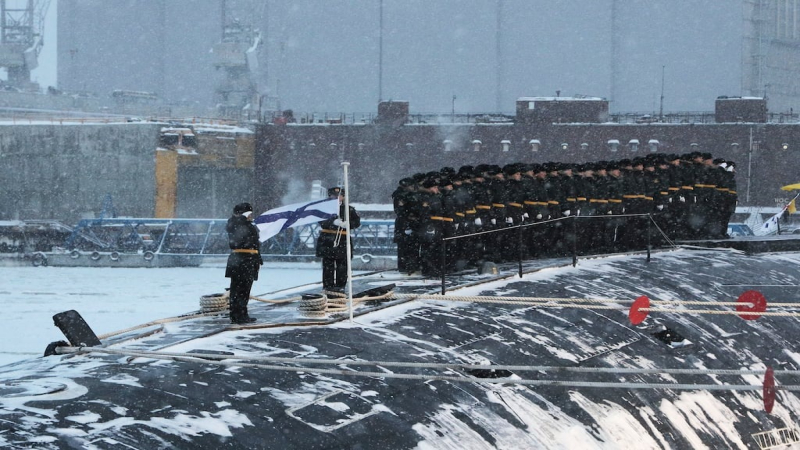
At the same time, Russian military planners are uneasy about the concrete security implications. Greenland occupies a pivotal position in the Arctic and North Atlantic, and any significant expansion of American military infrastructure there could directly affect Russia’s naval posture. Analysts warn that enhanced surveillance and anti submarine capabilities in the region could limit the freedom of movement for Russian strategic submarines operating out of the Barents Sea, a cornerstone of the country’s nuclear deterrent.
Access to the North Atlantic is particularly sensitive for Moscow, as it underpins the credibility of its sea based nuclear forces. Russian experts fear that a stronger United States footprint in Greenland would complicate transit routes and potentially expose submarines to greater detection, undermining strategic stability. These concerns are heightened the broader militarization of the Arctic, where climate change is opening new sea lanes and intensifying competition among major powers.
Despite these risks, Moscow also sees diplomatic advantages in the unfolding crisis. Analysts suggest that tensions over Greenland deepen divisions within the transatlantic alliance, creating friction between the United States and European partners. From Russia’s standpoint, such fractures weaken Western cohesion and indirectly strengthen its own strategic position without requiring confrontation.
The Greenland episode has also revived historical comparisons in Russian policy circles, with some likening it to mid twentieth century power politics where territorial ambitions openly trumped diplomatic convention. This framing allows Moscow to argue that its own actions on the global stage are part of a broader trend rather than an exception.
As Arctic geopolitics continue to evolve, Russia is likely to maintain a cautious public posture while quietly adjusting its military and diplomatic calculations. The Greenland crisis, analysts say, underscores how rapidly the balance between opportunity and vulnerability can shift in a region that is becoming ever more central to global security.