






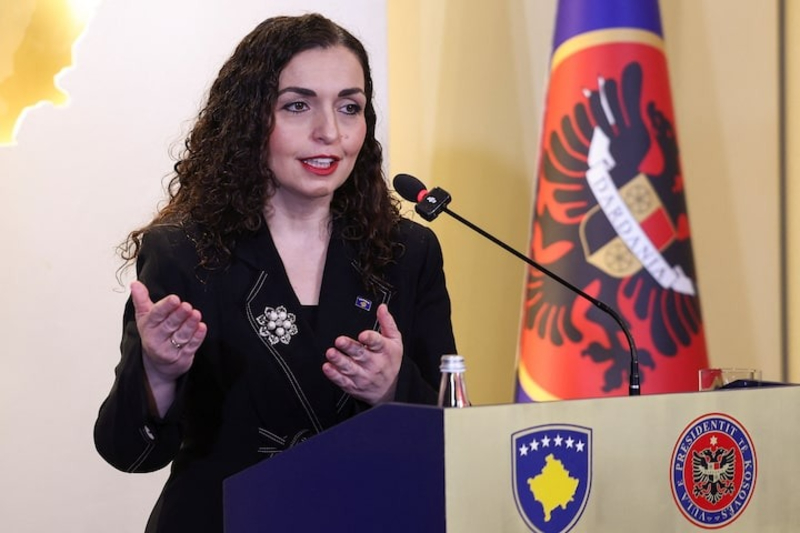
Kosovo has entered another period of political uncertainty after President Vjosa Osmani dissolved the country’s parliament and called for snap elections following lawmakers’ failure to elect a new head of state. The decision was announced after parliament missed the constitutional deadline to choose a successor before the current presidential term ends in April. According to the country’s constitution, if lawmakers fail to elect a president within the required timeframe the parliament must be dissolved and new elections must be held. The move deepens an ongoing political stalemate in the Balkan nation and sets the stage for yet another election cycle.
The parliamentary vote collapsed after opposition parties refused to participate in the process of selecting a new president. Without their participation the assembly could not reach the required majority needed to elect a head of state. The political impasse reflects continuing divisions between the ruling Vetevendosje party led Prime Minister Albin Kurti and opposition groups that have demanded a consensus candidate for the presidency. Kurti’s government nominated Foreign Minister Glauk Konjufca for the role, but opposition parties rejected the proposal and declined to take part in the vote.
President Osmani said the constitution left no alternative after lawmakers failed to meet the deadline. In a public statement she emphasized that a parliament unable to elect a president could not continue to prolong the process indefinitely. The president also stressed that while another election cycle may not be desirable, the country must follow its constitutional procedures. She is expected to meet representatives of political parties to discuss the next steps and determine the date for the upcoming parliamentary elections.
The latest development prolongs a period of political instability that has already seen multiple elections in a short span of time. Kosovo held a snap parliamentary election in December after political parties were unable to form a government following the February 2025 vote. Although Kurti’s Vetevendosje party achieved a strong result in the most recent election and managed to form a government, the political divisions within parliament have persisted. Analysts had hoped that the latest election would break the deadlock and allow institutions to function more smoothly, but the failure to elect a president has now triggered another political reset.
Kosovo’s political challenges come at a sensitive time for the country as it continues to pursue closer ties with European institutions. As Europe’s youngest nation Kosovo has repeatedly expressed its ambition to join the European Union and strengthen its international partnerships. However political instability and repeated election cycles have raised concerns about the country’s institutional stability and governance. European officials have often emphasized the importance of political cooperation and functional democratic institutions as essential conditions for progress toward EU integration.
The upcoming elections will be the third national vote in just over a year, highlighting the depth of political fragmentation within the country’s parliament. The repeated elections have also created uncertainty for policy making and economic planning. Businesses and international partners closely watching Kosovo’s political environment have expressed hope that the next election could finally produce a more stable parliamentary majority capable of resolving key political disputes.
Despite the current tensions political leaders have stated that the electoral process will follow democratic procedures and constitutional guidelines. Authorities are expected to announce the official election date after consultations between the president and political parties. Until then the country will remain under the current transitional political framework while preparations begin for another nationwide vote that could determine the future direction of Kosovo’s government.


