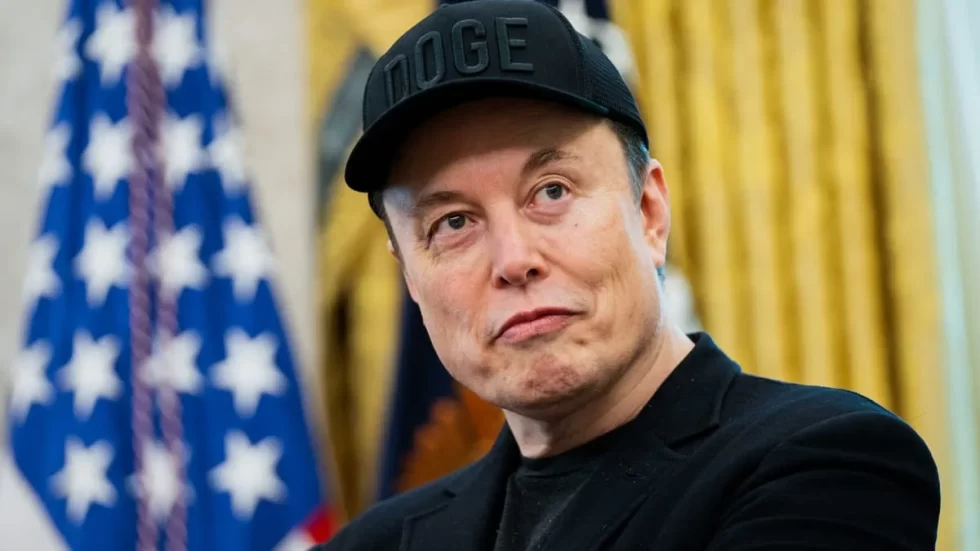
Tech billionaire Elon Musk has stirred controversy once again, this time questioning how leadership works within the European Union. In a post on his social media platform X, Musk argued that if democracy is truly the foundation of freedom, then the president of the European Commission should be chosen directly EU citizens, rather than appointed political leaders.
“If democracy is the foundation of freedom, surely your position as leader of the EU should be elected directly the people?” Musk wrote in response to Ursula von der Leyen, the current head of the European Commission.
In another post, he reiterated his point, insisting that the EU’s top executive “should be elected the people, not appointed a committee.” His remarks quickly gained attention across Europe, with both supporters and critics debating whether Musk’s comments were a legitimate call for reform or simply another example of his online provocations.
The exchange came shortly after von der Leyen announced the European Democracy Shield, a new initiative aimed at strengthening democracy and protecting elections from foreign interference. The program is designed to counter online disinformation campaigns and bolster public trust in democratic institutions.
“Democracy is the foundation of our freedom, our prosperity, and our security,” von der Leyen wrote in her own post announcing the initiative. The Democracy Shield includes the creation of a European Centre for Democratic Resilience, which will unite experts from EU and candidate countries to detect and respond to manipulation efforts online. It also features guidelines on the use of artificial intelligence in elections and strategies to use influencers to promote civic awareness about EU laws, including digital and advertising regulations.
Von der Leyen first floated the idea for the Democracy Shield in 2023, during a campaign speech at the Copenhagen Democracy Summit, as part of her effort to secure another term as Commission president.
Under the current EU system, the Commission president, often referred to as the EU’s top executive, is nominated the European Council, which consists of the leaders of the 27 member states, and then approved the European Parliament. The role is not directly elected citizens, though it is influenced the outcome of the European Parliament elections held every five years.
After being reappointed last year, von der Leyen has faced political challenges from within the Parliament, including three motions of no confidence this year, which she successfully survived in both July and October.
Musk’s criticism reflects his long-standing skepticism toward political institutions and his tendency to frame leadership in populist terms. The billionaire, who owns Tesla, SpaceX, and X, has frequently commented on democracy, free speech, and governance, often sparking heated debate. Earlier this year, he briefly served as an informal adviser to Donald Trump during the U.S. presidential campaign, promoting the idea of “direct democracy” and minimal government control.
European officials were quick to defend the EU’s structure, noting that its leadership model is designed to balance representation among member states while maintaining democratic legitimacy through the Parliament’s oversight.
However, Musk’s remarks have struck a chord among some critics of the EU who believe the bloc lacks direct accountability to its citizens. “It’s hard to dismiss the underlying question,” one Brussels-based analyst said. “Should 450 million Europeans have a direct say in choosing their top executive, or is the current process sufficient for a union of nations rather than a single state?”
While Musk’s comments may not lead to immediate change, they have once again ignited discussion about how the EU governs itself and how it communicates democratic legitimacy to its people.