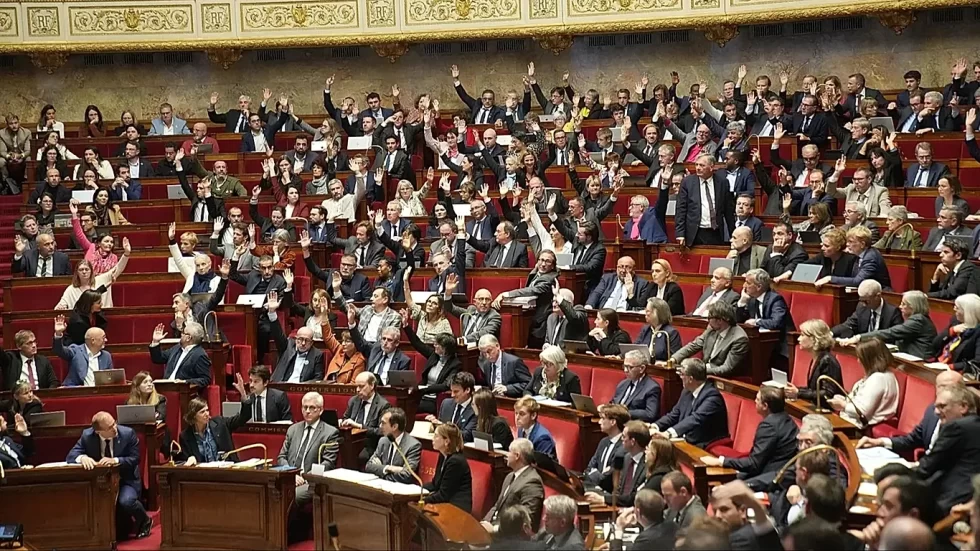
France’s National Assembly voted on Wednesday to suspend the controversial pension reform that has divided the nation and shaken President Emmanuel Macron’s government for more than a year. The measure, approved a margin of 255 votes to 146, marks a significant political shift for France’s leadership, which has been under pressure to restore stability after months of unrest and economic strain.
The decision follows an agreement between Prime Minister Sébastien Lecornu and members of the Socialist Party, who had threatened to back a motion of censure unless the reform was temporarily halted. The suspension is seen as a strategic move to maintain the government’s fragile majority in parliament and avoid yet another political crisis.
Lecornu, who took office earlier this year after the removal of François Bayrou, described the decision as “a necessary act of responsibility to preserve national unity.” The suspension, he explained, would remain in place until the 2027 presidential election, allowing time for broader consultation and a potential re-evaluation of France’s social and fiscal priorities.
The reform in question had been one of Macron’s most contentious policies. Introduced in 2023, it raised the official retirement age from 62 to 64, sparking months of strikes, street demonstrations, and widespread criticism from trade unions and opposition lawmakers. Many French citizens saw the change as an attack on social protections that form part of the country’s postwar identity.
pressing pause, Lecornu hopes to calm tensions ahead of next year’s budget negotiations and to refocus the government on tackling France’s mounting fiscal challenges. The Labor and Solidarity Ministry estimates the suspension will cost roughly €300 million in 2026 and up to €1.9 billion in 2027, a figure that has already raised alarm among financial analysts and European partners.
France currently faces one of the highest budget deficits in the euro zone, and efforts to curb public spending have been complicated repeated changes in leadership. In just two years, France has had five prime ministers, a sign of the political volatility that has plagued Macron’s second term.
The country’s political instability has not gone unnoticed abroad. European officials and investors have been watching Paris closely, concerned that France’s growing debt, now exceeding 110 percent of GDP, could weigh on the broader euro area economy. The European Commission has urged France to adopt new fiscal measures to offset the costs of delaying the reform, while credit agencies have warned of potential consequences if no corrective action is taken.
Earlier this year, both Standard & Poor’s and Fitch Ratings downgraded France’s credit rating to the single-A category, while Moody’s shifted its outlook from “stable” to “negative,” citing growing fiscal uncertainty and weak political cohesion. Analysts warn that the suspension of pension reform, though politically expedient, could further strain investor confidence if no alternative savings plan is introduced.
Within France, reactions to the vote were divided. The Socialists and Greens hailed the suspension as “a victory for social justice,” while the far-right National Rally framed it as proof that Macron’s government had “lost control of its economic agenda.” Meanwhile, Les Républicains and centrist allies criticized the decision as “short-term populism” that ignored the need for structural reform.
Still, for many French citizens exhausted months of political drama and economic uncertainty, the vote offers a temporary reprieve. “People needed a sign that the government was listening,” said one lawmaker from the majority bloc. “This is not a victory or a defeat, it is a pause for reflection.”
As the National Assembly moves to finalize its social security budget, Lecornu faces the challenge of balancing social pressure with fiscal discipline. For now, the suspension of pension reform buys his government time, but the deeper question of how France will fund its future remains unresolved.