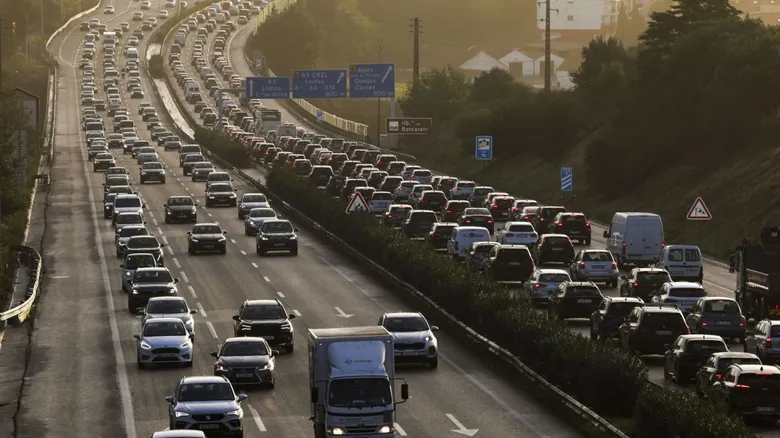
Road safety has once again come under scrutiny after Portugal’s National Road Safety Authority identified forty high risk locations across the national road network. These areas, commonly referred to as black spots, are sections of road where serious accidents occur with alarming frequency. The findings have drawn attention to persistent safety challenges faced drivers, commuters, and authorities alike.
Among all identified locations, the A5 motorway stands out as the most dangerous. This major route links Lisbon to Cascais and is one of the busiest roads in the country, carrying thousands of vehicles daily. Its prominence in the report has raised questions about traffic management, driver behavior, and infrastructure limitations on heavily used roads.
The A5 Motorway and Its Risk Profile
The A5 motorway has long been a critical connection between the capital and the western suburbs. High traffic volumes, frequent congestion, and varying driving speeds combine to create a demanding environment for motorists. According to road safety experts, these factors significantly increase the likelihood of collisions, especially during peak hours.
Sharp curves, merging lanes, and sudden braking are common features along certain stretches of the A5. When combined with driver fatigue or distraction, these conditions can quickly lead to serious accidents. The designation of the A5 as the most dangerous road reflects not a single incident, but a pattern of repeated crashes over time.
Understanding What Defines a Black Spot
A road black spot is typically identified through statistical analysis rather than isolated events. Authorities examine accident frequency, severity, and location over a defined period. When a specific stretch of road consistently records serious or fatal accidents, it is flagged for closer examination.
In Portugal, these forty black spots span motorways, national roads, and urban connectors. They are not limited to remote areas, as many are located near major cities where traffic density is highest. This reinforces the idea that risk is often linked to volume and complexity rather than road type alone.
Causes Behind High Risk Road Sections
Several factors contribute to the formation of dangerous road segments. Excessive speed remains one of the leading causes, particularly on motorways where drivers may underestimate risks. Inadequate signage, poor visibility, and worn road surfaces also play a role in increasing accident likelihood.
Weather conditions can further intensify danger. Rain reduces visibility and road grip, while glare during sunrise or sunset can impair driver judgment. In busy corridors like the A5, even small disruptions can trigger chain reactions involving multiple vehicles.
Impact on Drivers and Communities
The identification of dangerous roads is not just a technical exercise. It has real consequences for those who rely on these routes daily. Frequent accidents lead to traffic delays, emotional distress for families, and increased pressure on emergency services. Communities near high risk roads often experience heightened anxiety due to noise, congestion, and the constant presence of emergency responders.
For commuters, repeated incidents erode confidence and increase travel stress. The economic impact is also significant, as accidents result in lost productivity, medical costs, and infrastructure repairs.
Measures to Improve Road Safety
The National Road Safety Authority uses these findings to guide targeted interventions. Typical measures include improved signage, speed control mechanisms, better lighting, and road surface upgrades. In some cases, traffic flow is redesigned to reduce conflict points such as dangerous merges or abrupt lane changes.
Public awareness campaigns are also an essential part of the response. Authorities emphasize that infrastructure improvements alone are not enough without responsible driving behavior. Compliance with speed limits, avoidance of distractions, and proper vehicle maintenance remain crucial.
A Reminder of Shared Responsibility
The identification of forty dangerous road sections serves as a reminder that road safety is a shared responsibility. While authorities work to improve infrastructure and monitoring, drivers play a decisive role in reducing accidents through everyday choices behind the wheel.
The prominence of the A5 motorway in the report highlights the risks associated with busy urban connections. Addressing these dangers requires coordinated action, sustained investment, and continued attention to how roads are used in practice.