A milestone in India’s economic ascent
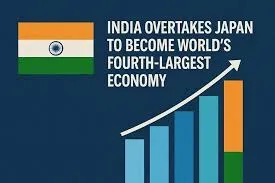
India has reached a major economic milestone, emerging as the world’s fourth largest economy according to the Indian government’s end of year economic review. With gross domestic product valued at approximately US$4.18 trillion, the country has moved ahead of Japan and the US state of California, marking a significant moment in its long term growth story. Officials in New Delhi describe the development as confirmation that India is now firmly among the fastest growing major economies in the world.
The shift reflects more than a single year of strong performance. It is the outcome of sustained expansion driven population scale, domestic consumption, and structural reforms that have gradually reshaped India’s economic base.
How India moved ahead of Japan and California
India’s rise in the rankings is the result of steady growth rather than sudden acceleration. While Japan has struggled with slow expansion and demographic headwinds, India has benefited from a younger population, rising productivity, and expanding services and manufacturing sectors. California, despite being a global economic powerhouse in its own right, represents a subnational economy, making India’s comparison particularly striking.
The government’s review highlights that India’s growth momentum is expected to continue. With GDP projected to reach US$7.3 trillion 2030, policymakers believe the country is on track to surpass Germany and become the world’s third largest economy within the next two and a half to three years.
Growth drivers behind the numbers
Several factors underpin India’s economic rise. Domestic consumption remains a key pillar, supported a growing middle class and expanding urbanisation. At the same time, investment in infrastructure, digital services, and manufacturing has strengthened productive capacity.
India’s technology and services sectors continue to play an outsized role. From software and digital payments to business services, these industries have helped integrate India more deeply into global value chains. Manufacturing initiatives aimed at boosting local production and exports have also gained traction, contributing to more balanced growth.
Policy reform and economic confidence
Reforms over the past decade have laid the groundwork for sustained expansion. Measures to improve tax collection, streamline regulation, and encourage foreign investment have increased formal economic activity and broadened the tax base. Digital infrastructure has also enhanced efficiency, enabling faster delivery of services and reducing friction across sectors.
Government officials emphasise that confidence in India’s economic trajectory has improved both domestically and internationally. Stronger fiscal management and a focus on long term development goals have helped reassure investors, even amid global uncertainty.
Comparing scale with structural challenges
Despite its impressive rise, India still faces significant challenges. Per capita income remains relatively low compared with advanced economies, highlighting the gap between aggregate size and individual prosperity. Job creation, education, and healthcare remain critical priorities if growth is to translate into broad based improvement in living standards.
Inflation management, fiscal discipline, and external shocks also pose ongoing risks. Maintaining high growth rates over the long term will require careful balancing of expansion with stability, particularly as global economic conditions remain volatile.
What comes next in the global rankings
India’s ambition to move into third place globally depends on sustaining momentum while navigating these challenges. Germany’s economy remains larger for now, but slower growth in Europe contrasts with India’s faster expansion. If projections hold, the gap could narrow quickly.
The symbolic significance of overtaking established economic powers should not be underestimated. It reinforces India’s growing influence in global forums and strengthens its voice on issues ranging from trade to climate policy.
A turning point, not an endpoint
Becoming the world’s fourth largest economy marks a turning point rather than a conclusion. It reflects decades of incremental change and signals the potential for even greater influence in the years ahead. For policymakers, the task now is to ensure that scale is matched resilience and inclusivity.
As India continues its climb, the focus will increasingly shift from rankings to outcomes. Sustaining growth while improving quality of life will determine whether this economic ascent delivers on its promise for the country’s 1.4 billion people.